What the Sampling Cart Kit does at a market
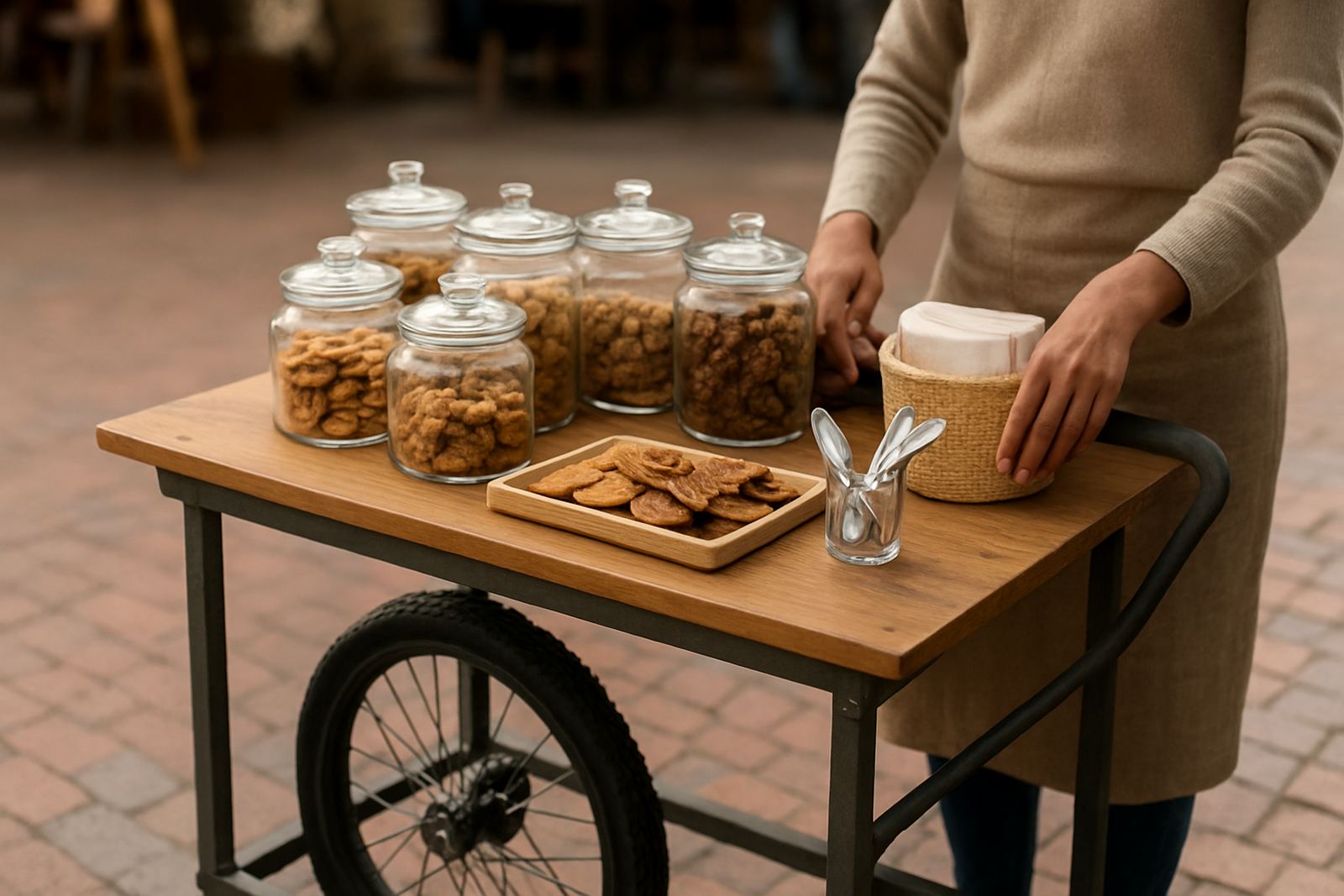
This cart is built for short, high-contact moments where a maker needs to greet people, hand out samples, explain products and capture orders or sign-ups without holding up the queue. It works well for food tastings, small product demonstrations, mailing list sign-ups, workshop bookings and simple point-of-sale use. For Hatfield weekends, indoor mall pop-ups or an evening maker night the cart keeps everything within reach and easy to tidy between rushes.
The frame is usually set up as a lockable wheeled station with a service top, lower shelf and optional front panel branding area. It suits sellers who need to move between stalls and storage quickly, or teams that must set up in under 30 minutes. A good cart also helps with customer flow, because people know where to stand and what to do next. That matters when foot traffic is busy and there is no room for clutter.
- Ideal for tastings, mini demos, order capture and visitor sign-ups
- Easy to reposition for indoor floors, paved courtyards and covered walkways
- Can be used as a single-person station or a two-person service point
Sizes, finishes and setup choices that suit your space
Most makers choose one of three cart sizes depending on the event and transport limits. A compact cart around 900 mm long x 600 mm wide suits narrow aisles and smaller activation points. The mid-size option at about 1200 mm long x 700 mm wide gives more prep space, while a larger cart at 1500 mm long x 750 mm wide works better when you need extra display room, sample trays or a small under-counter storage bin.
Finish options matter in South African conditions. For outdoor markets in Pretoria, Centurion or coastal areas, powder-coated metal frames and sealed timber tops hold up better than untreated surfaces. Where food is handled, smooth non-porous top panels are easier to wipe down and keep hygienic. If you will use the cart in daylight or under warm lights, lighter colours help show dust less and keep the work surface from getting too hot. Small typo, but important: check the wheel locks on setup day, not after the crowd arrives.
- Compact: 900 x 600 mm for tight spaces and short activations
- Medium: 1200 x 700 mm for mixed use and better storage
- Large: 1500 x 750 mm for tastings, brochures and light prep work
Where the cart suits best across markets and events
This kit suits weekend makers markets, school fundraisers, food courts, festival entrances, workshop registration tables and seasonal promotions. It is useful for sellers who want to greet visitors before they reach the main stall, or who need a separate station for sampling so the main display stays clean. At Hatfield, Brooklyn, Lynnwood, Menlyn and Centurion events, a cart like this helps you manage peak times without losing the personal touch.
It also works for maker nights where the conversation is more important than the full retail display. You can use the cart to present a few hero items, explain ingredients or materials, and then direct buyers to the main stall or online ordering form. For community events and nationwide pop-ups, the cart gives a familiar face to the setup, which helps customers feel comfortable and makes the space look organised. In small venues, that can make the difference between a quick browse and a proper enquiry.
- Weekend markets and artisan fairs
- Food sampling points and product launch tables
- Workshop check-ins, sign-up points and event greeters
Installation, power and utility needs
Most sampling cart kits are mobile and do not need fixed installation. You roll the unit into place, level it, lock the wheels and set out your containers, sign-up sheets or card machine. If the cart includes a small fridge, heated tray, lightbox or display lamp, check the power draw before the event. A basic sampling cart can run without power, but any chilled or heated product work should be planned around the venue’s plug points and cable rules.
For food work, keep water, waste and sanitising items separate from the serving area. If you are serving chilled samples, use ice packs, insulated inserts or a portable cooler to keep products at the right temperature. Gas is only needed if you are heating or cooking on site, and then it must follow venue and municipal safety rules. Most market organisers want proof of safe hoses, stable cylinders and clear separation between the gas point and the customer area.
- Standard setup uses no fixed plumbing
- Optional 220 V supply for lighting, cooling or warming equipment
- Gas only for approved food service equipment with venue clearance
Care, cleaning and servicing between events
A sampling cart gets handled by hands, cups, napkins and packaging all day, so regular cleaning is important. Wipe food-contact surfaces after each service run, then clean the wheels and underside before loading out. If the cart is used for sweets, sauces or oily foods, a deeper clean at the end of the day prevents smells and sticky residue. In humid areas or near the coast, dry the cart before storage so fittings do not rust or warp.
Once a month, check hinge screws, castors, wheel locks, shelf fixings and any cable routing. If the cart has branding panels, keep them flat and store them away from direct sun to avoid fading. Small cuts or chips in the top coating should be touched up early, because moisture finds weak points quickly. A cart that gets serviced regularly lasts longer and looks better at every market, even after many weekend runs.
- Wipe down each day with mild soap and a soft cloth
- Inspect wheels, locks and fasteners before each event
- Store dry, covered and off damp concrete where possible
What to check before ordering this display kit
Before ordering, measure the space where the cart will stand and check the access route from vehicle to stall. A cart that fits the stall may still be too wide for a lift, doorway or passage. Confirm whether you need storage for napkins, sample tubs, payment tools or brochures, and decide if you want open shelving or a lockable compartment. If your team travels to different towns, choose a weight that two people can move safely without strain.
It also helps to think through the product you will serve. Dry goods, chilled samples and hot tastings each need different layouts, and some require a sink nearby while others do not. Ask for the load capacity, wheel type, finish colour and whether the top surface is food-safe. For markets in Pretoria and nationwide pop-ups, simple questions now save delays on site. When in doubt, ask for a mock layout so you can see if the cart suits your serving style.
- Stall width, doorway clearance and vehicle loading height
- Sample type, storage needs and power or gas requirements
- Weight, wheel quality, finish and cleaning routine
Key facts
| Product type | Mobile cart-style sampling station |
|---|---|
| Typical sizes | 900 x 600 mm, 1200 x 700 mm, 1500 x 750 mm |
| Frame | Powder-coated metal with lockable castors |
| Top surface | Sealed timber or smooth wipe-clean panel |
| Power | Optional 220 V for lights, cooling or warming equipment |
| Best use | Tastings, sign-ups, quick sales and short product demos |