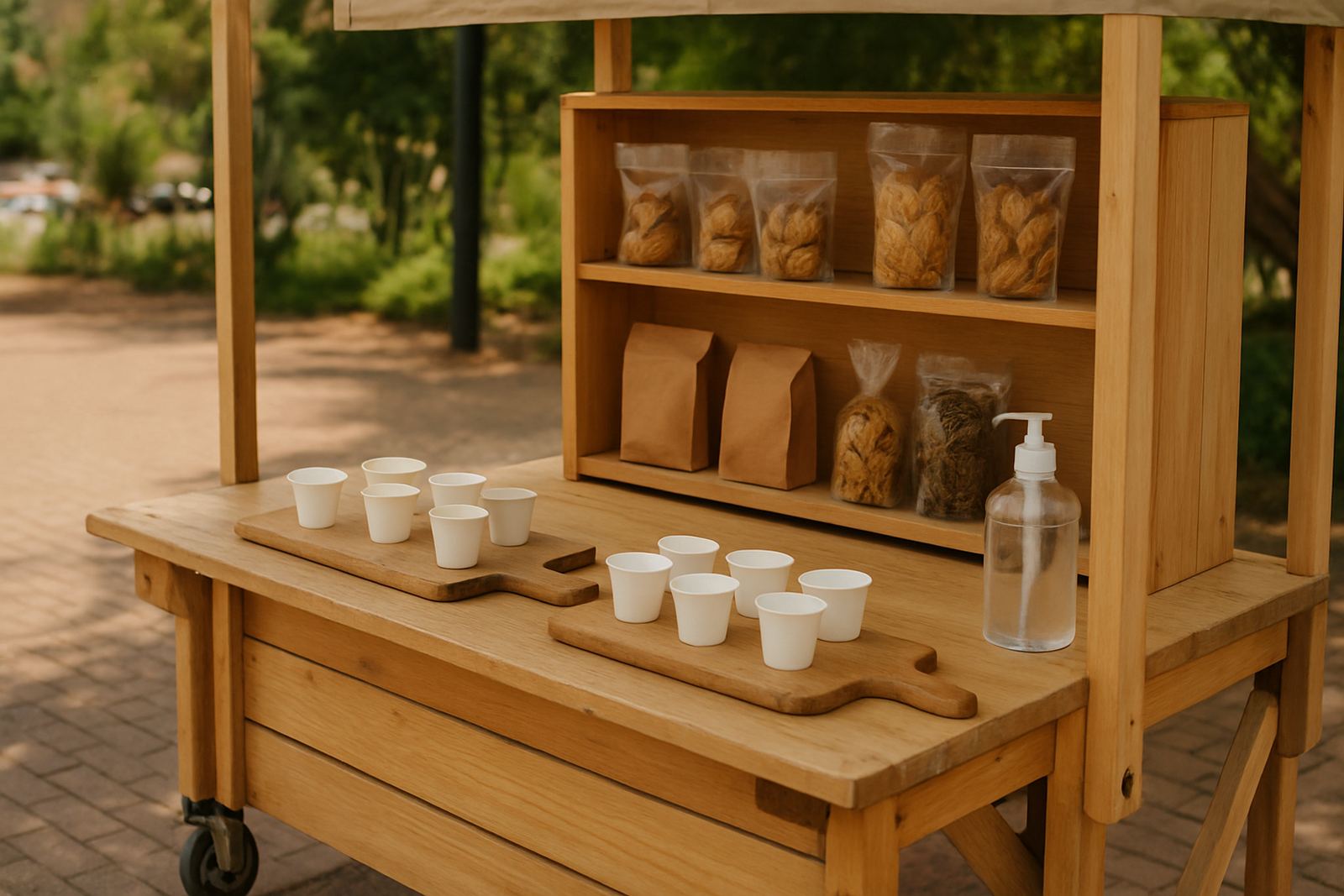
What the Tasting Station Kit does at a busy stall
The Tasting Station Kit is a compact sampling setup for food makers who need to offer small tastings without turning the stall into a mess. It gives you a cleaner way to portion, present and serve bites of product, with space for gloves, tongs, wipes, labels and waste control in one place.
At Hatfield, Brooklyn and Menlyn markets the pace can change quickly, especially when families arrive late morning and want to move on fast. A proper tasting point helps you keep the flow steady, protect your stock and give customers enough to try before they buy. It also helps with basic compliance because the serving area stays organised and easier to clean.
- Works for sweet and savoury food makers
- Helps keep sample portions consistent
- Makes the stall look neater and more professional
- Reduces handling time during peak trading hours
Size options and what each layout suits
The kit is usually supplied in a single-server or dual-server layout, depending on how much traffic you expect. A smaller footprint works well for narrow market tables, while a wider station suits stalls that run tastings alongside packaging or card payments.
Most makers choose a front-facing setup around 600 mm to 900 mm wide, with a working depth of about 450 mm to 600 mm. If you are trading at a crowded Centurion or Lynnwood event, a slimmer unit is easier to move and position. For maker nights and longer pop-ups, a larger counter gives you more room for prep trays and sample covers. its worth measuring your table first so you dont end up with gear hanging over the edge.
- 600 mm wide compact station for tight spaces
- 900 mm wide station for higher sample volume
- Optional lidded trays for chilled or dry samples
- Space for labels, serviettes and hand sanitiser
Where the kit suits best
This kit suits traders who offer baked goods, preserves, confectionery, sauces, biltong, snack foods, infused drinks and other small-batch products. It is especially useful where customers want to taste before buying, and where a clean first impression matters as much as the product itself.
It also works well for outdoor events where dust, wind and sudden weather changes can affect presentation. In Pretoria the dry winter air can leave open product exposed, while coastal humidity at nationwide pop-ups can make packaging soft if it is left out too long. A covered tasting station helps you manage both.
- Weekend markets in Hatfield, Brooklyn, Menlyn and Centurion
- Indoor maker nights and workshop-style events
- Corporate pop-ups and community festivals
- Food stalls that need controlled sample service
Installation, power and gas needs
Most tasting station kits are free-standing or table-top units and do not need hard installation. You set the station on a level surface, secure any trays or lids, then organise your serving tools so the workflow goes from left to right or right to left, depending on your stall layout. If the station includes a chilled insert or a small warming element, allow proper clearance around the unit for airflow and safe use.
For cold sampling, you will normally need a cool box, ice packs or a small powered cold unit if the event allows it. For hot tastings, some makers use a gas warmer or electric warming tray, but only if the venue permits it. Check the venue setup as well, because weekend trading can still be affected by limited services and you may need a back-up plan for ice, gas or pre-portioned samples.
- Level table or counter space required
- Access to power only if using chilled or heated accessories
- Gas only where the venue and market rules allow it
- Keep cords, cylinders and open flames away from customer reach
Care, cleaning and service intervals
Food sampling gear needs cleaning after every trade day, not just when it looks dirty. Wash food-contact parts with warm soapy water, rinse well and let them dry fully before packing away. If the kit includes stainless steel, wipe it dry to avoid water marks. For plastic trays or lids, check for scratches because those can hold residue and become harder to sanitise.
At busy market seasons in Pretoria, especially over December and school holidays, it pays to service the kit regularly. Replace cracked containers, bent tongs or worn labels before your next event. If you trade often, do a deeper check once a month and clean hidden corners where crumbs and sticky syrup tend to collect.
- Wash and dry all food-contact parts after each event
- Inspect seals, lids and hinges for wear
- Store in a dry place to prevent odours and mould
- Keep replacement gloves, wipes and tongs in stock
What to check before ordering your kit
Before you order, measure the exact table width, ask how many samples you want to serve per hour, and confirm whether you need hot, cold or dry tasting support. It also helps to know if your stall will sit indoors, outdoors or under a partial roof, because that affects the type of cover and tray system you need.
Ask about the finish too. A smooth easy-clean surface is better for syrupy or oily foods, while clear lids or sneeze protection can matter at crowded events. If your products are fragile or crumbly, ask for deeper trays and tighter covers so the samples stay presentable during transport and during the first rush after setup.
- Table size and available footprint
- Sample type: hot, cold, dry or mixed
- Need for lids, covers or sneeze guards
- Transport size and weight for loading in and out
- Event rules on gas, electricity and food display
A practical fit for market sellers who trade often
The best tasting station is one that saves time while still keeping things neat. For a maker who trades every weekend, that means fast setup, simple cleaning and parts that can handle repeated use. If you are running multiple stalls across Pretoria or taking product to nationwide pop-ups, a kit like this helps keep the look and routine consistent from one event to the next.
It is a small piece of kit, but it can make a real difference to customer flow and product sampling. When people can taste safely and without fuss, they are more likely to stop, chat and buy. That is often the difference between a busy table and a quiet one.
Key facts
| Product type | Hygienic sampling station for food makers |
|---|---|
| Typical widths | 600 mm to 900 mm |
| Typical depth | 450 mm to 600 mm |
| Materials | Food-safe plastic, stainless steel and clear cover options |
| Use case | Weekend markets, maker nights, pop-ups and food stalls |
| Care | Wash after each use, dry fully and inspect seals and trays monthly |