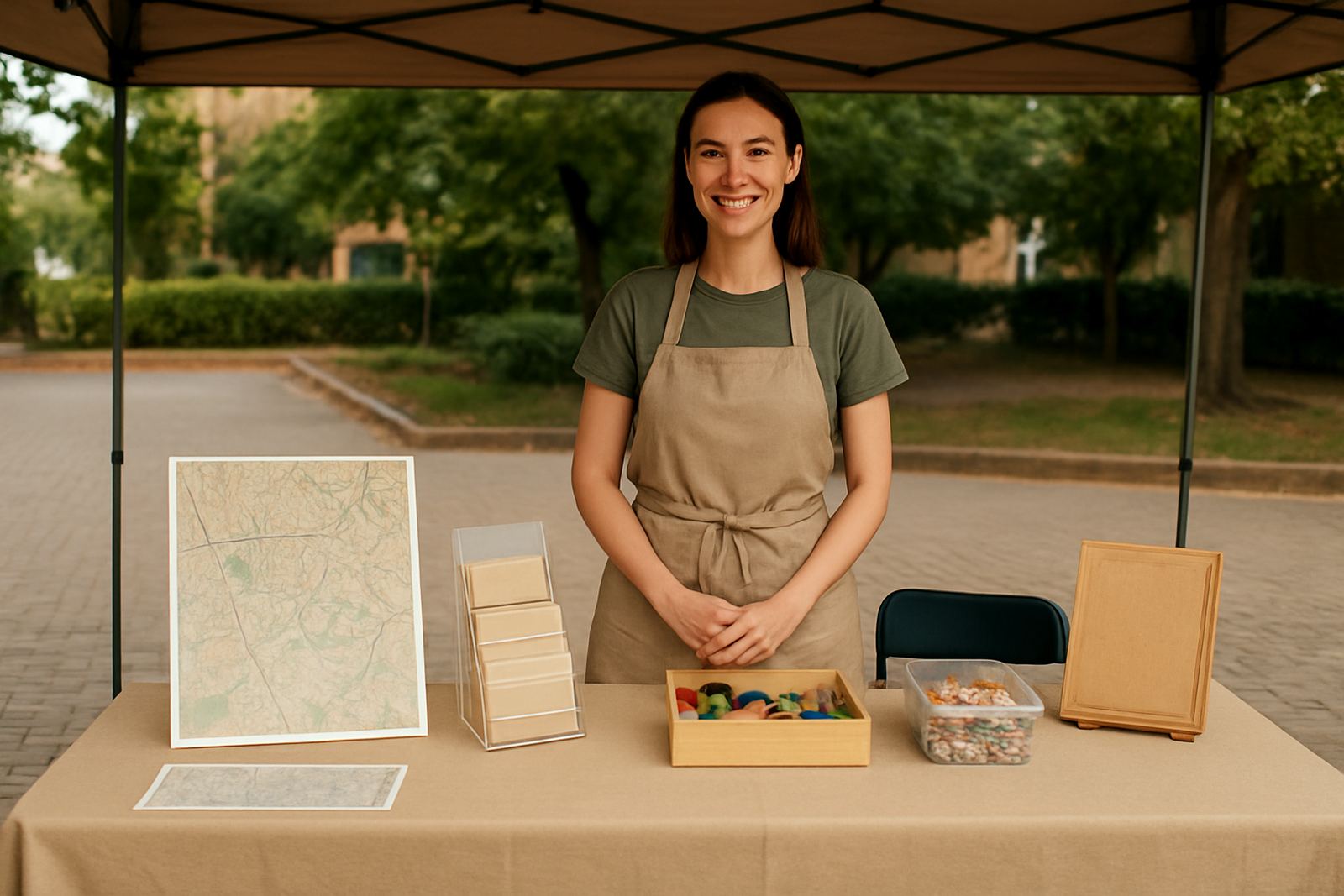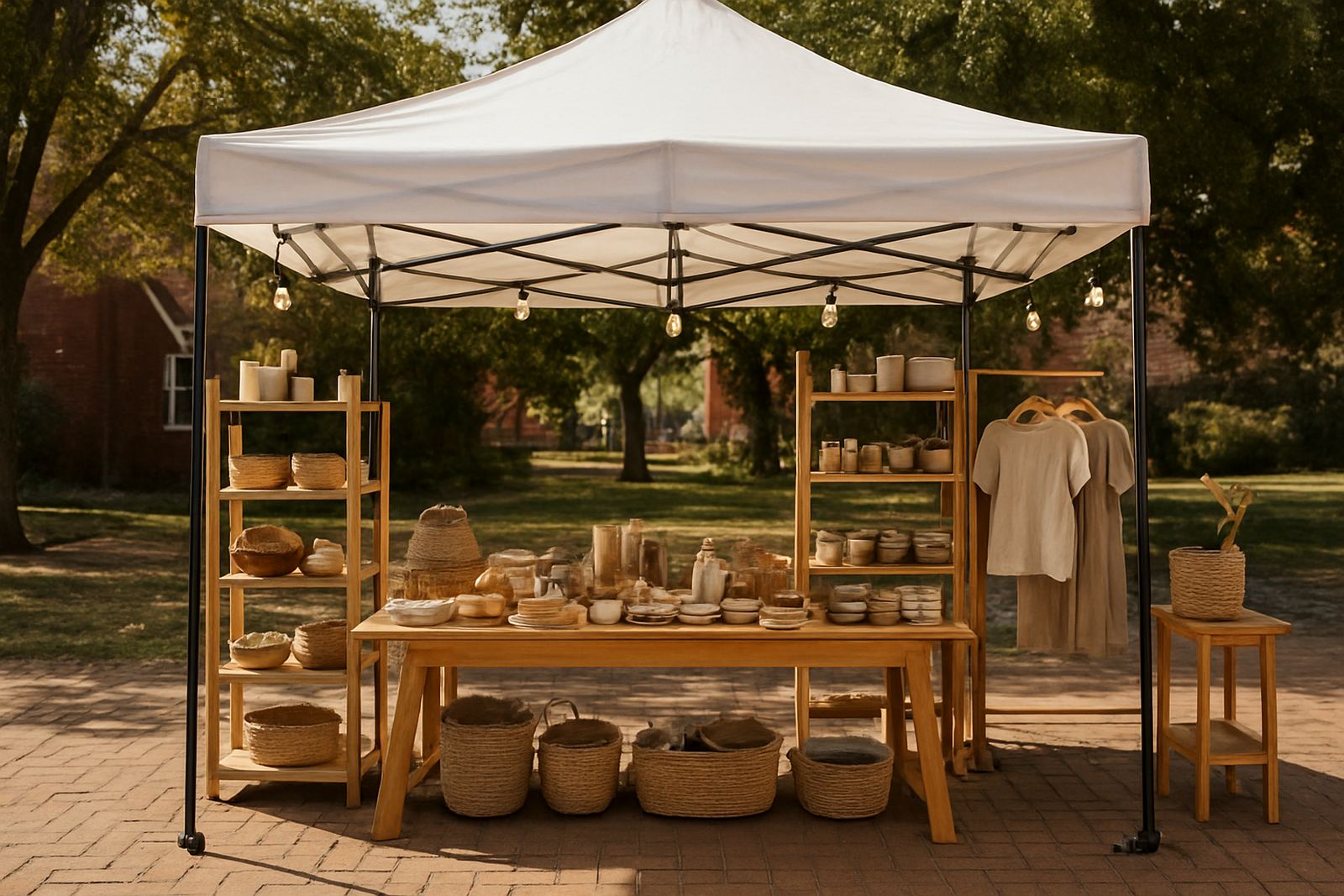
What the Demo Table Kit includes
The Demo Table Kit is a working display setup for live demonstrations, sampling and customer chat. It is built for makers who need a stable surface, clear storage and enough room to keep tools, stock and packaging close at hand without crowding the stall.
Most kits are supplied as a modular set so you can choose the footprint that suits your product and the venue. The standard layout is easy to transport in a bakkie or small trailer, and it packs down for quick setup at Hatfield, Brooklyn or a travelling market stand.
- 1 main demo table with reinforced top
- 1 front display shelf or riser set
- Under-table storage crate or shelf space
- Optional side prep board for cutting, mixing or packing
- Optional branding panel for stall name and pricing
Sizes and options for different market spaces
Markets in Pretoria and beyond do not all offer the same space, so the kit is usually chosen by footprint rather than a single fixed size. A compact table works well for food tastings, soaps, candles and small batch craft items. A wider unit is better for hands-on making, live painting or product assembly.
Typical options include a 1,2 m table for tight indoor spaces, a 1,5 m table for standard weekend stalls, and a 1,8 m table where more demonstration room is needed. Height is usually set between 750 mm and 900 mm depending on whether you want seated prep or standing demos. If you need a lower section for customer interaction, a mixed-height arrangement can be arranged.
- Compact: 1200 x 600 mm for small stalls
- Standard: 1500 x 750 mm for general use
- Large: 1800 x 750 mm for fuller demos and display
- Optional lockable castors for easy movement
- Choice of plain, branded or easy-clean finishes
Where the kit suits best
This setup works well at weekend makers markets, corporate pop-ups, school fairs, indoor retail activations and maker nights where people want to see the process not just the product. It is especially useful when your goods need explaining, such as handmade skincare, baked items, ceramics, prints, jewellery or small batch pantry goods.
It also helps when you want to keep conversation moving. Customers are more likely to stop, ask questions and make a purchase when they can see work happening in front of them. In busy spaces like Menlyn or Centurion, that extra engagement can make a real difference to sales.
- Weekend markets with steady foot traffic
- Night markets and after-work events
- Product launches and sampling tables
- Workshops and live teaching sessions
- High-traffic indoor corridors with limited stall width
Installation, power and gas needs
The kit is designed for practical installation on a level surface. In most cases you only need a clear stall area, access to a standard plug point if your demo includes lighting or small equipment and enough room behind the table for safe movement. For food-related demos, check whether the venue allows gas, open flame or heated equipment before you load in.
If you use electrical items, plan for a safe cable route and keep all leads taped down where permitted. Many Pretoria venues and indoor spaces expect neat cable management and no overloading of sockets. For outdoor or semi-covered markets, you should also plan for extension leads, surge protection and weather cover where needed.
- Level floor or matting recommended
- Standard plug point needed for lights or small appliances
- Gas use only where venue rules allow it
- Keep a fire extinguisher nearby for food or heat demos
- Use covers if the site is exposed to dust, wind or drizzle
Care, cleaning and servicing
Daily care is simple but important. Wipe the table top after each event, especially if you work with flour, oils, dyes or liquids that can stain. Coastal humidity in some areas and indoor venues can affect finishes and electrical add-ons, so it is worth storing the kit in a dry place with the fittings packed together.
Check fasteners, hinges and castors before every market day. If the table is used for food prep, sanitise all contact surfaces before packing down. For painted or laminated finishes, use a soft cloth and mild cleaner rather than harsh chemicals that can lift the coating over time. Small scratches are normal with market use, but damaged edges should be repaired early to keep the setup safe and tidy.
- Wipe down after every use
- Check bolts, wheels and shelf clips monthly
- Store indoors away from damp concrete floors
- Replace worn cable ties, tape and covers as needed
- Book a service check after heavy seasonal use
What to confirm before ordering
Before you order, measure the stall space, ask about loading access and check if the venue has rules for power, gas, fire safety and food handling. If you are joining Hatfield, Lynnwood or a nationwide pop-up, it helps to know the exact footprint you can use and whether the table must fit through a narrow entrance or lift.
You should also decide how the kit will be used on the day. A demo table for packaging and chatting needs different details from one used for mixing, heating or cutting. If you sell food, confirm whether the surface must be stainless steel or if a covered prep top is acceptable. It is better to sort these points out early than to arrive and find the site conditions are wrong.
- Exact stall size in metres
- Indoor or outdoor use
- Need for power points or gas approval
- Whether food handling rules apply
- Transport size and weight for your vehicle
- Need for branded panels, shelves or storage
Key facts
| Product name | Demo Table Kit |
|---|---|
| Use case | Live craft demos, sampling and customer engagement |
| Standard sizes | 1200 x 600 mm, 1500 x 750 mm, 1800 x 750 mm |
| Height range | 750 mm to 900 mm |
| Materials | Powder-coated frame with easy-clean worktop |
| Power and gas | Optional power for lights or small equipment, gas only where venue rules allow |