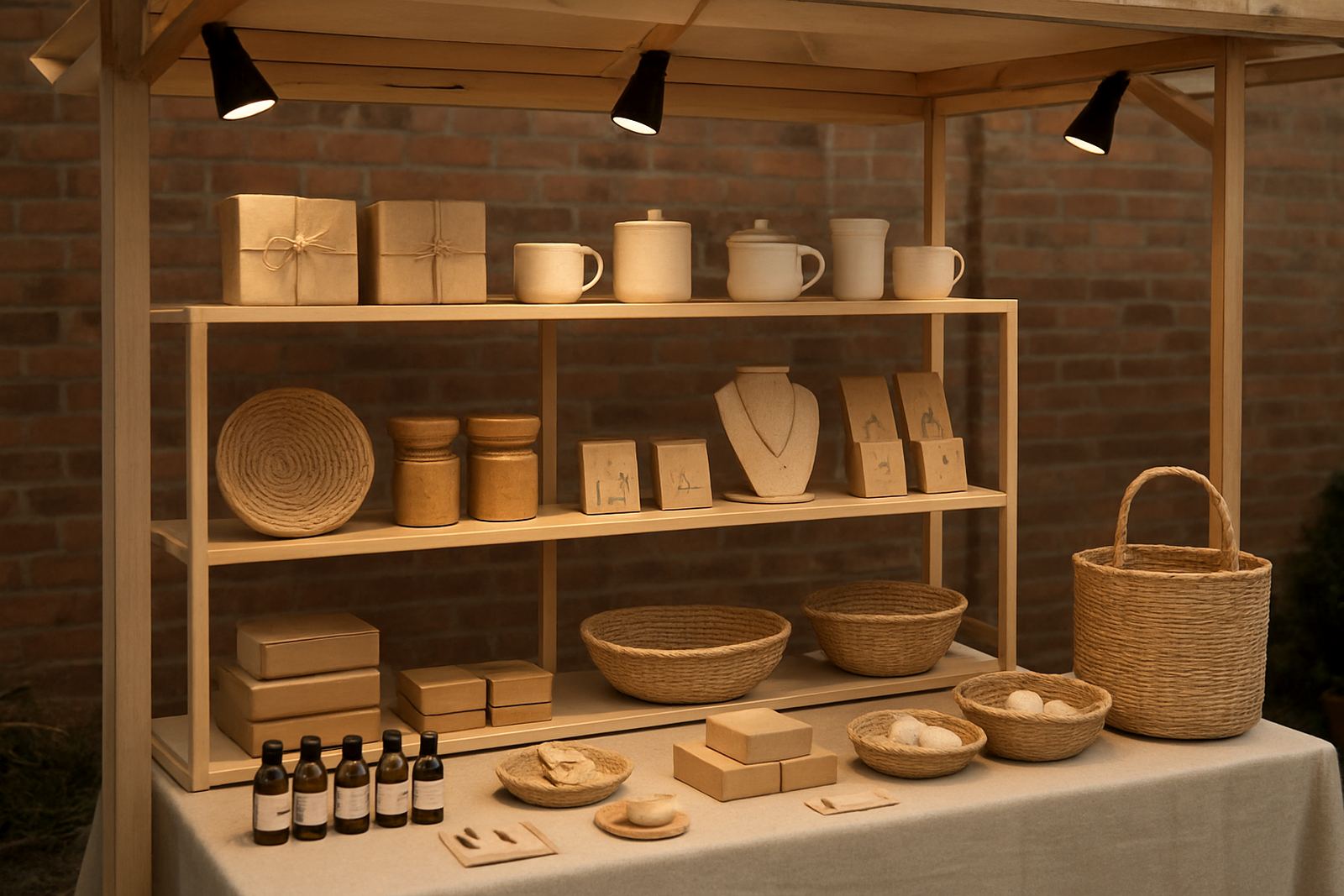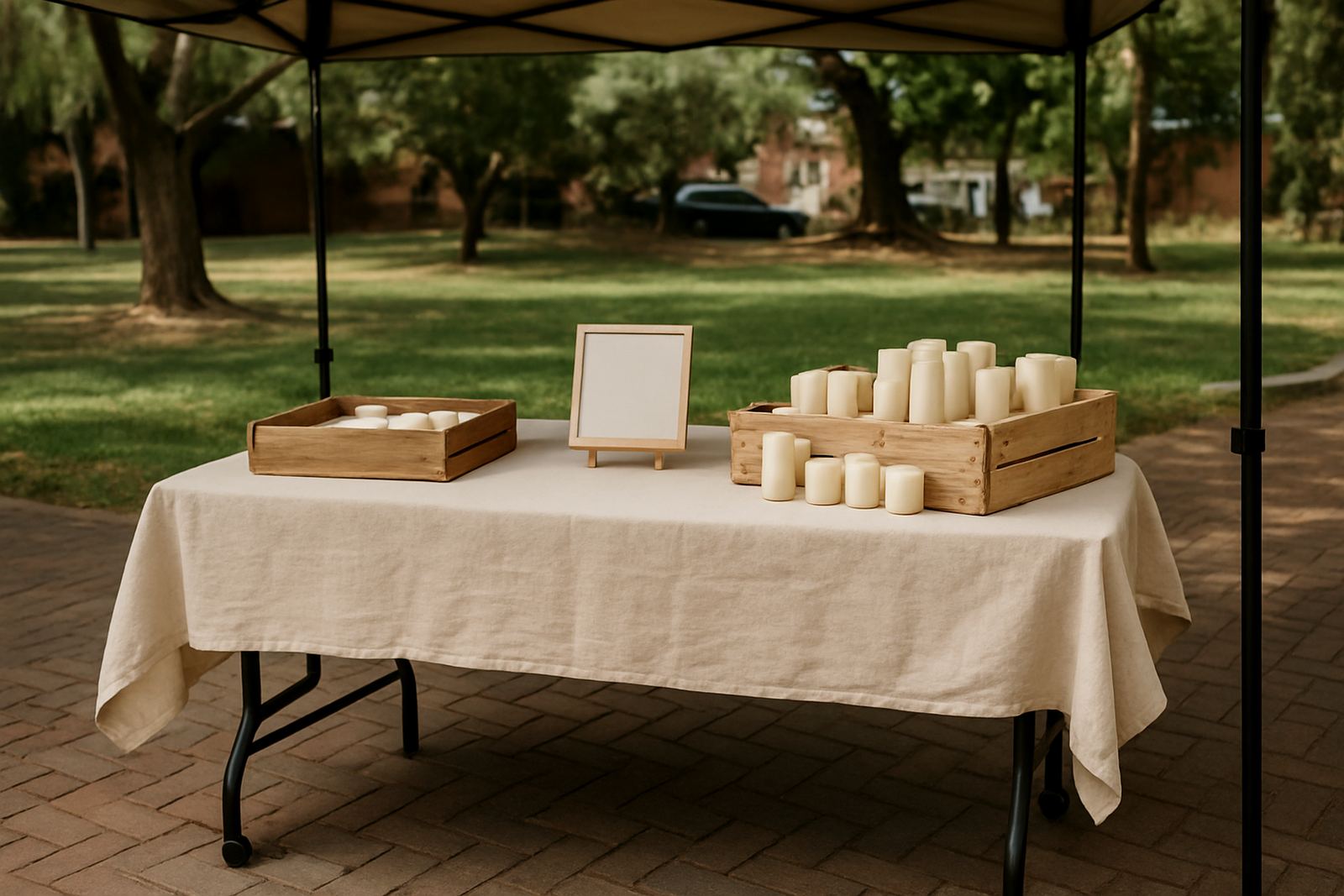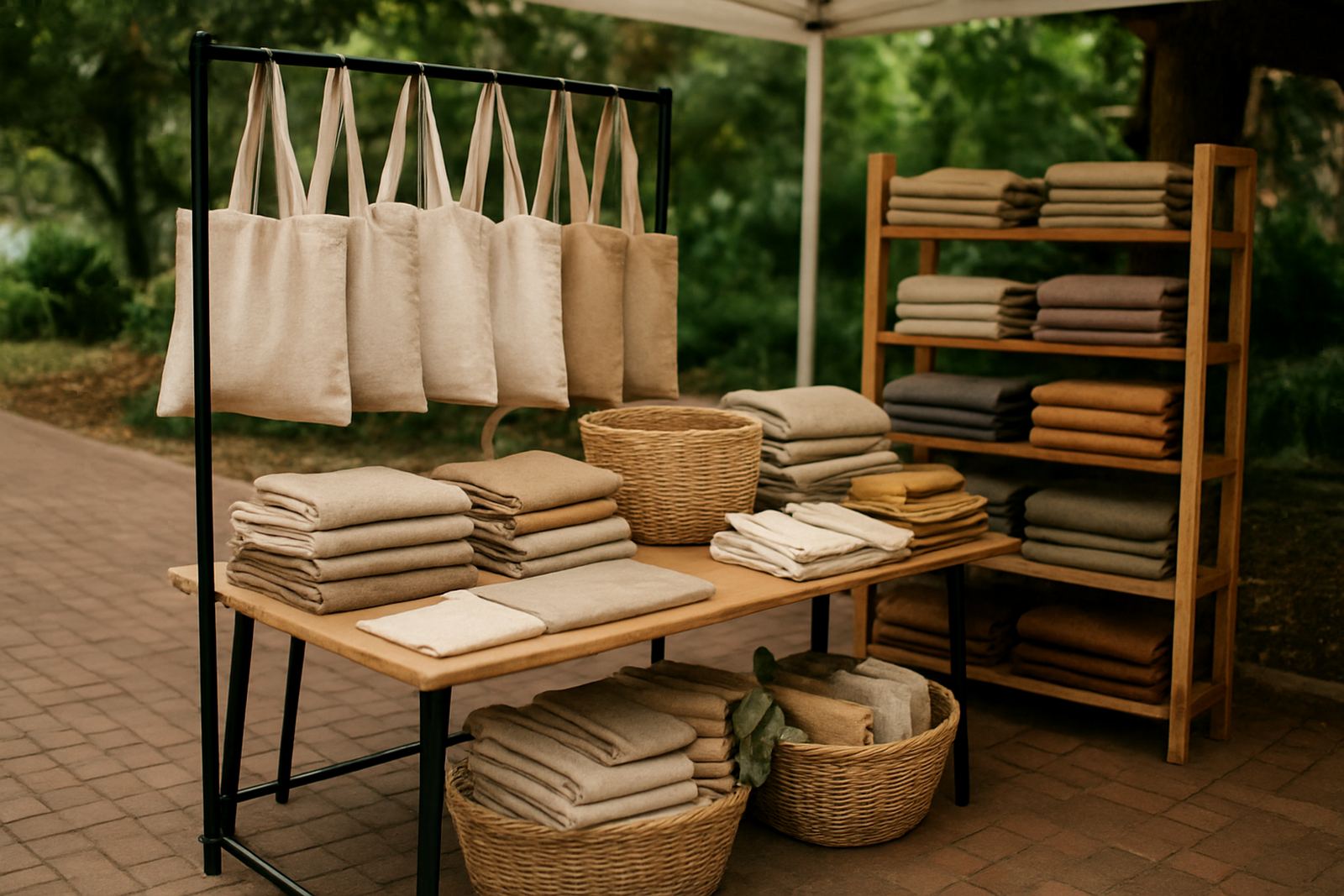
What the Eco Display Kit includes
The kit brings together the main pieces most makers need for a compact stall display, using reusable parts instead of single-use packaging or throwaway fittings. It is suited to traders who want to show stock clearly, keep breakages down and pack out fast when the market closes.
Each kit is configured from standard components so you can start small and add pieces as your range grows. The finish is neutral enough for handmade goods, gourmet food, soaps, candles, printed items and craft products. It is especially practical for Hatfield markets, mall pop-ups and maker nights where floor space is limited and organisers expect tidy, consistent stalls.
- Flat-pack display shelves for table or floor use
- Fold-down risers for mixed-height product presentation
- Reusable signage holders and price-card clips
- Crate-style storage boxes for stock and back-up packaging
- Lightweight table skirting panels or hanging front panels
The kit is not meant to replace a full custom stall build. It is a practical middle ground for traders who need something presentable and hard-wearing, but still easy to move in a hatchback or bakkie.
Sizes, layout options and load limits
The standard Eco Display Kit is designed around a 1.8 m market table or a 2 m x 2 m pop-up footprint. The components can be arranged to suit a narrow indoor aisle, a corner stand or a longer community market stall. If you trade with heavier goods, the layout can be changed to keep weight low on the bottom shelf and lighter stock at eye level.
Typical sizes and options are below. These are the common combinations requested for Pretoria weekend markets and nationwide event work, but they can be mixed to suit your stock profile.
- Compact kit: 1 shelf tier, 2 risers, 1 sign holder, suited to 1.2 m tables
- Standard kit: 2 shelf tiers, 4 risers, 2 sign holders, suited to 1.8 m tables
- Extended kit: 3 shelf tiers, 6 risers, 3 sign holders, suited to 2 m x 2 m bays
- Load rating: up to 25 kg per shelf tier when weight is spread evenly
- Pack size: fits into 2 flat carry bags plus 1 crate set for stock and packaging
For food stalls, keep heavier jars, tins and bottles on the lower shelf and use the top level for lighter produce, tasting portions or packaged items. For craft sellers, the risers help create height without blocking sight lines across the stall, which is important in busy market rows.
Where it works best on the market circuit
This kit suits traders who move between Hatfield, Brooklyn, Lynnwood, Menlyn and Centurion, as well as local maker nights and pop-up events in other provinces. It is a good fit for venues with short bump-in windows, shared loading areas and limited storage once the trading day starts.
It is also useful where lower-waste trading matters. Reusable display parts cut down on cardboard replacement, plastic table cover waste and repeated one-off signage printing. That matters for makers who do many weekend events and need a display that holds its shape through regular use.
- Handmade jewellery, prints, stationery and small gifts
- Soap, skincare, candles and home fragrance
- Dried foods, condiments, baked goods and preserves
- Seasonal gifts and themed market specials
- Workshop sales tables and demo stations
In outdoor winter markets around Pretoria, the kit can be weighted with stock crates or sand-filled base bags to reduce movement in wind. For coastal venues, the wipe-clean surfaces help with humidity and morning condensation, which can be hard on cardboard and untreated wood.
Power, gas and stall setup requirements
The Eco Display Kit itself does not need power or gas, so it is simple to use at dry goods stalls, craft stalls and most maker night counters. If you trade with warming trays, coffee equipment or gas burners, those appliances sit outside the kit and should follow the organiser's safety rules. Always check the venue requirements before setting up any heat source.
Installation is straightforward. Most sellers can assemble the kit in 10 to 20 minutes with no special tools. The shelves slot into place and the signage holders clamp onto the front edge or the side panels. For uneven outdoor ground, use the adjustable feet or pack under one side so products sit level and do not slide.
- No mains power required for the display components
- No gas connection required for the display components
- Assembly: 1 person for compact and standard kits, 2 people for extended kits
- Recommended clearance: allow at least 600 mm behind the stall for stock access
- Best practice: keep cables, extension leads and batteries away from product traffic paths
At indoor venues, make sure the display does not block fire exits, EFT stations or aisle flow. Many market organisers in Pretoria ask for clear front access and no loose trip hazards, so a tidy cable route and low-profile setup helps keep things moving.
Care, cleaning and servicing between market days
The kit is built for repeat use, so basic care goes a long way. Wipe dust and food residue off after every event, especially after humid or dusty outdoor trading days. If you sell food or cosmetics, separate clean display parts from stock and packaging so everything stays presentable for the next market.
For best results, store the parts flat, out of direct sun and away from damp concrete floors. If the kit is kept in a garage or storage room, use a sheet or crate under it to prevent moisture transfer. Coastal humidity can affect untreated materials, so dry the pieces fully before packing them away.
- Use a soft cloth and mild soap water for routine cleaning
- Avoid harsh abrasives that mark the finish
- Check fasteners and clips every few events for wear
- Replace split elastic, bent clips or loose feet before the next market
- Keep food-contact items separate from display-only parts
If a maker trades weekly, it is worth setting a simple service routine every 6 to 8 markets. Check for wobble, loose joints and scuffing, then replace the small parts before they fail during a busy Saturday rush.
What to confirm before you order
Before placing an order, confirm how much stock you carry, whether your stall is indoor or outdoor, and what type of products you sell. The right layout depends on shelf depth, total weight, storage space and whether you need room for tasting samples, packaging or a card machine. If you are still testing markets, a standard kit is usually the safest start.
It also helps to check the organiser's rules on stall size, table cover colours, flame use and signage height. Some venues prefer low signage for sight lines, while others allow taller branding pieces at maker nights. If your goods include food, ask about food handling rules, hand sanitising and covered display requirements.
- Stall footprint: 1.2 m, 1.8 m or 2 m x 2 m
- Stock weight and shelf load per tier
- Indoor or outdoor use, and exposure to wind or rain
- Need for price holders, signage and packaging storage
- Food safety needs if you sell edible products
For makers who trade across Gauteng and beyond, the value is in having one kit that can move from a Sunday market to a maker night without redoing the whole setup. That saves time, cuts waste and keeps the stall looking organised even when weather or tight pack-up times get in the way.
Key facts
| Product type | Reusable modular market display kit |
|---|---|
| Standard footprint | 1.8 m table or 2 m x 2 m pop-up layout |
| Shelf load rating | Up to 25 kg per tier with even weight distribution |
| Assembly time | 10 to 20 minutes |
| Power requirement | None for display components |
| Gas requirement | None for display components |
| Pack method | Flat-pack carry bags and storage crate |
| Recommended use | Weekend markets, maker nights, pop-ups and workshop sales tables |