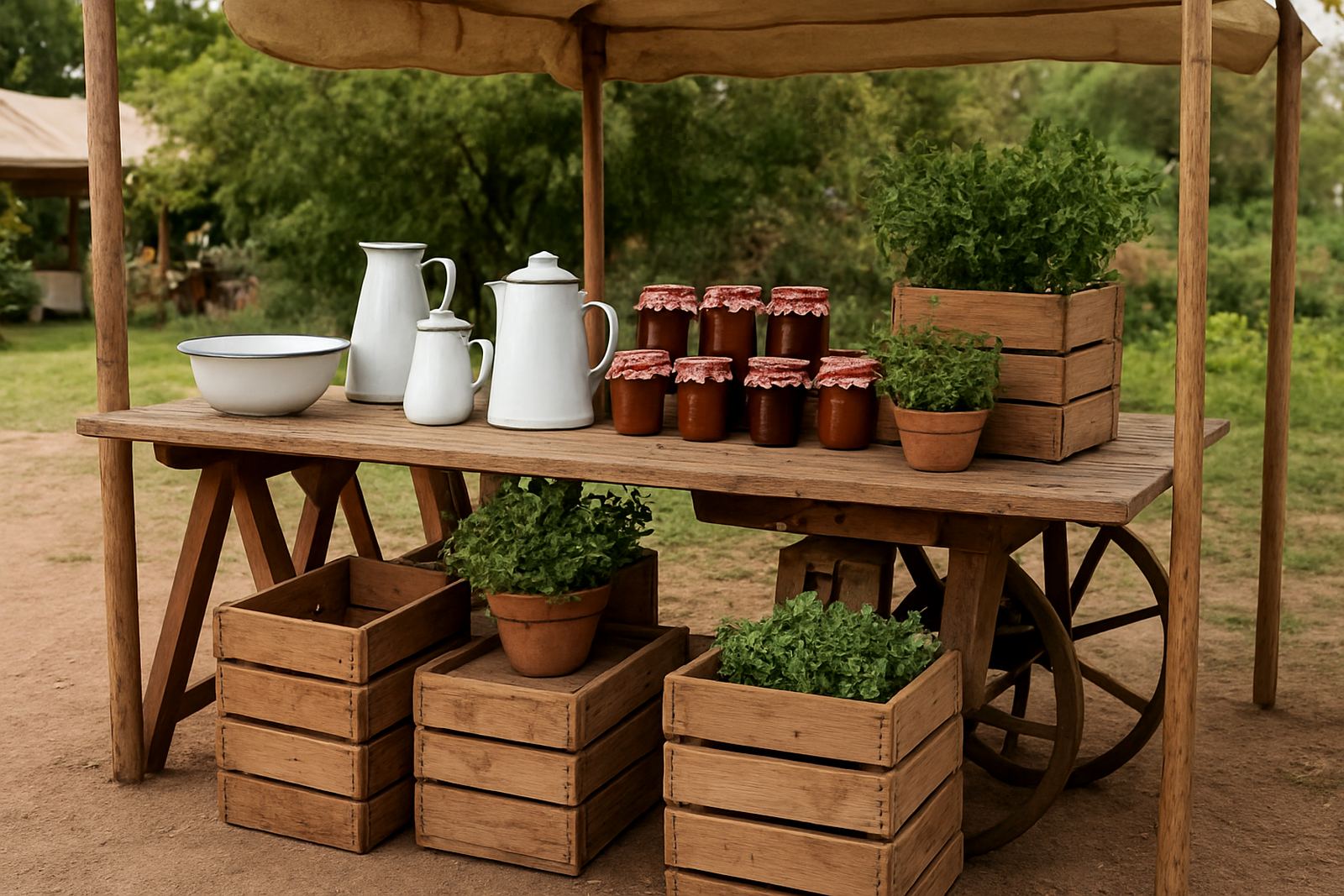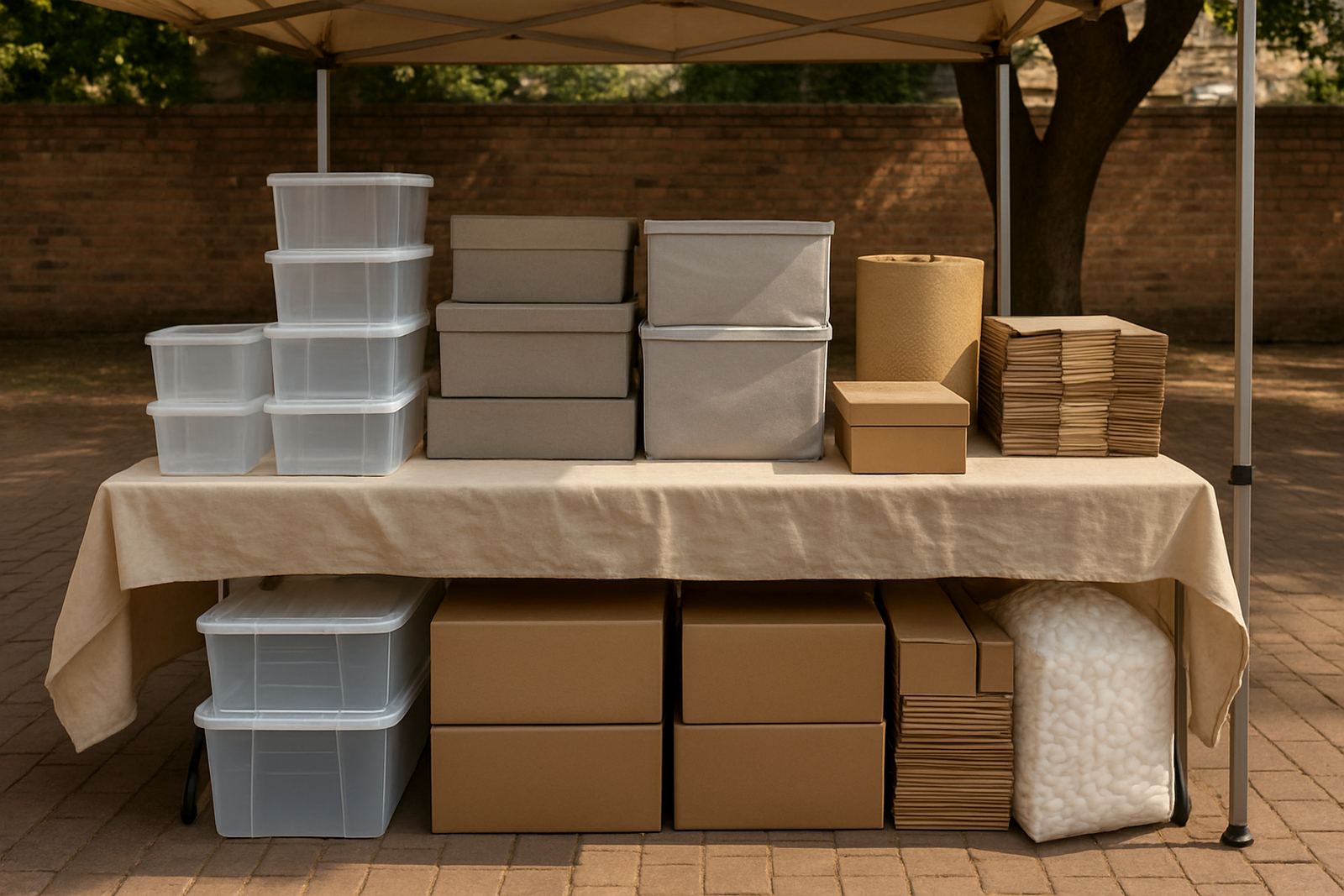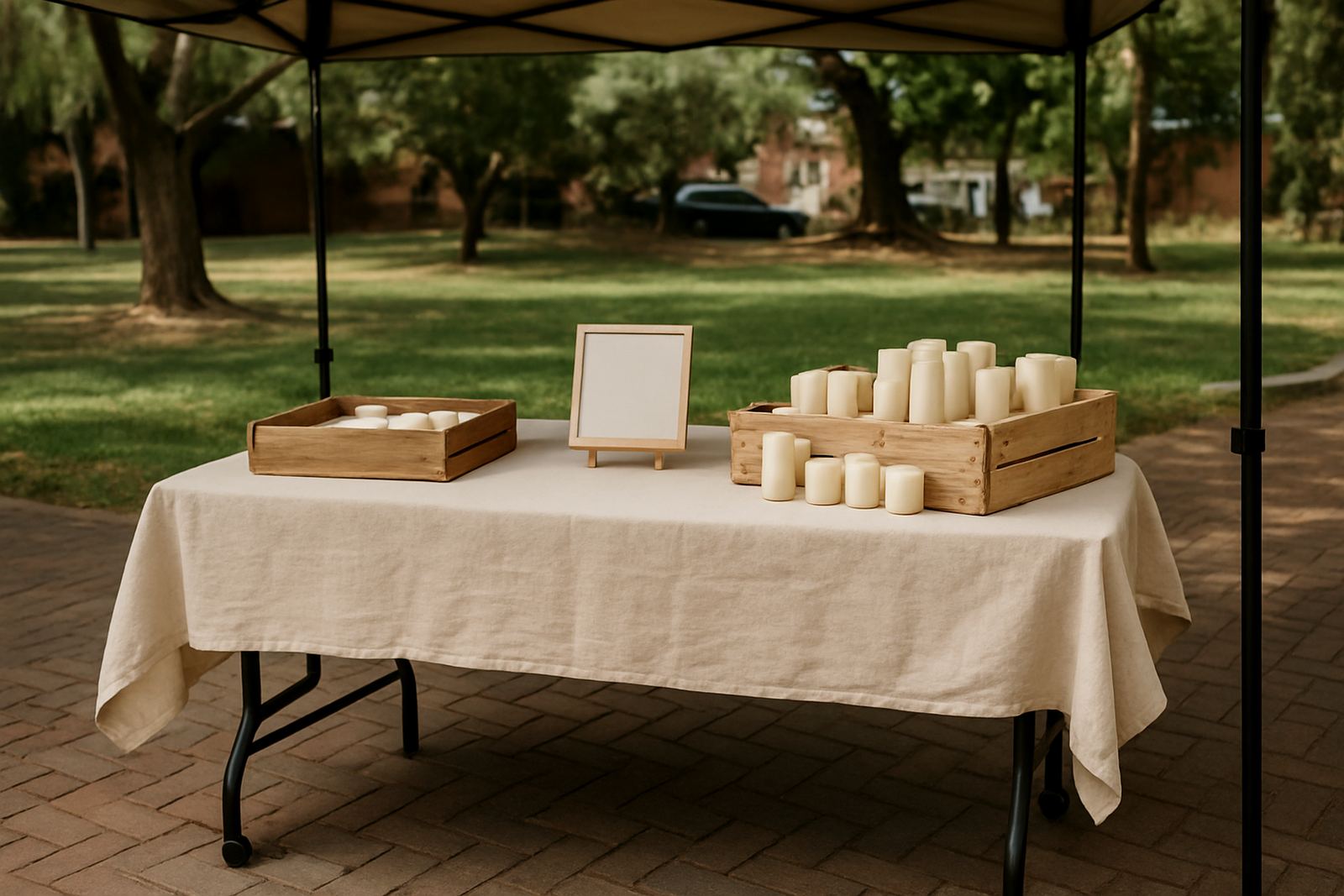
What The Starter Stall Kit Covers
The Starter Stall Kit is a practical entry setup for traders who are moving from home production into their first live market. It brings together the basic pieces needed to present stock clearly, protect product during trading, and keep your stall looking tidy from setup to pack-down. For makers selling crafts, packaged food, candles, stationery, small home goods, or gift items, the kit gives you a good starting point without overbuying gear you may not use every weekend.
It is aimed at one-table to two-table stalls, which suits Hatfield markets, Brooklyn Markets, Lynnwood Markets, Menlyn Markets, Centurion Markets and most maker nights around Gauteng. The kit is also useful for inland and coastal events where you need your display to be light enough to carry, but stable enough to handle wind, foot traffic, and the odd rainy setup. It keeps your first market simple and helps you test what sells before you add more specialist fittings.
Standard Sizes And Options
The base kit is built around common market furniture sizes so it can fit in small bakkies, hatchbacks, or trailer loads. The core pieces are usually planned for a 1.8 m table or a pair of 900 mm folding tables, with display elements sized to fit neatly behind or beside the trading surface. Where height is limited, such as indoor halls or community venues, the kit can be reduced to a low-profile layout. For outdoor setups, the same kit can be built slightly taller for visibility from the walkway.
- Table footprint: 1.8 m x 0.75 m standard, or two 900 mm tables
- Display risers: mixed heights from 150 mm to 450 mm
- Sign frame or menu board: A2 or A3 format
- Storage crates or tubs: 30 L to 60 L capacity
- Optional add-ons: compact canopy weights, hook strips, sample trays, cash tray, and bag holders
If you sell food items, choose smooth wipe-clean surfaces and lidded containers. If you sell fragile pieces, ask for deeper trays and lower risers so stock can stay stable on uneven floors. The kit can also be adapted for a maker night counter with a smaller front profile and more focus on brand signage, packaging, and payment space.
Where It Suits Best
This kit suits first-time traders who need a clean, organised setup for weekend markets, school fairs, church bazaars, maker nights, and local pop-ups. It works well for handmade soaps, ceramics, prints, home fragrance, baked goods, preserves, fresh produce in sealed packs, and small gift items. Traders who move between Pretoria and other provinces will appreciate that the kit packs down into a manageable load and does not rely on heavy fittings.
In Pretoria, many venues have limited parking and a short unloading window, so a starter kit needs to be quick to carry in and quick to reset if the venue asks for a different position. In coastal towns, moisture and salt air can affect unsealed timber and metal fittings, so the kit is best ordered with powder-coated metal or sealed plywood where possible. If your trading calendar includes summer outdoor events, the layout should also allow for shade and secure anchoring, because a neat display is no use if the wind shifts half your stock.
Installation, Power And Gas Needs
Most of the Starter Stall Kit needs no permanent installation. The goal is simple assembly on the day, using folding legs, clip-on display pieces, and stackable storage. One person can usually set it up, but two people make it easier when a venue has a narrow entrance or a bumpy loading area. Allow 20 to 40 minutes for first-time setup, then less once you know where each item goes.
- No fixed installation is required for basic use
- Power is usually not needed unless you add lighting, a heat lamp, or a small payment device charger
- If you use a light, keep it within venue limits and use safe cable routing
- Gas is not part of the standard kit, but food traders can add approved gas equipment separately if the venue allows it
- Always check with the market organiser on sockets, amperage, and generator rules before trading day
Keep the kit workable without electricity. Battery lights, printed price cards, and manual payment options are worth having as backups. A trader who can still sell without a plug point is usually in a stronger position than one relying on a single plug point, and it saves a lot of stress on busy weekends.
Care, Cleaning And Servicing
Keep the kit clean and dry after each market. Wipe down tables, risers, and trays with a damp cloth, then dry them before packing away. Cardboard inserts and paper-based display pieces should be replaced when they start to soften or curl. If you trade food, sanitise all contact surfaces before and after use, and store separate cleaning cloths for food and non-food items.
Check bolts, clips, and hinges every few outings, especially if the kit is carried in the back of a bakkie or moved over gravel. Coastal humidity can loosen lower-grade fixings over time, so it helps to inspect metal parts for rust and treat any exposed edges early. Timber pieces may need resealing now and again, particularly if they are used outdoors in summer rain or strong sun. A bit of routine care goes a long way and avoids last-minute repairs before a busy market weekend.
What To Check Before You Order
Before ordering, match the kit to your stock type, your vehicle space, and the markets you plan to attend. A starter setup should not look empty, but it also should not be so large that you need three trips from the car. Measure your folded tables, storage bins, and vehicle boot height before deciding on the final configuration.
- Confirm your product type: food, craft, beauty, stationery, or mixed goods
- Check available stall size at your regular venues
- Decide whether you need indoor-only or outdoor-capable pieces
- Ask about branding space for signs, price cards, and menu boards
- Check if you need extra weather protection for wind, heat, or coastal conditions
- Confirm transport dimensions so the kit fits your vehicle without stacking too high
It also helps to think about your first three markets, not only your first one. If you are testing new products at Hatfield one weekend and a pop-up in another city the next, the kit should stay flexible enough to rework quickly. Start simple, then add display pieces as your trade grows and you learn what customers pick up first.
Key facts
| Product type | Starter market display kit for new traders |
|---|---|
| Typical table size | 1.8 m x 0.75 m or two 900 mm folding tables |
| Display heights | 150 mm to 450 mm risers |
| Pack-down size | Designed for hatchback, bakkie, or trailer transport |
| Power need | None for standard setup; optional for lighting or charging |
| Best use | Weekend markets, maker nights, pop-ups, and first-time stalls |