
What the Minimalist Stall Kit is
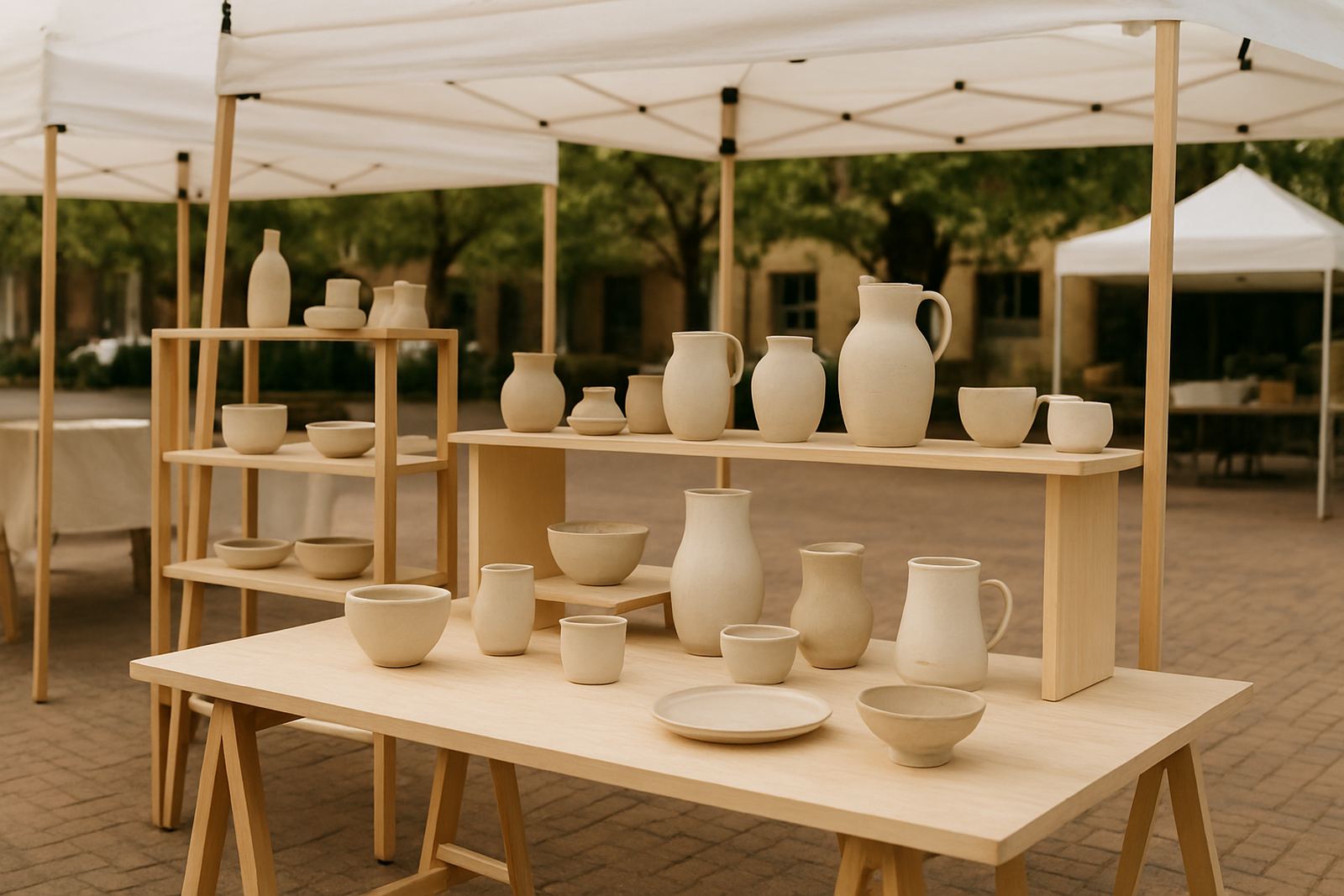
The Minimalist Stall Kit is a pared-back stall package for makers who want their products to carry the look of the stand. It uses straight lines, light-coloured surfaces and simple product spacing so the eye goes straight to the goods, not the fittings. This suits markets where customers are browsing at pace, asking questions and moving from stall to stall with a coffee in hand.
It is a good fit for sellers who already have a clear product identity and do not need heavy display clutter. Think small batch candles, jewellery, bath and body items, art prints, dry gourmet foods, and carefully boxed gifts. The finish is neat enough for Hatfield weekend markets, but also holds up at evening maker nights in Pretoria, Johannesburg, Durban and coastal towns where humidity can affect packaging and display materials.
The kit is built for repeat use and easy transport. Panels, shelves and sign points are sized to pack into a vehicle with limited load space, and the layout can be adjusted for short or longer tables depending on the venue rules.
Sizes and layout options for different stall footprints
Most makers use this kit in a 2 m x 2 m space, a 3 m frontage, or a full 3 m x 3 m corner stall. The smallest format is useful for tight indoor pop-ups or foyer markets where walkways are narrow and organisers want clean sight lines. The larger setup suits weekend markets with more stock on hand and room for customer movement.
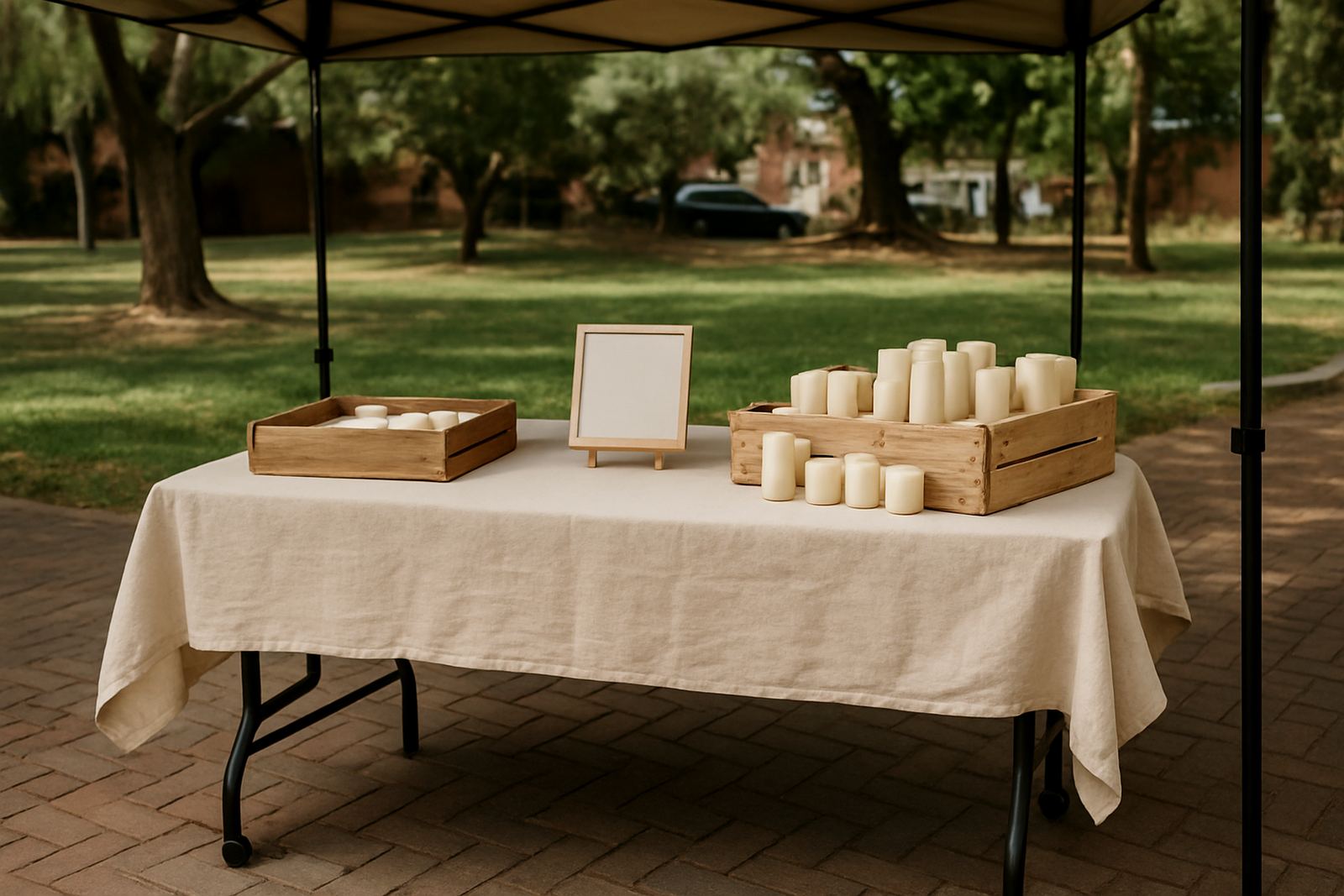
Available layout options usually include a table-front display, a back-panel display, or a mixed layout with low shelves and one upright feature board. The idea is to keep sight lines open and stock easy to pick up. A low front table works well for packaged goods, while an upright board is better for hanging items, cards, or light framed pieces.
- 2 m frontage for compact events and first-time sellers
- 3 m frontage for mixed product ranges and better stock rotation
- Corner option for high-footfall areas and dual-side browsing
- Back-panel add-on for signage, hooks, or small shelf units
Where this stall style works best
This kit suits venues where the product range is visually tidy and the setup must be quick. It works especially well at Hatfield, Brooklyn and Lynnwood markets, maker nights, school fundraisers, gallery-style pop-ups and food-focused events with controlled serving areas. If the market has shared power points, limited storage, or strict bump-in times, the simplified layout helps you set up without dragging around too much gear.
For food sellers, the clean layout keeps allergen labels, price tags and ingredient notes visible. For non-food makers, it gives room for testers, sample trays and packaging without crowding the counter. In coastal regions, the minimalist format also helps with airflow, so paper stock and labels are less likely to curl during damp weather. In summer rain seasons, less clutter means less wiping down between customer chats.
It is not the right choice for a stall that needs heavy machinery, open flames or deep equipment runs. If your work needs a full prep station or a live demonstration area, a larger custom trade setup is usually more practical.
Power, lighting and food-safe setup notes
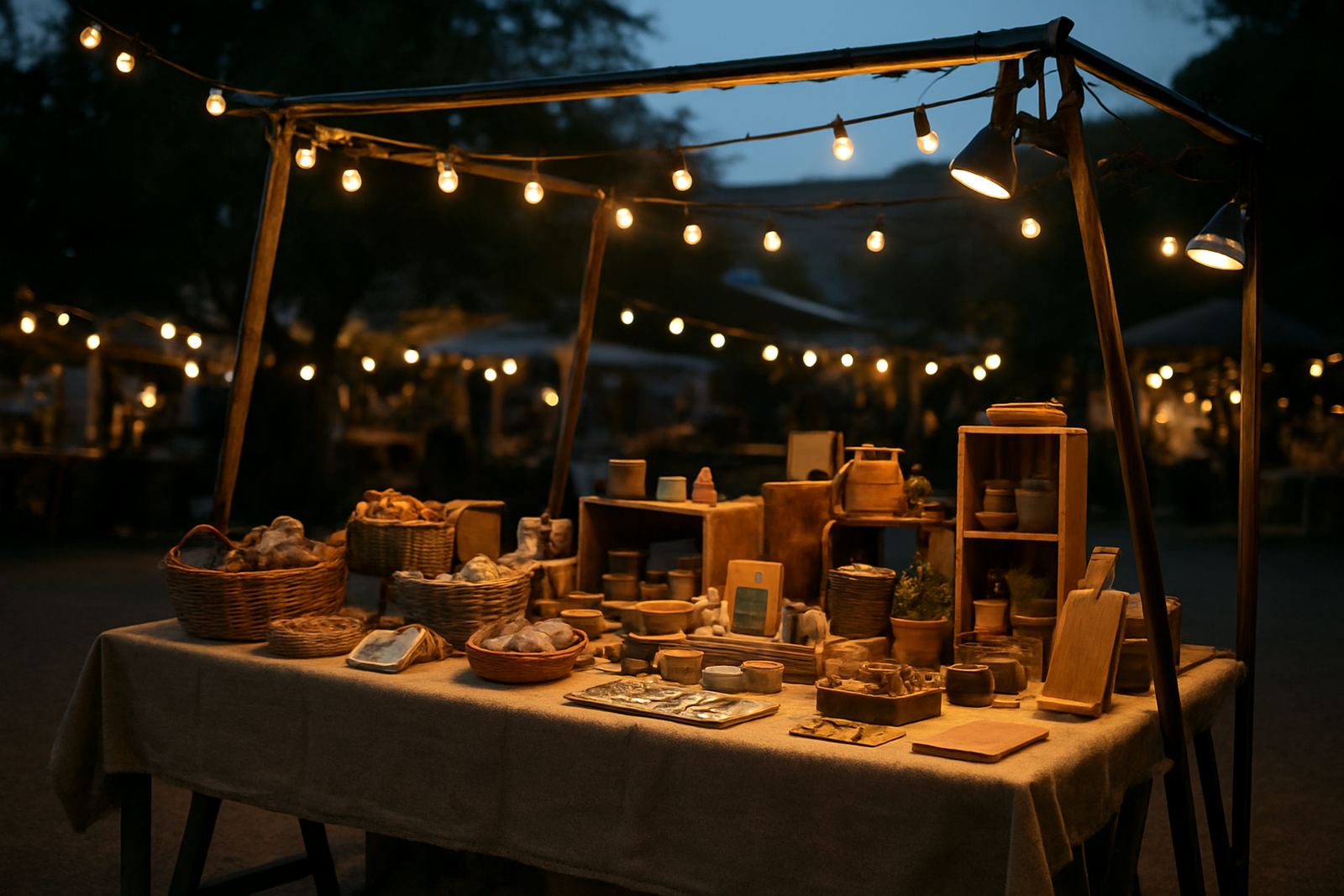
The Minimalist Stall Kit is mostly low-tech, which makes it practical for markets where shared supply points can interrupt service. Most setups only need a small LED light run, a phone charger and, for food makers, a compact warming or cooling solution if allowed by the venue. Any electrical add-ons must match the event’s power rules and cable route requirements.
If you are selling food, check whether the market allows gas, battery or mains-operated equipment. Some venues allow only sealed foods and no flame at all. Others permit a small gas appliance with prior approval, but only if the cylinder is secured and placed outside customer reach. Always confirm fire extinguisher requirements, handwashing access and municipal food trading rules before bump-in day.
- Low power use for LED lighting and small accessory charging
- No fixed electrical installation required for basic display use
- Optional gas or heat equipment only where venue rules allow it
- Use cable covers and taped-down leads in public walkways
Care, cleaning and routine servicing
The surfaces are easy to keep tidy if you wipe them after each market. A soft cloth, mild soap and clean water are usually enough for the display boards and shelf units. Avoid harsh cleaners, abrasive pads and soaking joints or edges, especially if the kit has laminated finishes or treated timber parts. If you work food markets, keep a separate cloth set for product areas and wipe contact points before and after service.
After a wet event, dry every component fully before packing. This matters in humid coastal areas and on rainy winter days, because trapped moisture can cause swelling, rust on fittings or marks on printed signs. Check fasteners, hinges and any detachable brackets every few uses. If a shelf feels loose or a panel starts to wobble, sort it before the next event rather than waiting for the market morning rush.
Routine servicing is simple. Replace worn labels, re-tape chipped edges, and keep spare clips, cable ties and small tools in the transport box. That way the stall keeps its clean look without much downtime.
What to double-check before ordering this kit
Before ordering, measure your pitch and check the market organiser’s layout rules. You need clear numbers for frontage, depth and any height limit, plus whether the stall sits on grass, paving or inside a hall. If your vehicle space is tight, ask for the packed size and weight so you know what you can move on your own and what needs two people.
It also helps to list what you sell, because the kit can be adjusted for hanging items, upright packaging, tasting cups or boxed goods. For food sellers, confirm whether you need space for a warming unit, chilled display, or only sealed stock. If you need branded sign space, ask where the logo panel sits and whether you want price cards built into the front display.
- Stall footprint and height limits at the venue
- Type of products, including any food handling needs
- Power access, lighting needs and backup options
- Transport vehicle space and the number of people for setup
- Storage needs between events and whether the kit will live in a garage or storeroom
A clear brief at the start saves time later and helps the stall feel like part of the product, not an afterthought.
Key facts
| Standard frontage | 2 m or 3 m options |
|---|---|
| Depth | 600 mm to 900 mm, depending on your stall layout |
| Height | Up to 2.1 m display height, venue dependent |
| Materials | Lightweight coated boards, timber frame, metal fittings |
| Power need | Low draw LED lighting, optional small accessory charging |
| Typical use | Handmade goods, packaged food, gifts, prints and accessories |