What the Maker Storage Kit is for
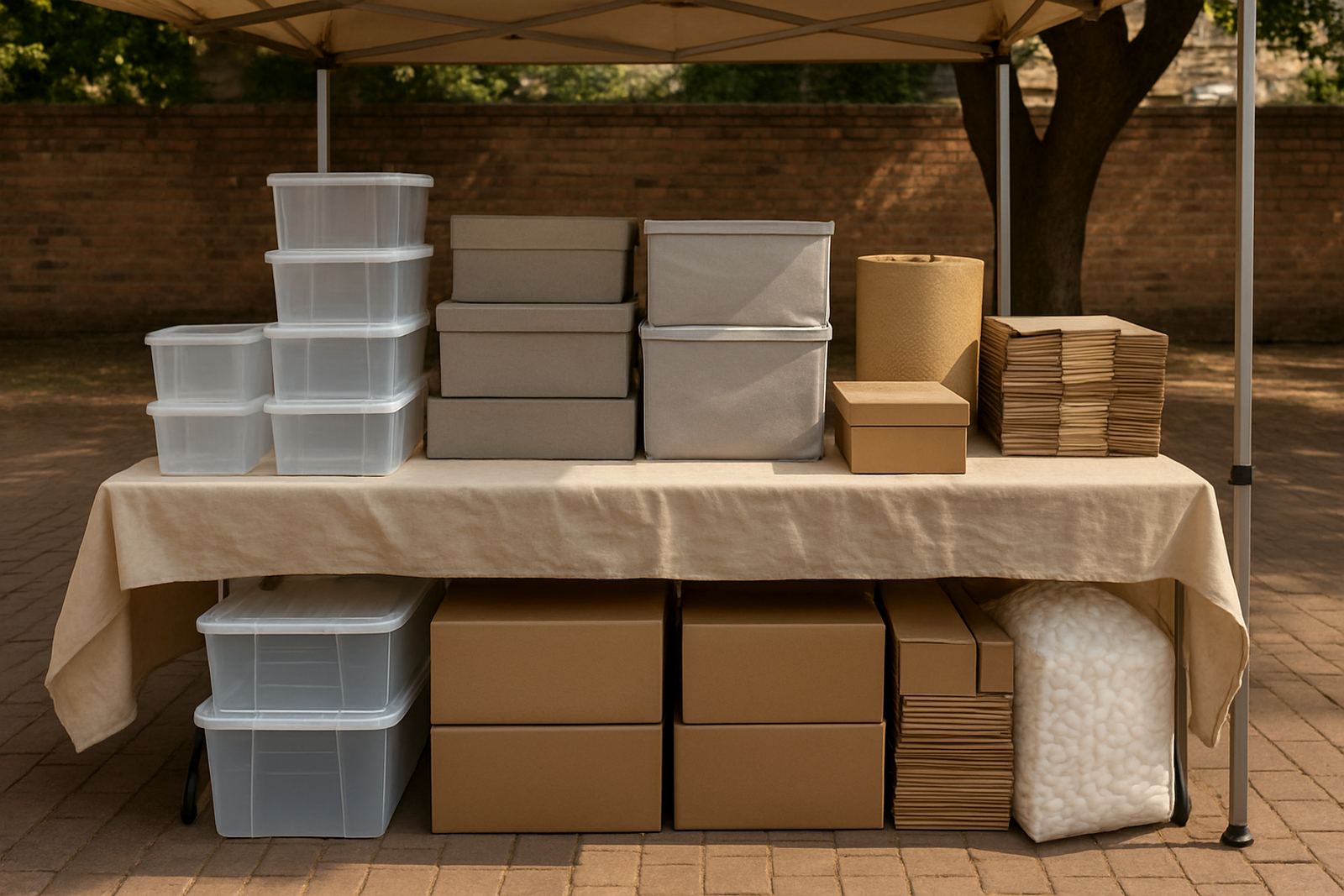
The Maker Storage Kit is a practical storage setup for market traders who need more than a table and a chair. It is used under the selling surface or behind the stall to hold wrapped stock, carrier bags, till float, tablecloths, cleaning cloths and spare packaging without cluttering the display area.
For weekend markets and maker nights, the aim is simple: keep your front-of-stall neat and your backup stock within reach. That matters when you are trading in a busy flow of customers and need to restock quickly without leaving the stand unattended.
Sizes and storage options
Storage kits are usually chosen by the width of the stall and how much stock moves during the day. A small setup suits light craft goods, while food traders and high-volume sellers often need deeper crates or a two-level arrangement. Most kits are built around standard market table sizes so they fit under trestles, branded counters or fold-up tables.
- Compact kit: for 1.2 m stall widths, light stock and small packaging items
- Standard kit: for 1.8 m stall widths with mixed stock and bags
- Extended kit: for wider stalls, back-of-stall storage and refill crates
- Stackable crates: useful where stock changes through the day
- Weather cover: handy for open-air markets and coastal humidity
Ask for the depth you need as well. A shallow kit keeps things easy to reach, while a deeper unit works better if you carry bulk refills or sealed food containers.
Where it works best on market day
This kit suits almost any stall that needs organised back-up stock. It is especially useful for handmade products, gift items, soap, candles, pantry goods, baked items and small clothing ranges. Makers who trade at Hatfield Markets, Menlyn Markets, Centurion Markets or a travelling pop-up stand often need storage that packs flat and sets up fast.
It also helps when you are sharing space at maker nights or indoor community events where the front display has to stay tidy. If you trade in a venue with narrow aisles, keeping stock under the table can make the stall safer and easier for customers to browse.
- Weekend markets with high foot traffic
- Indoor pop-ups and maker nights
- Family-focused events where bags and stock must stay out of the way
- Food stalls that need dry storage for packaging and extras
- Small business displays with limited stall space
Set-up, power and gas considerations
The storage kit itself does not usually need power or gas, but it must work around the rest of your stall equipment. If you run lights, a cash point, a label printer or a warming appliance, plan where the kit sits so cables and hoses do not run across the storage area. Keep electrical leads off the floor where possible and use a proper cable cover if the venue allows it.
For food stalls, keep gas cylinders and heat sources separate from stock storage. Do not place soft packaging, paper bags or cleaning products next to burners or hot equipment. Where a market has its own safety rules, follow those first and leave a clear walkway behind the stall for access and inspections.
If you are trading outdoors in Pretoria heat or in a coastal site with damp air, allow for ventilation. Closed containers should not trap moisture, especially if you carry paper goods, fabric items or pre-packed snacks.
Care, cleaning and regular servicing
Good storage lasts longer when it is cleaned after each event. Wipe away dust, food crumbs and spills before packing away. If you trade with food, wash down any food-safe surfaces and dry them fully before loading up the next day. In damp weather, open the kit at home and let it air out before storing it in a garage or storeroom.
Check fasteners, hinges, wheels and zips regularly if your kit includes them. Loose fittings can become a problem when you are loading stock in a hurry. If the unit has removable crates or inserts, inspect them for cracks and replace damaged parts early. A small repair now can save you from a broken container on market morning.
- Clean after each market to prevent odours and stains
- Dry fully before storing to avoid mould
- Check corners, handles and joins every few weeks
- Keep a spare pack of bags, tape and cloths inside
- Replace worn lids or cracked tubs before peak season
What to check before you order
Before placing an order, measure your stall properly from side to side and from front to back. Check the space under the table and behind the stand, then allow room for your feet and for customers to move past safely. If you use tablecloths or branded skirting, confirm that the storage unit still fits once those are in place.
You should also list what will go into the kit. A trader carrying candles needs different compartments from someone selling jars, baked goods or hanging accessories. Think about how often you restock, whether you need lockable storage and how easy it must be to lift into a car bakkie or trailer.
- Stall width and depth in metres
- Maximum weight you plan to store
- Need for lockable sections or sealed containers
- Indoor or outdoor use
- Whether the kit must pack flat for transport
- Any food handling or hygiene requirements
Specs for the Maker Storage Kit
The right spec depends on your stall setup, but these are the common working details buyers ask for when planning market storage. If you need a custom fit for a narrow table, a back wall or a shared pop-up bay, confirm the measurements before you commit.
For regular weekend trading, a simple durable unit is often enough. For heavier sellers, choose stronger frames and deeper storage bins so you are not re-packing stock between every customer rush.
Key facts
| Typical width options | 1.2 m, 1.8 m and custom widths |
|---|---|
| Typical depth options | 300 mm, 450 mm and 600 mm |
| Height | Fits under standard trestle and market tables |
| Weight capacity | Varies by build, allow 15 kg to 40 kg per shelf or crate |
| Materials | Powder-coated metal frame, plastic crates, laminated board or heavy-duty fabric storage |
| Use | Under-table storage, back-of-stall stock holding and event supply packing |