Why a clear sign matters before a customer says hello
At a busy weekend market, people decide in a few seconds whether to slow down or keep walking. A clear stall sign helps them do that first bit of shopping on their own. It should tell them what the stall is about, what the main products are, and whether prices are in reach before they ask a single question.
For makers in Hatfield, Brooklyn or Menlyn, that matters even more on crowded Saturdays when families are moving between food stalls, crafts and live music. Visitors do not want to guess. If they can read your sign from 3 to 5 metres away, they are more likely to step in, ask about the product and make a decision with confidence.
Signs also cut down on repeated questions. Instead of explaining the same basics all day, you can spend more time talking about size, materials, custom options and care instructions. That is better for sales and better for your energy too.
What every stall sign should say, without clutter
The best signs are simple and useful. They answer the questions that shoppers ask most often: What is this? How much is it? Is it handmade? Can I order more later? A sign that tries to say everything usually says too much and becomes hard to read in a moving crowd.
- Business or maker name so people remember you after the market.
- One short line about the product such as candles, ceramics, jams or leather goods.
- Starting prices for the items on display.
- Payment options including card, EFT or cash if you take it.
- Contact details for repeat orders or custom work.
If you sell food, add basic details that help buyers feel safe and informed. That can include ingredients, whether the item is vegetarian or vegan, and any allergens. For handmade gifts, mention if the item can be personalised, made to order or packed as a gift.
Keep it short enough to read while walking past. Long sentences, small lettering and too many colours make signs harder to use, especially in bright midday sun.
Design choices that work in Pretoria heat and weekend crowds
Good sign design is not only about looking neat. It must survive sun, wind, dust and the odd splash from a nearby coffee stall. In Pretoria, strong daylight can wash out pale colours and glossy surfaces can reflect badly. A matte finish usually reads better outdoors and is kinder on the eyes.
Use high contrast. Dark text on a light background or light text on a dark background works best. Avoid script fonts that are lovely on a label but hard to read from a distance. Bigger lettering is always safer than fancy lettering, particularly at Hatfield Markets where people often approach while carrying bags, coffee cups and children.
- Choose lettering that can be read at 2 to 3 metres.
- Use one main font and one secondary font at most.
- Leave enough blank space around the words.
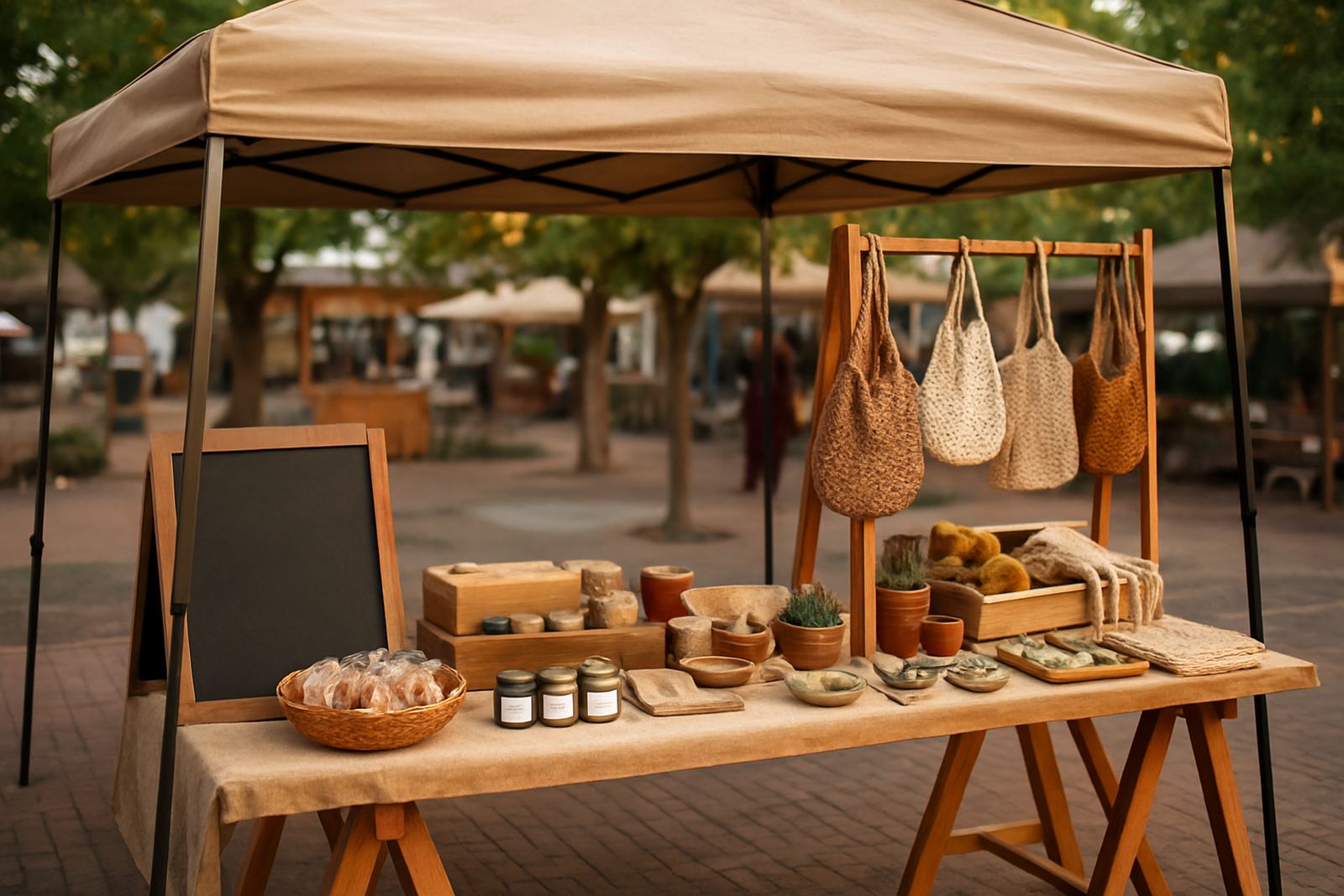
- Mount signs at eye level, not flat on a table.
- Use weather proof materials if your stall faces wind or light rain.
If you trade near the coast or at outdoor pop-ups with humidity, sealed boards and laminated inserts last longer. Printed backup signs are useful too, because a phone screen or lit display is not always practical in poor light.
Pricing signs that help shoppers make quick decisions
Price hesitation is one of the biggest reasons a person walks away. A visible price sign removes that uncertainty. It does not have to list every single item, but it should give a clear starting point. If the first thing a visitor sees is a neat sign with honest pricing, they are more likely to stay and browse.
For example, a maker selling small batch preserves at a market in Lynnwood might show: jars from R45, gift boxes from R120, custom orders available. That tells the shopper the range without making them ask whether the item is affordable. It also helps compare sizes on the table, which saves time for both sides.
For higher priced work, break the price into easy parts if you can. Say what affects the cost, such as size, stitching, materials or finishing. If your items are all different, use simple tags on each piece and keep a larger sign nearby that explains the range. That keeps the stall orderly and stops confusion at the pay point.
Signs that support food stalls and small batch makers
Food stalls need signs that are especially clear because shoppers want to know what they are buying before tasting. A neat sign can handle the basics and leave the conversation for the finer details. It should name the product, highlight key ingredients, and show the portion size where that helps.
For handmade snacks, preserves, baked goods or spice mixes, include practical details such as shelf life, storage advice and any allergen warnings. If you sell at Centurion Markets or a maker night, this is even more useful because people often buy to take home after the event and want to know the item will keep.
- List top ingredients clearly for packaged food.
- Show unit sizes, for example 250 g, 500 ml or a six pack.
- State if the product needs refrigeration after opening.
- Use simple tasting labels for samples so visitors know what they are trying.
Food signs also need to match basic municipal and event rules. If a market asks for ingredient lists, date marking or hygiene notices, build those into the stall layout from the start. It makes setup faster and keeps you from scrambling during a busy morning.
Hatfield example: turning foot traffic into sales
Think of a Saturday in Hatfield. Students are walking through, parents are pushing prams, and a few regulars are coming back for their favourite items. A stall with a hand written sign that says only specials makes people guess. A stall with a clear sign that says handmade soaps from R35, gift sets available, custom scents on request gives them a reason to stop.
That small difference matters. At a market, many sales begin with confidence, not persuasion. If shoppers can see the value from the walkway, they arrive already interested. Then your conversation can focus on the story behind the item, the materials used, or how it was made.
Local makers who trade across Pretoria often adjust signs from one event to the next. A family market may need softer wording and larger text. A maker night may need stronger lighting and shorter price cards. The point is to make the sign fit the crowd, not force every market to work the same way.
A simple sign checklist before the gates open
Before setup, walk through your stall and read every sign as if you were the customer. If you have to lean in too far, it needs to be bigger. If you have to explain the basics before someone understands the sign, it needs to be shorter. Small changes here can lift your sales without changing the products at all.
- Can a visitor read the main sign from a few metres away?
- Does the price appear on the table or nearby?
- Are food ingredients or key product details easy to see?
- Do all signs match the style of the stall?
- Will the signs still work if the lights go off or the weather changes?
Good stall signs do not shout. They guide. They help visitors move from curious to ready-to-buy with less effort, which is exactly what a busy market day needs.