Why children settle better at colourful stalls
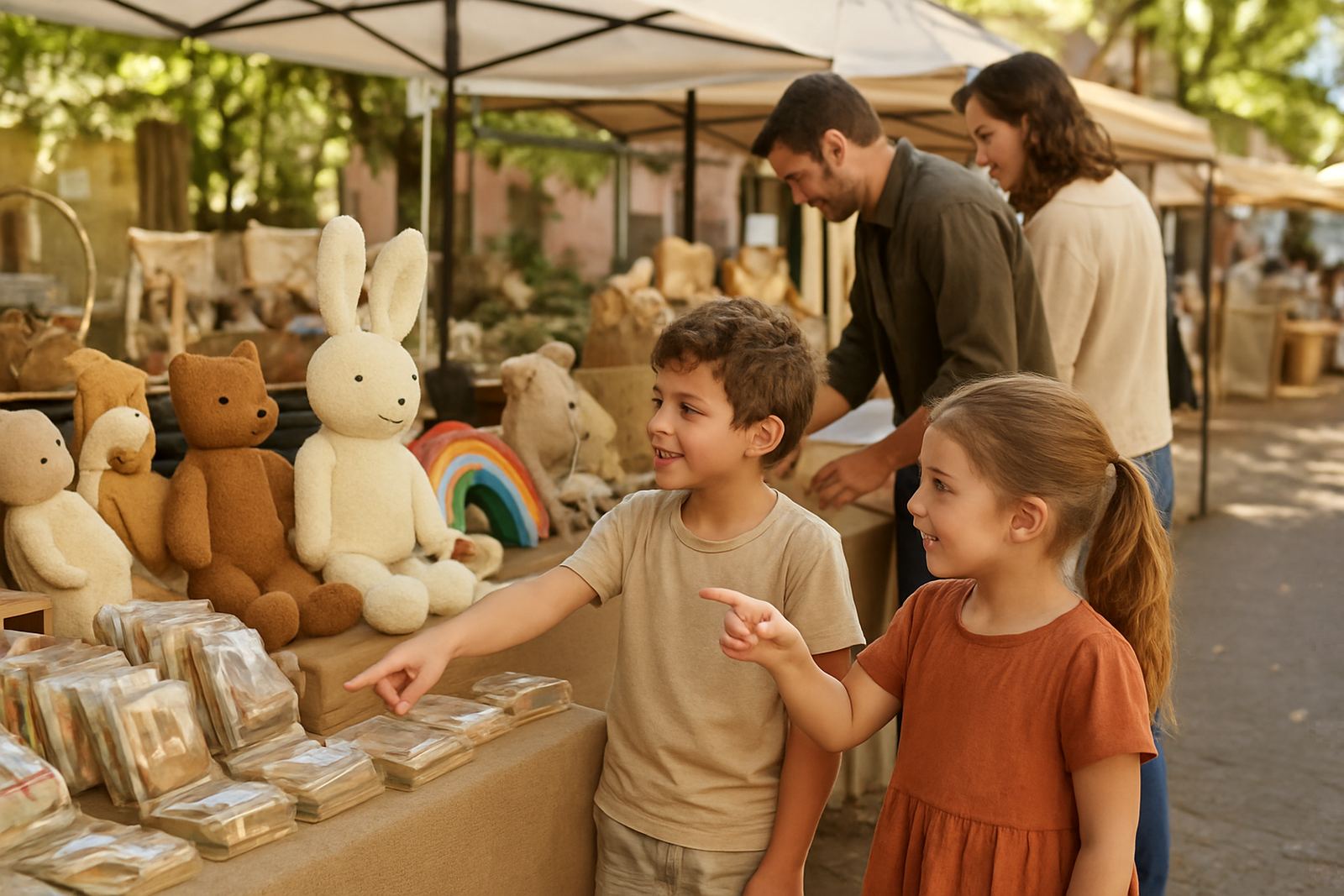
Children respond to what they can see at eye level. A table with bright fabric, neat jars, hanging tags and a few sample pieces gives them something to focus on, which means fewer “Are we done yet?” moments. For parents, that calm makes the whole outing feel easier, especially when there is a pram, a snack break and a sibling with different interests.
In markets around Hatfield and Brooklyn, the stalls that do well with families usually have one clear idea on display. It might be hand-poured soap, mini baked goods, small toys or printed cards. When products are grouped clearly, children can understand the stall in a few seconds, and that helps them stay interested while adults chat with the maker.
What makes a market outing easier for parents
A family-friendly market is not only about the products, it is about the practical layout. Wide walking space, good shade and a few places to pause matter a lot on a warm Pretoria morning. If a market is packed too tightly, children get tired fast and parents spend the whole visit managing bags, shoes and loose hands.
- Keep pathways open enough for a pram to move without squeezing past tables.
- Place food stalls and drink points where families can stop before children get restless.
- Use signs that are easy to read from 3 to 5 metres away.
- Offer one low-touch area where children can look closely without touching every item.
- Have card payments ready for quicker exits, especially when a child is getting hungry.
Simple touches like these do not look fancy, but they save time and reduce stress. That matters when a family is trying to fit a market visit between sport, lunch and the school run.
Small hands, big questions: how makers can respond well
Children ask direct questions and they often notice the details adults miss. They want to know why something smells like cinnamon, how a candle is made or whether a wooden puzzle was cut by hand. Makers who answer plainly usually keep the family engaged for longer. That is good for sales, but it also builds trust because parents can see that the stall holder is patient and practical.
A useful approach is to keep one short explanation ready for children and a fuller one for adults. For example, a soap maker can explain the ingredients in one simple sentence, then talk about skin types and packaging to the parent. This way nobody feels left out, and the conversation moves at a pace that suits the whole family, not just the person paying.
At a Hatfield weekend market, a stall with colourful baked treats and a clear price board can draw children in first, then give parents enough information to make a proper choice. It sounds small, but that first point of interest often decides whether a family keeps walking or stops to buy.
Treats, activities and little spending limits
Families usually visit markets with a plan, even if it is a loose one. Parents may allow a treat, a snack and one small purchase for each child. If your stall fits that pattern, it is easier for them to say yes. Compact items, low entry prices and clear bundles work well because they help buyers make quick decisions without doing mental maths at the stall.
- Offer a few items under R50 for pocket-money purchases.
- Set one family bundle, such as 3 snacks or 2 small gifts at a set price.
- Display product names clearly, so children can point and parents can decide faster.
- Keep tasting portions neat and hygienic, especially for food stalls on busy days.
On hot or windy days, families also appreciate packaging that is easy to carry and does not spill. Paper bags, sealed containers and labels that stay on in damp weather are worth the effort. In coastal towns this matters even more, but even in Pretoria a sudden summer shower can turn a flimsy pack into a problem.
How the best stalls hold a child’s attention
The most effective family stalls usually have movement, texture or a small story. A row of beads, a stack of shaped biscuits or a board showing how something is made can hold a child’s attention for longer than a plain table with one product type. When children are interested, parents have more time to browse properly.
Colour is useful, but it should not become clutter. Too many competing items can make a stall feel noisy and harder to read. A better approach is to choose one main colour family and repeat it in cloth, labels and packaging. That gives the stall a neat look and helps children recognise it from a distance, which is useful in busy pop-up spaces.
Families also appreciate stalls that are easy to approach from both sides. If a parent can step in, ask a question and step out without blocking others, the whole area feels calmer. It is a small detail, but it makes a real differnce when the market is busy and the kids are ready to move on.
A Pretoria example that works on the ground
In Hatfield, weekend market traffic often includes students, young parents and grandparents all at once. That mix means a good stall has to speak to more than one person at a time. A table of handmade sweets may catch a child’s eye first, while a parent looks at ingredients and a grandparent checks price and quality. The stall that works best is the one that answers all three without extra fuss.
At a family market day in Pretoria, the simplest winning setup is often a bright tablecloth, clear signage, one sample tray and a friendly maker who can speak to children without rushing them. If the food is neat, the prices are visible and the stall is not crammed, families tend to stay longer and buy more than they planned. That is why preparation matters before the first customer arrives.
For makers planning seasonal sales or a first market, this is where good training helps. Knowing how to style a stall, price items and talk to customers can turn a good product into a family favourite. When children enjoy the visit, parents remember the experience and often come back next weekend.
Why family-friendly markets build repeat visits
Families do not return only for shopping. They make time for it because the outing feels manageable and worth the effort. If children are entertained, parents are not exhausted and there is something to eat, buy or take home, the market becomes part of the weekend routine. That is valuable for makers too, because repeat visitors are easier to serve than one-time foot traffic.
Local makers who focus on neat presentation, simple pricing and warm conversation often do well in these settings. The stall becomes more than a sales point. It becomes a place where a child remembers a flavour, a parent remembers a useful product and the family leaves with a good impression of the day. That kind of memory keeps market culture strong across Pretoria and beyond.