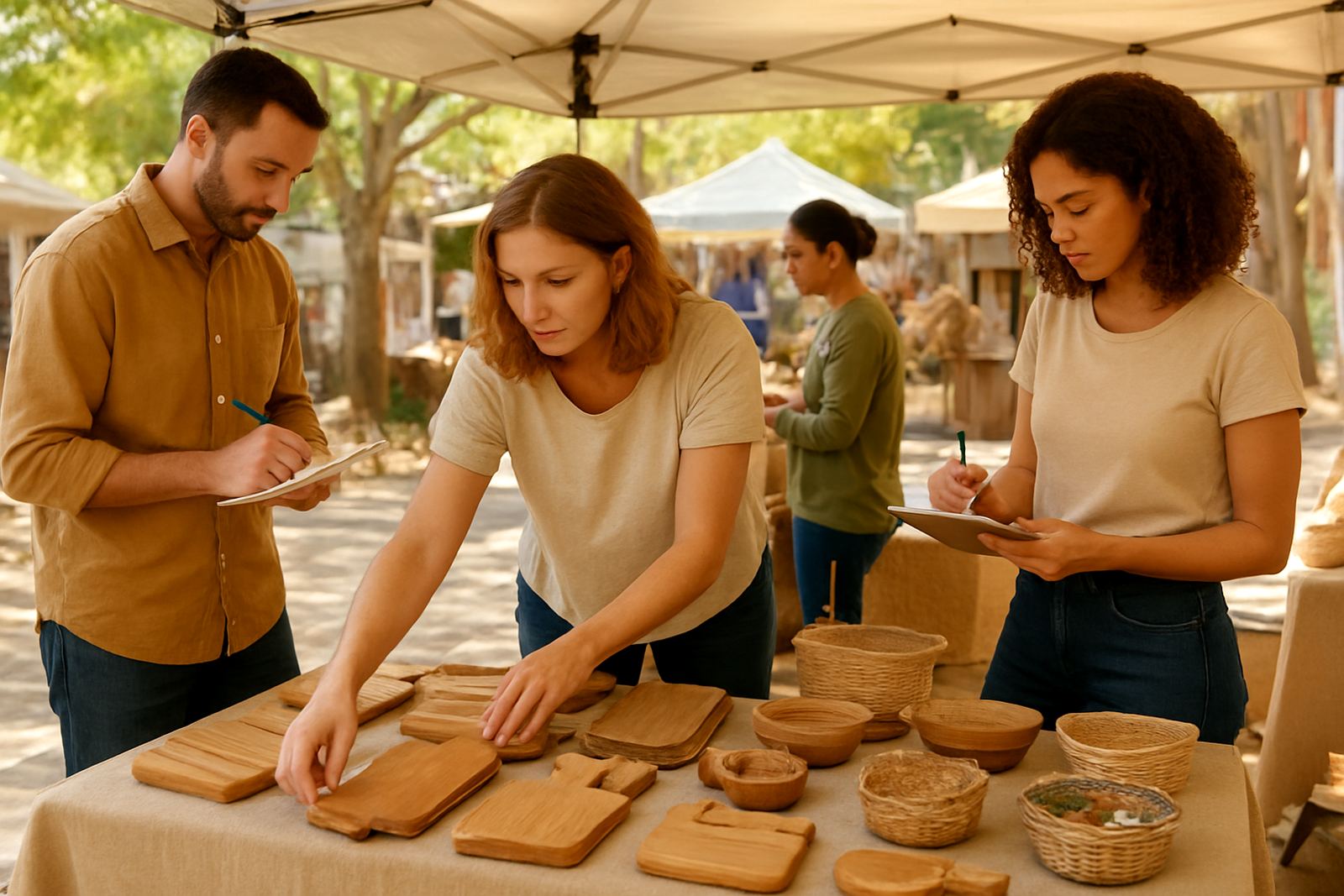
What the Stall Styling Workshop Covers
This workshop is for makers who want a stall that feels organised, easy to browse, and simple to buy from. We look at how your products sit on tables, shelves, crates, risers and hanging points so the display supports the sale instead of fighting it. The aim is to make your best sellers visible from the front, keep smaller items grouped neatly, and create enough breathing room that customers are not overwhelmed.
We work with handmade goods, pantry items, homeware, gifts, textiles, prints and mixed product ranges. If you trade at Hatfield, Brooklyn, Lynnwood, Menlyn or Centurion, the approach is shaped around foot traffic, weather exposure and the reality of packing up quickly after a long day. For indoor pop-ups and maker nights, we also cover lighting, table height and queue flow so the stall looks good from both close-up and across the room.
- Front table layout for quick product recognition
- Riser use for depth and better visibility
- Colour grouping and range separation
- Sign placement for prices and product names
- Space planning for bags, stock and payment points
How We Structure the Session
The process starts with what you already have. You bring photos of your current stall or a list of the items you sell, and we map out a display structure that suits your stock, stall size and budget. If you trade with only one folding table, we show how to build height and interest without crowding the surface. If you have a larger setup, we plan zones so customers can browse in sections instead of scanning a messy spread.
The session usually moves from product grouping to layout, then to signage and customer flow. We finish by checking what happens when the stall gets busy, because a neat display that falls apart at peak trade is not useful. We also account for wind at outdoor markets and heat in summer. That means thinking about weights, clip systems, battery lighting and shade friendly placement before the day arrives.
- Review of products, packaging and stall size
- Grouping by type, colour, size or price point
- Table map with front, middle and back zones
- Signage and label placement
- Busy-hour check for customer movement and stock access
Turnaround for New and Returning Traders
For a first market prep, we normally allow a short planning turnaround so you can adjust your display before trading day. Returning makers with an existing stall can move faster, especially if the stock range is stable and only the layout needs refining. If you are preparing for a maker night or seasonal event, we can tighten the timeline around your launch date and the size of the range.
Most styling recommendations are practical enough to implement with items you already own. Where extra tools are needed, we keep them simple: crates, risers, tablecloths, storage boxes, price cards, clips and small lighting options. The aim is to avoid overspending on props that do not travel well or hold up in damp weather. Coastal humidity, dusty outdoor sites and repeated packing all matter when a stall is used every weekend.
- Quick review for returning traders
- Layout planning for a first market appearance
- Seasonal refreshes before holiday trade
- Preparation for indoor or outdoor setups
Pricing Approach That Fits Small Makers
Pricing for the workshop is kept straightforward and tied to the amount of setup support needed. A maker with a simple one-table stall needs different input from a trader preparing a multi-table layout with several product categories. We price according to workshop time, the level of custom planning, and whether the advice is for one event or a recurring market season.
If you want to update your stall ahead of a monthly market run, we can structure the guidance as a once-off session with a follow-up check. For traders with changing stock, such as seasonal food ranges or gift items, ongoing styling support may be more useful. That way your display stays current without redoing the whole setup from scratch each month.
- Once-off workshop pricing for a single market setup
- Custom planning for larger product ranges
- Repeat support for regular traders
- Seasonal refresh options for holiday and peak periods
Practical Specs for a Better Stall Layout
The workshop includes layout guidance that can be measured and repeated. That matters when you are setting up early, trading through a long day, or working at a site where space is tight. We consider table depth, vertical layering, packing space, and what shoppers can reach without disturbing the full display.
For most stalls, a clean front edge and a clear product path make a bigger difference than adding more stock. We also look at maintenance intervals, because a stall that is styled well in week one can drift badly by week four. Small weekly checks keep it sharp and save time on market morning.
- Recommended table depth: 60 cm to 75 cm
- Visible height target: 120 cm to 160 cm using risers or back display
- Clear customer path: at least 90 cm where possible
- Price signage size: readable from 1 m to 2 m away
- Maintenance interval: quick review before every market, full refresh every 4 weeks
- Packing allowance: one sealed crate or box per product group where possible
Why This Matters at Busy Weekend Markets
At a busy Pretoria market, people decide quickly whether to stop, browse or walk on. Good stall styling helps your range do the talking before you need to explain it. That is especially useful when there is music, food stalls, children moving around and the usual weekend rush. A tidy display gives customers confidence that the products are well made and fairly priced.
This workshop also supports sales efficiency. When the layout is logical, you spend less time answering basic questions and more time talking to the right buyer. It can also reduce handling damage, save space in your stock crates and make pack-up easier when the event ends late or the weather changes fast. For small businesses, that practical difference matters.
Key facts
| Workshop format | One-to-one or small group session |
|---|---|
| Typical setup focus | Tables, risers, signage, stock flow and customer movement |
| Best suited to | Handmade products, pantry goods, gifts and mixed stall ranges |
| Recommended refresh | Before every market, with a full review every 4 weeks |
| Typical planning lead time | 3 to 7 working days |
| Service area | Hatfield, Pretoria and nationwide maker markets and pop-ups |