
When wooden pieces need to do more than look good
Wooden crafts usually sit in a sweet spot between art and useful homeware. Buyers stop for the texture, then start asking whether the piece is for serving, storing, gifting or display. That means the stall has to show finish quality, size and purpose straight away, because people make decisions quickly at weekend markets and maker nights.
For makers, the main challenge is keeping the range focused. A table with 40 unrelated timber items can feel busy and hard to price, while a tighter edit of bowls, trays, chopping boards, wall pieces and small gifts is easier to shop. In Pretoria, where dust, heat and strong sun can be a factor, the display also needs to protect unfinished surfaces and stop warping on hot afternoons.
Wooden goods often attract family buyers, corporate gift shoppers and people looking for something local with character. If your pieces are handcrafted, carved, turned or assembled from offcuts, the market story should be simple: what wood it is, how it was finished, how to care for it and what makes each item unique.
Typical stall setup for timber items
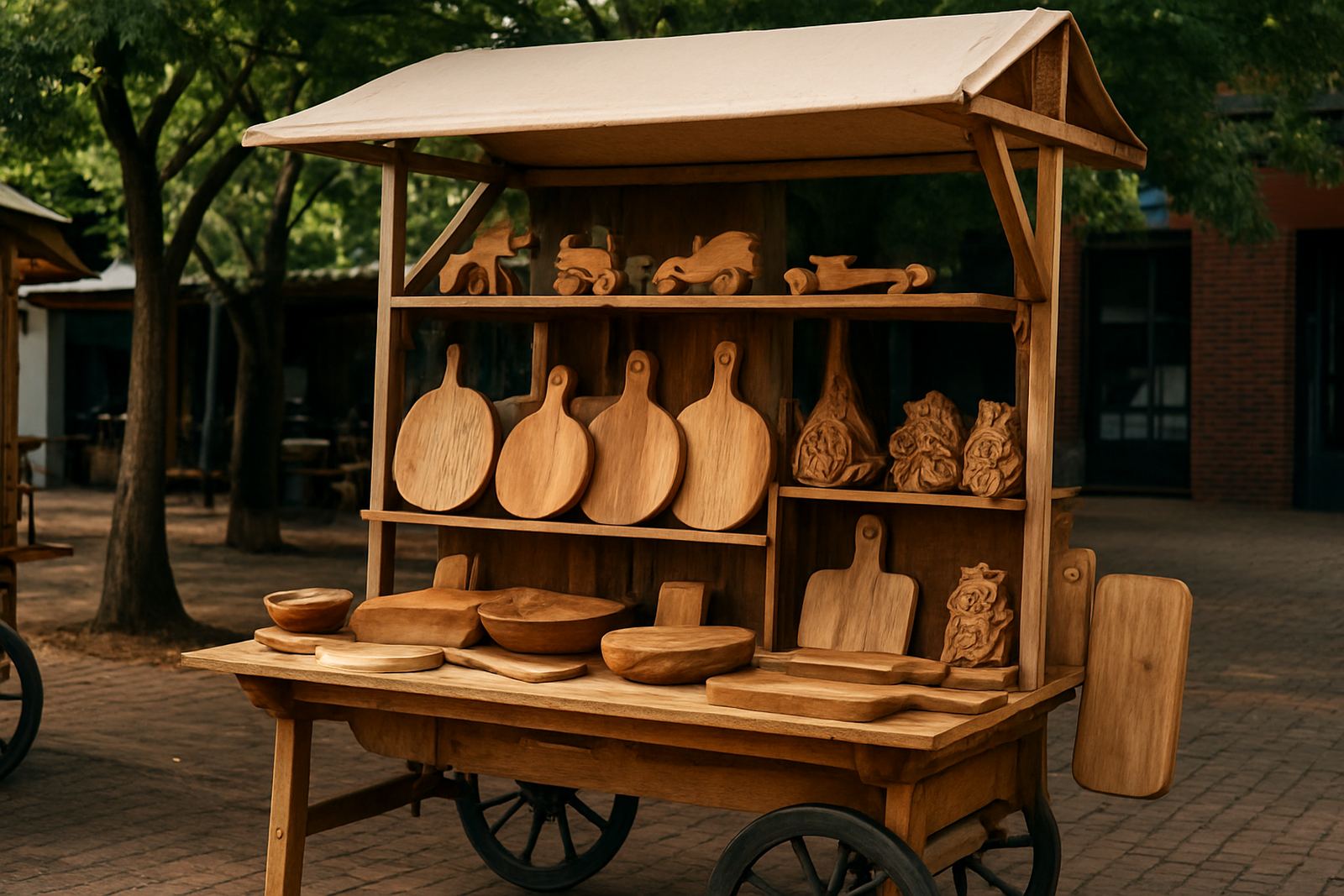
A wooden crafts stall works best with height, texture and clear spacing. Flat tables alone can make the stock feel crowded, especially when the pieces are similar in tone. Use risers, crates, stands and a few vertical panels so shoppers can see the range without lifting every item.
- 2 to 3 folding tables or modular display tables
- Shallow risers or boxes for small carved items
- Vertical back boards for hanging pieces or signage
- Soft cloths, offcuts or mats to stop items sliding
- Price cards that are easy to read in shade and sun
- Cardboard sleeves or wraps for fragile edges
- Hand wipes, a dust cloth and a small repair kit
If you sell serving boards, spoons or kitchen items, keep at least one sample piece in hand for customers to touch. For decorative pieces, a small plinth or crate can give the object more presence without making the stall look overfilled. At outdoor markets, make sure nothing sits directly on damp ground and use pegs or weights if the wind picks up.
Planning the layout around browsing and movement
Good layout starts with the customer path. Most people approach from the aisle, scan the centre of the stall and then step to the side if something catches their eye. Put your strongest pieces at eye level and keep smaller items grouped by type or price so buyers are not hunting through mixed stock.
For wooden crafts, colour is usually natural rather than bright, so contrast matters. Dark timber needs lighter cloth, pale timber needs darker backing, and glossy finishes need a bit of space so glare does not hide the grain. At markets in Hatfield, Brooklyn or Menlyn, the noon light can be sharp, so plan for shade or a canopy that still leaves enough light for buyers to see detail.
- Keep one clear zone for browsing and one for payment
- Place delicate or high value items away from the front edge
- Group similar pieces in odd numbers for a neater look
- Show 3 price points so buyers can start small and trade up
- Leave a little open space, even if stock is full
If you use a banner or sign, keep the wording plain. Buyers want to know if the wood is sealed for food use, whether items are made from local timber, and whether custom orders are available. A tidy layout also makes packing up faster when the market closes and you are dealing with traffic or a long drive home.
Common mistakes wooden makers make at markets
One common mistake is bringing stock that has not fully cured, sealed or sanded. In a market setting, people touch everything, so rough edges, sticky varnish or visible tool marks can cost a sale quickly. Another mistake is relying on the same sample photos and not showing the actual item in front of the buyer. Handmade wood has variation, and that should be part of the appeal.
Pricing is another area where makers lose margin. If a chopping board took three hours to make, plus sanding, oil, packaging and fuel to get to Centurion or Pretoria, the price must cover more than the timber cost. Underpricing can also make the stall look inconsistent, with one piece seeming too cheap next to another. Buyers notice that.
Keep an eye on these trouble points:
- Overcrowding the table with too many similar pieces
- Using weak labels that cannot explain size or care instructions
- Leaving raw timber exposed to moisture and dust
- Forgetting spare stock wrap, tape and tissue
- Offering only one payment method when buyers want quick checkout
A smaller issue, but a costly one, is forgetting to test the weight of larger pieces before market day. A timber stool, shelf or planter can be harder to carry than it looks. If customers cannot lift it comfortably, they may admire it and move on.
Budget ranges for a practical wooden crafts stall
Budget depends on whether you are starting with small gift items or carrying larger carved pieces. A lean first setup for a weekend market can begin around R3,500 to R7,500 if you already have basic tools and only need tables, signage, packaging and display items. A more complete setup with better lighting, custom display stands and storage bins can sit between R8,000 and R18,000.
For regular trading, it helps to break costs into stock, stall kit and operating costs. Packaging for timber goods is often underrated because corners, edges and finishes need care. If you sell to visitors from outside Pretoria or at maker nights nationwide, allow for transport, extra wrap and a few sample pieces that can be handled without damage.
- Display tables and stands: R1,500 to R6,000
- Labels, sign boards and price cards: R250 to R1,200
- Protective packaging and wraps: R400 to R1,800
- Transport and fuel for local markets: R300 to R1,500 per event
- Lighting or battery back-up for evening events: R700 to R3,500
If you are moving into regular sales, build in seasonal costs too. Summer humidity can affect timber and winter events may need extra hand care for finishes and dust. It is better to budget for a few replacements and repairs than to lose money fixing damaged stock after each market.
Support that helps wooden makers sell with confidence
Wooden crafts do well when the maker can explain the story, price the work properly and display it neatly. Our workshops and market support are useful for timber sellers who need help with first market prep, pricing products, packaging for sales, stall styling and customer conversation. We also work with makers who trade at Hatfield Markets, Brooklyn Markets, Lynnwood Markets, Menlyn Markets, Centurion Markets and at nationwide pop-ups.
If your range includes carved pieces, small homeware or gift items, we can help you plan for the practical side of selling: how much stock to bring, how to arrange it, what to say when buyers ask about care, and how to make each piece easy to pick up and carry. It keeps the stall calm and helps your work speak for itself, even on a busy Saturday with lots of foot traffic.
For makers based in Pretoria or travelling in from other parts of South Africa, a good market setup is not about having the most stock. It is about having the right stock, priced well and presented in a way that makes sense in one glance.