What pet product stalls need to do at a market
A pet products stall has one main job: make it simple for a customer to see what fits their animal, what it costs and how to carry it home. Most buyers stop for collars, leads, harnesses, treat jars, lick mats, travel bowls, bandanas, toys and small grooming items, so the table must show range without looking crowded.
At Hatfield, Brooklyn or Menlyn markets, shoppers often buy on impulse, but they still want clear sizes and clean packaging. If you sell edible items, keep them separate from fabric goods and make the food side look even more organised. A neat layout also helps if you are trading in humid coastal weather or in summer heat inland, because packaging can soften, treats can sweat and labels can peel if the table is overpacked.
- Keep best sellers at eye level and near the front edge.
- Use size labels that are easy to read from 1 to 2 metres away.
- Separate pet wear, toys and treats into clear sections.
- Leave one open space for payment, bagging and quick customer chats.
Typical equipment for handmade pet goods
For pet accessories and treats, the equipment list is fairly simple, but the finish must be tidy. You do not need a complicated setup, yet you do need enough structure to keep products off the ground, away from dust and safe from wind. A sturdy table, a fitted cloth, display risers and a few sealed containers go a long way.
If you trade at a weekend market in Pretoria or do a maker night in another city, plan for transport too. Many makers work from a small car boot, so every crate should stack neatly and every sign should travel flat. Treat packaging should close properly, because ants, crumbs and open jars can cause problems quickly once the crowd starts moving.
- 1 or 2 trestle tables, depending on product range.
- Fitted tablecloths in dark or neutral colours.
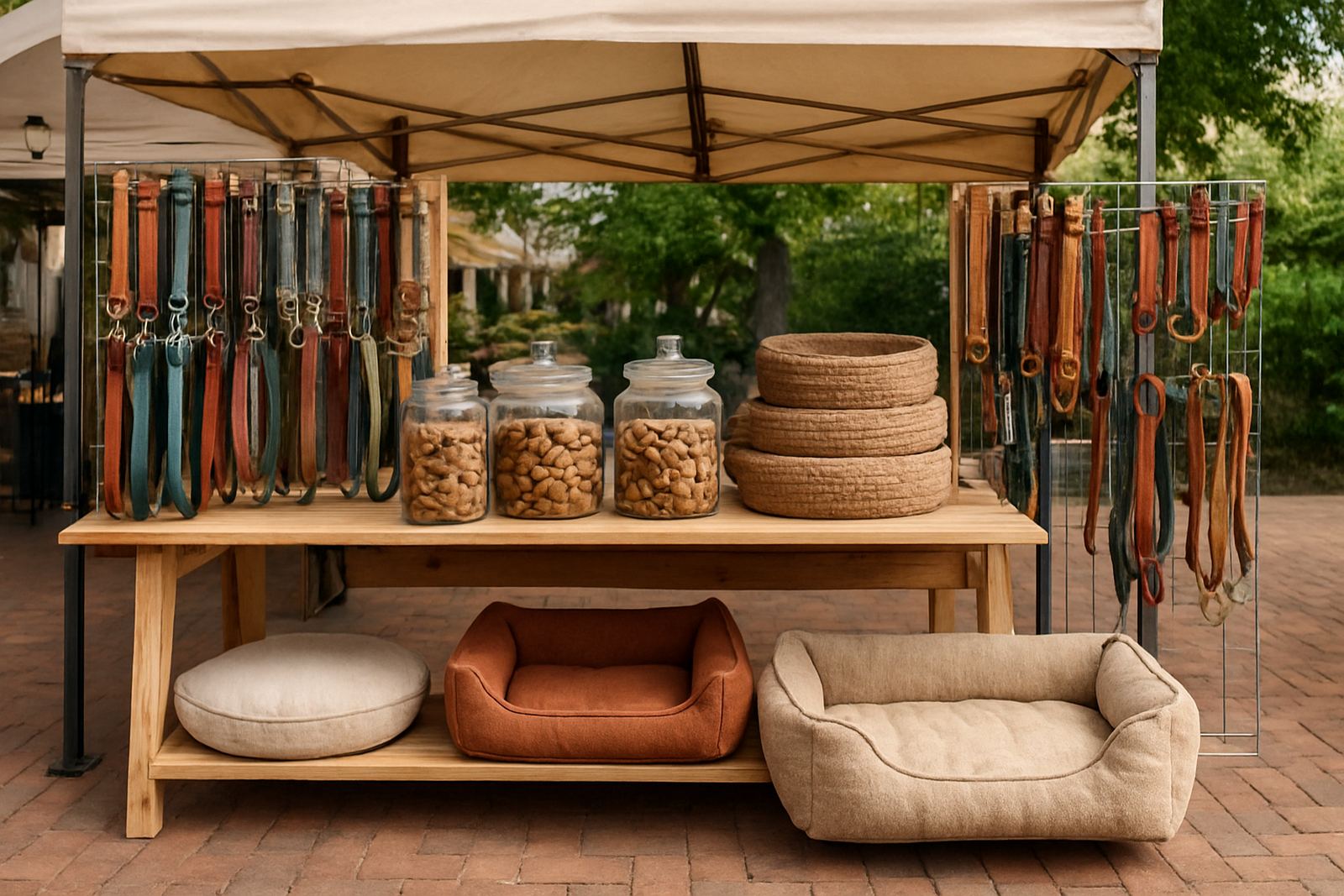
- Clear tubs or glass jars for sealed treats.
- Small risers, wooden crates or stands for collars and toys.
- Price cards, size guides and care instruction cards.
- Card payment device, cash float and small till pouch.
- Cool box or insulated bag for heat-sensitive treats.
A layout that keeps the stall easy to shop
Start by dividing the stall into three zones: wearables, play items and treats. Put the strongest visual item at the front left or centre, such as a bright collar set or a sample gift bundle, then build out from there. Customers should be able to understand the stall in a few seconds without asking where everything is.
Use height carefully. A back row at chest height helps the table feel full without blocking the view, while one lower front line lets parents and children browse comfortably. If you sell both dog and cat products, do not mix everything together. Group by animal type or by use, otherwise people miss items and the stall starts feeling messy. In a busy market, a simple flow from left to right works best.
- Front row: impulse buys like small treats, poop bag holders and toy bundles.
- Middle row: collars, leads, bandanas and harnesses by size.
- Back row: signage, gift packs and stock in reserve.
- Side area: payment point, shopping bags and a sample card for custom orders.
Pricing and packaging advice for pet makers
Pricing should be visible, direct and easy to trust. Pet buyers often compare quickly, so if they must ask the price for every item, you slow the sale. Use prices on the shelf or next to each product line, and keep your wording simple. If you have bundles, show the saving in Rand, not only the final amount.
Packaging matters more than many makers expect. Treats need food-safe bags, labels with ingredients and a clear best before date. Accessories need tags that show size, care and if they are handmade or made to order. For a market like Centurion or a pop-up in Johannesburg, buyers will often carry their purchase around for a while, so the packaging must survive being handled, squeezed and moved from stall to car.
A useful rule is to spend about 8% to 15% of your selling price on presentation, tags and protective packaging. For example, a R120 collar should not need more than about R10 to R18 worth of packaging and display support if you want decent margin. If your product is breakable or edible, factor in a bit more for jars, sealed pouches or inner wrapping.
Common mistakes that hurt sales at pet markets
One common mistake is bringing too much stock and not enough structure. A table full of loose items looks cheap, even when the work is good. Another mistake is using labels that are too small or handwritten in a hurry, which makes sizing hard and slows the sale. In a busy market, unclear pricing usually means fewer purchases.
Makers also forget weather and venue rules. Strong sun can fade fabrics, soften treats and heat up glass jars. Wind can lift light signage. Some venues do not allow open samples or loose food handling, so always prepare covered containers and keep a clean cloth handy. At outdoor markets, a little dust can make a pet stall look untidy very quickly, so wipe surfaces often.
- Do not mix food items and fabric products without clear separation.
- Do not rely on one tiny sign for the whole stall.
- Do not leave treat jars open where children or dogs can reach them.
- Do not forget a backup plan for battery power or card payments.
Budget ranges for a first pet product stall
A practical first stall can be done without spending a fortune, but the budget depends on whether you already own tables, containers and signage. If you are starting from scratch, a basic setup for handmade pet accessories and treats usually lands between R2 500 and R6 500. That covers a table, cloth, display crates, labels, simple packaging and a few signs.
A more polished setup, with matching containers, custom printed price boards, stronger display stands and better packaging, can sit between R7 000 and R15 000. If you need extra stock protection for treats, insulated bags or multiple table covers for different venues, allow a bit more. For maker nights, where the presentation has to feel tighter, many sellers spend more on lighting and vertical display than on the stock itself.
When we help makers plan a stall, the aim is always the same: keep the setup practical, quick to pack down and easy to understand. A good pet stall should make people stop, smile and buy without fuss.