What a candles and fragrance stall needs to do first
People usually stop at a candle or room scent stall because the table feels calm, clean and easy to test. The setup must carry scent without making the whole market area heavy, and it must let customers compare products quickly while they keep moving through Hatfield Markets, Brooklyn or a busy evening maker night.
The client situation is often simple. A maker has 20 to 80 candle jars, reed diffusers, wax melts, room sprays and gift boxes, then needs a layout that shows range without looking crowded. In Pretoria heat and coastal humidity at pop-ups, packaging and lighting both matter. Glass, labels and lids need to travel well, and any display that relies on electricity should still work if the lights go off for an hour or two.
A good fragrance stand should answer three questions fast: what does it smell like, how much is it, and is it a good gift. If those answers are obvious, customers stay longer and are more likely to buy 2 or 3 items instead of one.
Typical equipment for scent-led market displays
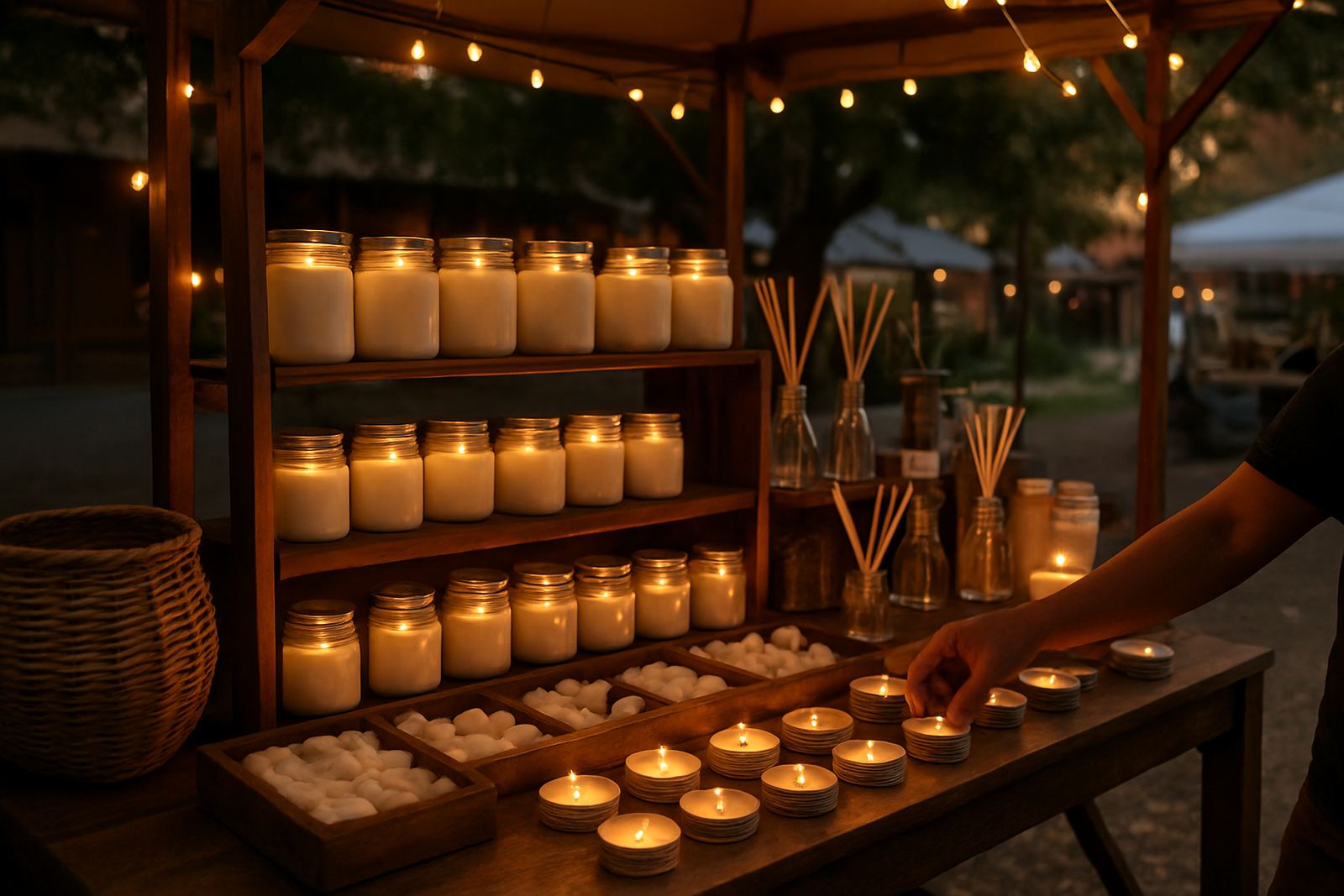
Most candle and fragrance stalls do better with a tidy, layered set-up than with a lot of stock spread flat on the table. You want height, labels, tester pieces and a few gift-ready bundles. Keep the table surface clear enough that customers can read names and prices without leaning over other items.
- 1 to 2 folding tables, usually 1.8 m each, with matching cloths in neutral colours
- Small risers or crates for height so jars are not all at the same level
- Clear tester bowls, scent strips or sample cards for room sprays and oils
- Covered storage tubs under the table for back stock, bags and tissue paper
- Battery lanterns or warm LED lights for evening markets
- Price cards that are easy to read from 1 to 2 metres away
- Gift bags, boxes, ribbon and a simple wrapping station
If you sell wax melts or oil burners, keep those grouped together rather than mixed in with jar candles. Customers shop faster when each product type has its own small zone. It also reduces breakage because you handle fewer pieces at once.
Layout that keeps scent pleasant not overpowering
Fragrance stalls need balance. Too little scent and the table feels dull. Too much and people move away before they look properly. The best layout gives each scent family its own space, then leaves breathing room between testers. If you use strong notes like spice, oud or heavy florals, place them at the edges instead of the middle so the air does not get muddled.
Arrange your table from lightest to strongest scent, or from everyday candles to gift candles. Put popular sizes at the front and special editions slightly raised at the back. A narrow lane through the display works better than a wall of stock. Customers should be able to point, read and pick up without knocking items over.
- Use one side for tester scents and the other for sealed stock
- Keep matches, wicks and lighters out of customer reach but close for staff use
- Separate food-scented candles from floral or fresh linen ranges
- Leave enough open space for a small queue at busy times
For Hatfield weekend markets, shade and airflow matter as much as visual layout. Direct sun can soften wax and fade labels, while still air can hold fragrance too long. A side awning or tent wall helps manage both.
Pricing and packaging for gift buyers
Candles and fragrance are often bought as gifts, so pricing must make sense in small steps. A customer may start with a R90 wax melt pack, then move to a R220 candle or a R350 gift set if the display makes the difference clear. Good packaging helps people see the value straight away and reduces the chance of chipped jars or crushed boxes in transit.
At markets around Pretoria, a practical budget range for a starter stall is usually R3 500 to R9 000 for display items, signage, lights, bags and packaging, not counting stock. A more polished set-up with custom tablecloths, fitted shelving, better lighting and sturdy transport tubs can reach R12 000 to R18 000. If you trade monthly rather than weekly, spend on durable gear first because it pays back over time.
Packaging for sales should be neat and quick. Tissue, stickers, kraft boxes and handle bags keep the queue moving. If you offer gift wrapping, make the price visible so customers do not need to ask. For maker nights, a small premium gift box range often works better than loose single items because the evening crowd likes easy gifting.
Common mistakes that reduce sales at fragrance stalls
Many candle stalls lose sales for simple reasons that are easy to fix. The most common issue is clutter. When there are too many scents, sizes and signs on one table, customers feel unsure and leave without choosing. Another problem is weak lighting. If the jars look dark or the labels cannot be read, shoppers assume the product is not worth the price.
Some makers also forget that fragrance changes in different spaces. A scent that works in a home studio may vanish in a windy outdoor market or become too strong in a small hall. Test your display at least once in conditions similar to the market, not only at home. Also check that wax does not soften in afternoon heat if you are trading in open sun.
- Do not place tester candles where people can knock them over
- Do not rely on one scent family only, especially at mixed-family markets
- Do not hide prices, because customers will not ask twice
- Do not use paper labels that curl in humidity or heat
- Do not pack fragile jars loosely in the car or trailer
Small details matter. A clean cloth, straight rows and well spaced products create trust faster than loud signage or too many colours.
Planning for Pretoria markets and nationwide pop-ups
Each venue type needs a slightly different plan. Hatfield and Brooklyn weekend markets usually reward slower browsing, while Centurion and Menlyn crowds may want quicker gift decisions. Nationwide pop-ups can be more compact, so your set-up must fold down into easy transport boxes and rebuild in under 30 minutes.
For indoor maker nights, bring extra lighting and keep one table section dedicated to sampling. For outdoor events, weigh down tablecloths and keep fragrance products away from direct wind. If the venue has municipal rules on open flame, use battery lighting only and keep all live testing under control. In some halls, you may also need to keep candles sealed unless they are being demonstrated by staff.
Best results usually come from a simple plan: strong signage, grouped scent categories, gift bundles, and a clear payment point. If you are still testing the market, keep stock tight and rotate fragrances by season. Fresh citrus, linen and light florals tend to move well in warmer months, while vanilla, spice and wood notes often sell better in colder weather.