When paper goods need a market-ready setup
Paper products sell on first impression. If your cards are stacked too high, your prints curl in the Pretoria heat or your notebooks sit in mixed piles, shoppers move on. The right setup helps customers see the artwork, compare sizes and choose a gift without handling every single piece.
This use case suits makers selling greeting cards, art prints, notepads, journals, planners, stickers, gift tags and small stationery bundles. It also suits makers who trade at Hatfield, Brooklyn, Lynnwood, Menlyn, Centurion and nationwide pop-up events where space is limited and the stock has to stay clean through the day.
For paper goods, the main aim is simple: keep the item upright, visible and protected from fingerprints, dust and moisture. A neat stall also makes pricing easier, because shoppers can see the difference between a R35 card and a R250 framed print without asking twice.
Typical equipment for cards, prints and stationery
A paper goods stall usually needs light, portable equipment that sets up fast and packs flat. You want display pieces that hold their shape, keep stock sorted and dont take up half the car boot on the way to the market.
- Tiered card racks or slanted trays for greeting cards and postcards
- Print browsers, clip rails or vertical stands for A4 and A3 artwork
- Table easels for feature pieces, new collections or best sellers
- Clear sleeves, backing boards and kraft envelopes for protection
- Small crate or drawer system for extra stock under the table
- Price holders or tent cards with large, easy to read figures
- Portable lighting for early starts or indoor maker nights
- Tablecloths and risers in plain colours that do not fight with the artwork
For humid coastal events, sealed sleeves and zip bags help keep edges straight. In winter dry air, paper can still lift at the corners so a proper backing board matters. If you are trading often, choose equipment that folds into one or two manageable loads because loading and unloading at 6am in Hatfield is never enjoyable when the gear is awkward.
Layout that helps shoppers browse and buy
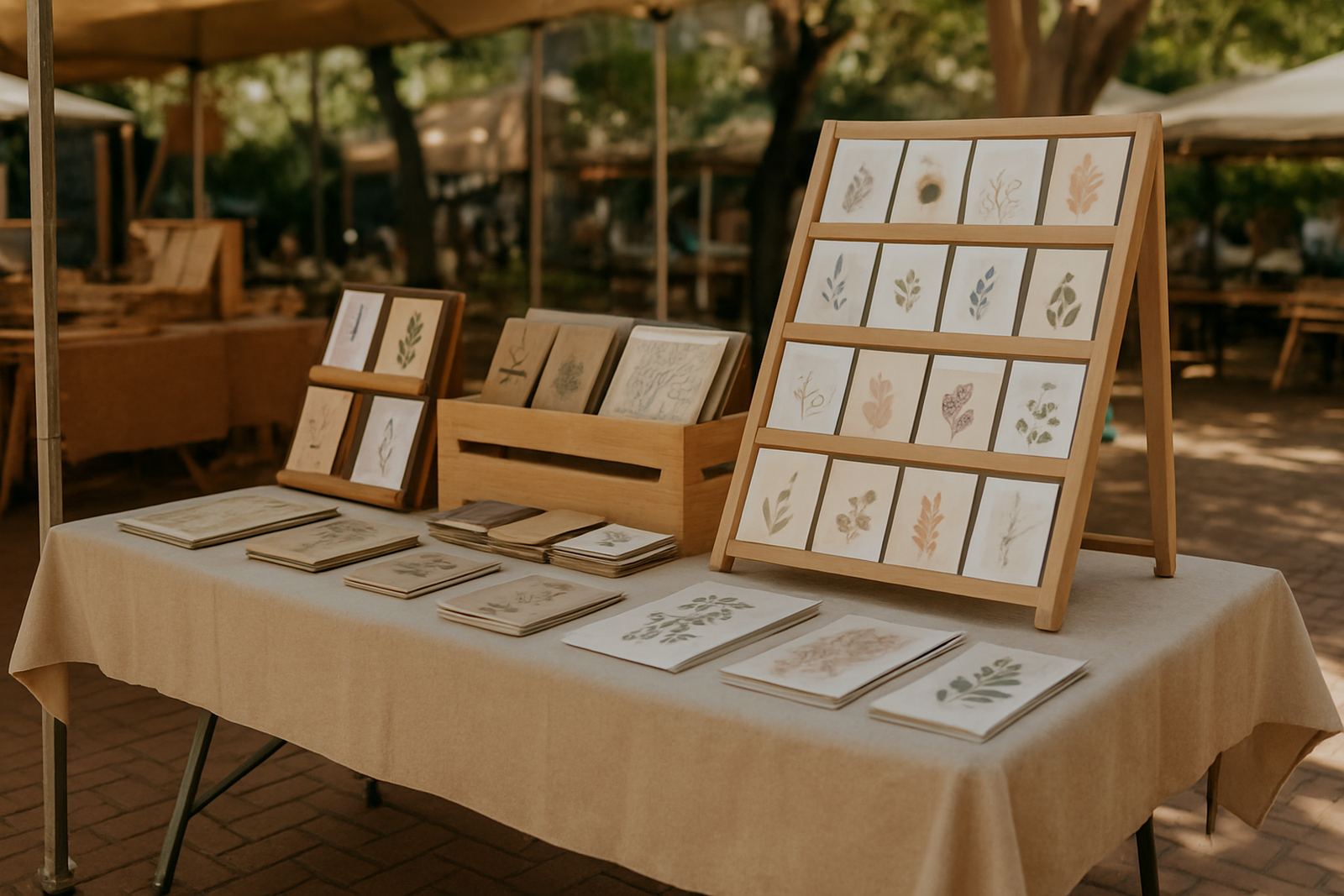
The best paper goods layout is one where customers understand the range in under ten seconds. Start with your strongest visual pieces at eye level, then group the rest by purpose or theme. Keep cards together, prints together and stationery together, so a shopper looking for a birthday card does not have to scan through notebooks and planners first.
Use a front row for smaller items and a back row for hero products. A vertical display works well for prints because it keeps the artwork visible, while flat trays are better for cards and sticker packs. Leave enough space for people to lift one item out without disturbing the stack next to it.
If you sell gift bundles, place them near the front edge of the table where hands naturally reach. In busy market aisles, a simple layout reduces bottlenecks and makes conversation easier because the customer can keep looking while you explain paper weight, print finish or packaging options.
Pricing, packaging and gift appeal
Paper goods often sit in a lower to mid price range, so your packaging has to support the value. A plain print in a proper sleeve and backing board feels more finished than a loose item in a bag. The packaging does not need to be expensive, but it must look intentional.
Common budget ranges for setup are:
- Starter stall with basic racks, trays and sleeves: R1 500 to R4 000
- Mid-range setup with branded display pieces and lighting: R4 500 to R10 000
- More polished market system with modular stands, storage and print protection: R10 000 to R22 000
For product packaging, many makers work with a per-unit spend of about R2 to R12 for bags, sleeves, envelopes and labels, depending on size and finish. If your range includes giftable items, a small add-on such as a belly band, sticker seal or handwritten note can lift the perceived value without pushing the price too high.
Common mistakes that hurt paper sales
Paper goods can be let down by simple errors. Curling corners, poor pricing and crowded tables are the biggest problems. Another common mistake is mixing too many styles together, which makes the stand feel busy instead of curated.
- Stacking prints too tightly so people cannot browse sizes easily
- Using shiny sleeves that reflect light and hide the artwork
- Leaving prices off smaller items, so customers have to ask for every piece
- Putting delicate stock near coffee cups, food samples or open wind gaps
- Using table colours that compete with your illustrations or stationery palette
At outdoor markets, wind is a real issue. A single light card display can blow over if it is not weighed down. At night markets, poor lighting makes pale paper look flat, so you need a focused light source rather than relying on the venue alone. It sounds small, but these details decide whether shoppers stop or keep walking.
Planning for market days, workshops and repeat events
For makers who trade regularly, paper goods work best with a repeatable system. Keep your stock sorted by size, season and best seller so packing takes less time before each event. A label on every box saves a lot of searching later, especially when you are moving between Hatfield, Menlyn and Centurion in the same month.
Our workshop team often sees paper traders improve quickly after a first market prep session or a packaging for sales workshop. The practical wins are usually straightforward: smaller box counts, clearer price points, better sleeve choices and a display that can be rebuilt fast by one or two people.
For seasonal ranges, plan early. Mother’s Day, festive gifting, exam season and wedding periods can all change what paper goods sell best. If you know your event calendar, you can print just enough stock, pack extras safely and avoid being stuck with the wrong mix after a wet or windy weekend.