What jewellery buyers notice first at market stalls
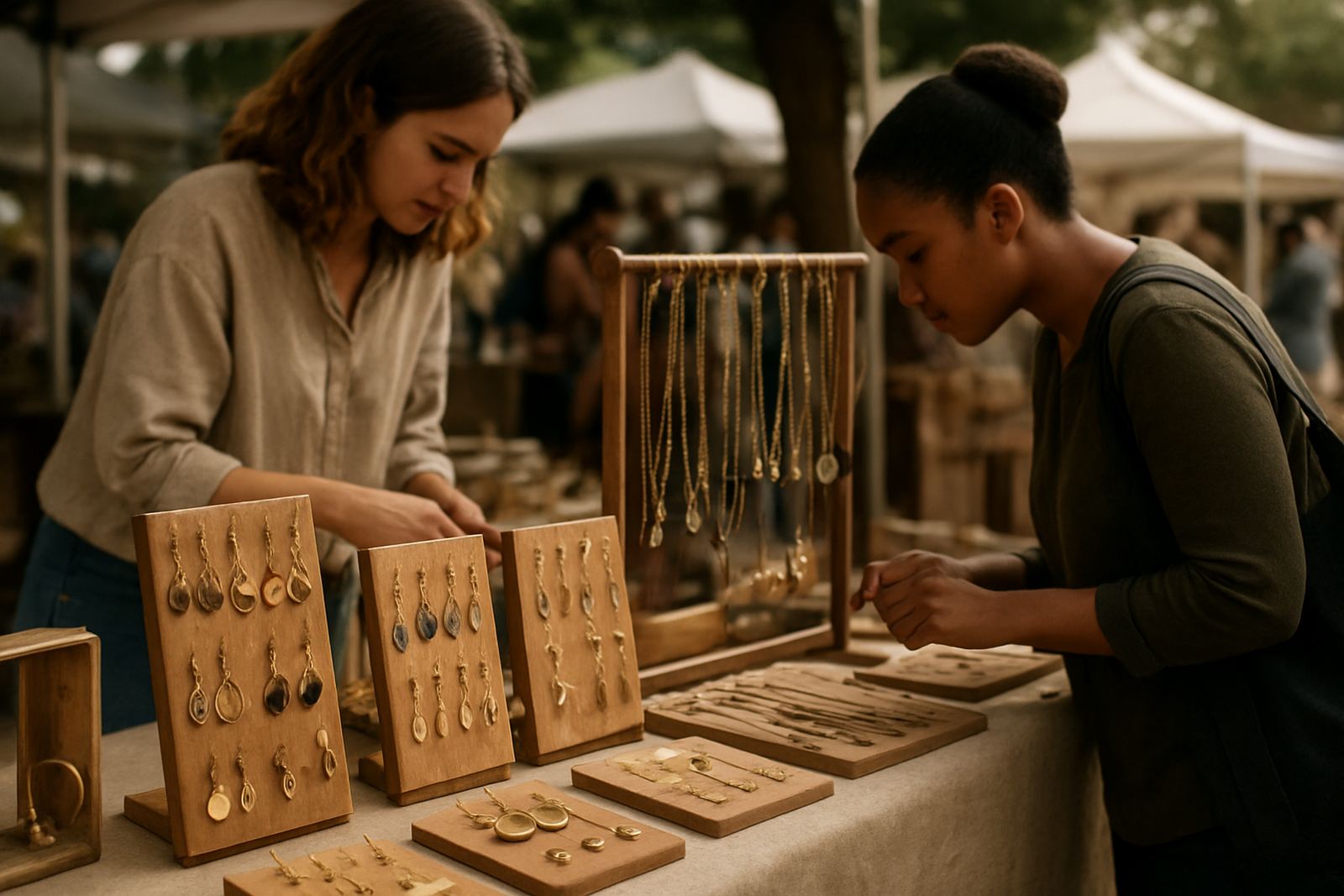
At Hatfield, Brooklyn and Menlyn markets, shoppers usually stop for one of three reasons: shine, price and ease of viewing. If earrings are hidden in a box or necklaces are tangled on hooks, people walk on. A good handmade jewellery setup lets buyers scan the full range from 2 to 3 metres away, then step in for a closer look without needing to ask where to begin.
For rings, earrings and necklaces, the display must do two jobs at once. It should protect delicate items from knocks and dust, and it should show enough pieces to make the stall feel worth stopping at. Too many items look untidy. Too few can make the table feel empty, especially at busier Pretoria weekend markets.
Typical display pieces for handmade jewellery
A practical set usually includes a mix of height, texture and secure holders. For most makers, that means small risers, earring stands, ring trays, necklace busts and a locked cash box or under-table storage crate. If you trade outdoors, add weighted tablecloth clips and a covered box for spare stock in case wind picks up after lunch.
- Velvet ring trays or foam inserts for small collections
- Standing earring panels with clear price cards
- Necklace busts in 2 or 3 heights so layers do not blend together
- Shallow display trays for bracelets, pendants and gift sets
- Small mirror for try-on use, plus hand sanitiser near the front
For maker nights, a lighter set works well because the crowd often moves more slowly and asks more questions. For weekend markets, make the setup sturdier and quicker to repack, since rain or a late venue change can mean a faster pack-down than planned.
Layout that keeps the table secure and easy to shop
With handmade jewellery, the front edge of the table should be the easiest area to browse. Put your best-selling earrings and entry-level rings here, since people are more likely to buy on impulse when the price is visible. Keep finer pieces slightly higher or deeper on the table, where they can be seen without being bumped by children or bags.
A simple rule helps: group by type first, then by price. That means one section for rings, one for earrings, one for necklaces, and a small area for premium pieces or custom orders. Use short labels and keep wording plain. Buyers at Centurion or Lynnwood do not want to guess if something is sterling, plated or beaded, they want the facts in front of them.
- Place top sellers at eye level, not flat on the table
- Leave one open space for try-ons and customer chats
- Keep back stock below the table in lidded tubs
- Use one clear payment point so the table does not feel crowded
How to price and present jewellery without losing margin
Handmade jewellery pricing should reflect materials, labour, packaging and stall fees. At local markets, many makers underprice small items and then struggle to cover the fee for the day. A ring or pair of earrings that looks simple may still need cleaning, polishing, packaging and a fair allowance for breakages or unsold stock.
As a working range, many new makers in Pretoria start with display-ready accessories and stall basics in the R1 500 to R4 500 range, if they already have stock. A fuller setup with multiple stands, risers, mirrors, printed labels and secure storage can sit between R4 500 and R12 000. If custom joinery, lighting or branded signage is added, it can go higher. The aim is not to overspend on fittings before you know what sells best.
Pricing cards should be large enough to read at arm's length. If a buyer has to ask the price of every piece, the stall becomes slower and sales drop. A small sign saying what metals, stones or beads are used is also helpful, especially for allergy-aware buyers.
Common mistakes makers make with jewellery stalls
The most common mistake is crowding too many small items onto one flat surface. When everything sits at the same level, the eye gets tired and the stall loses impact. The second mistake is poor labelling. If buyers cannot tell what is silver plated, gold plated or stainless, they may hesitate or move on.
Another issue is weak security. Tiny pieces disappear quickly when trays are open and unmanned, especially during busy family hours. Use trays that can be lifted and moved in one go, and keep a spare cloth or cover nearby for sudden weather changes. Coastal humidity can also dull some finishes, so store stock in sealed containers with anti-tarnish strips if needed. It is a small step but it saves money.
- Do not mix loose chains with earrings in the same tray
- Do not use dark backgrounds if your metalwork is also dark
- Do not leave price cards at the back where nobody sees them
- Do not pack every item by hand during trade hours if you can avoid it
Planning for weekends, pop-ups and maker nights
Pretoria weekend markets need a setup that can travel well and still look neat after an hour in the sun. Maker nights are different because lighting and foot traffic change the feel of the stall. For both, keep a checklist for stock, cleaning cloths, spare hooks, change and card payment tools. If the market has limited power or shared plugs, plan as though you may not get any power at all.
For seasonal trading, a few small changes help. In December, gift-ready packaging matters more. In winter, warm-toned lights and darker trays can make metals stand out better. If you travel for nationwide pop-ups, use modular fittings that can be packed into one or two strong cases. That keeps setup time down and reduces damage in transit.
When the layout is clean, prices are easy to see and the stock is protected, handmade jewellery sells better. Buyers feel more confident, the table looks professional and the maker spends less time untangling chains and more time talking to customers.