
What ceramic makers need from a market stall
Ceramic work sells best when people can see the form from a little distance and then come closer to feel the surface. Bowls, mugs, vases, plates and sculptural pieces need more breathing room than soft goods because the customer must judge weight, scale and glaze variation before buying. At Hatfield, Brooklyn, Lynnwood, Menlyn and Centurion markets, ceramic sellers often arrive with a mix of everyday tableware and one off statement pieces, so the stall has to show both price points clearly.
The client situation is usually simple: a maker wants to move stock without chips, cracked rims or crowded tables that make everything look cheaper. Good spacing helps with that. It also makes it easier for families to browse without bumping into displays, which matters at busy weekend markets and maker nights where foot traffic can bunch up. If you have work that is food safe, decorative or suitable for gifting, the setup should explain that in plain language with small signs and neat grouping.
Pottery also benefits from honest lighting. Bright, harsh light can flatten glaze and hide detail, while too little light makes earthy finishes look dull. In Pretoria, where strong sun and afternoon heat can affect comfort, stalls need shade, stable surfaces and enough room for shoppers to stand without blocking the whole front.
Typical equipment for ceramic stalls
A ceramic stall does not need a lot of equipment, but the right pieces matter. The aim is to protect stock, show variety and make the table easy to shop. For most makers, the set-up is built around display risers, table coverings, sturdy crates and simple price cards. If you sell larger vessels or heavier planters, you may also need a ground display area so the weight is spread out properly.
- Folding tables with enough load capacity for boxed stock and display pieces
- Layered risers, plinths or crates to create height without crowding
- Soft cloth, felt pads or cork sheets to prevent chipping and sliding
- Clearly printed price labels with item names, dimensions and use notes
- Bubble wrap, tissue and boxes for safe take-away packaging
- Card machine power backup, plus spare cash float
- Weighted signage for windy outdoor markets, especially in open Pretoria venues
For maker nights and pop-ups, many ceramic sellers also bring a small demo tray with glaze samples, clay tests or before-and-after firing examples. That helps customers understand the finish and can make a piece easier to choose, especialy when there are several similar forms on the table. A market team should know where the tables, chairs and queuing points sit so the stall does not become cramped during peak trading hours.
Layout and planning that protects fragile stock
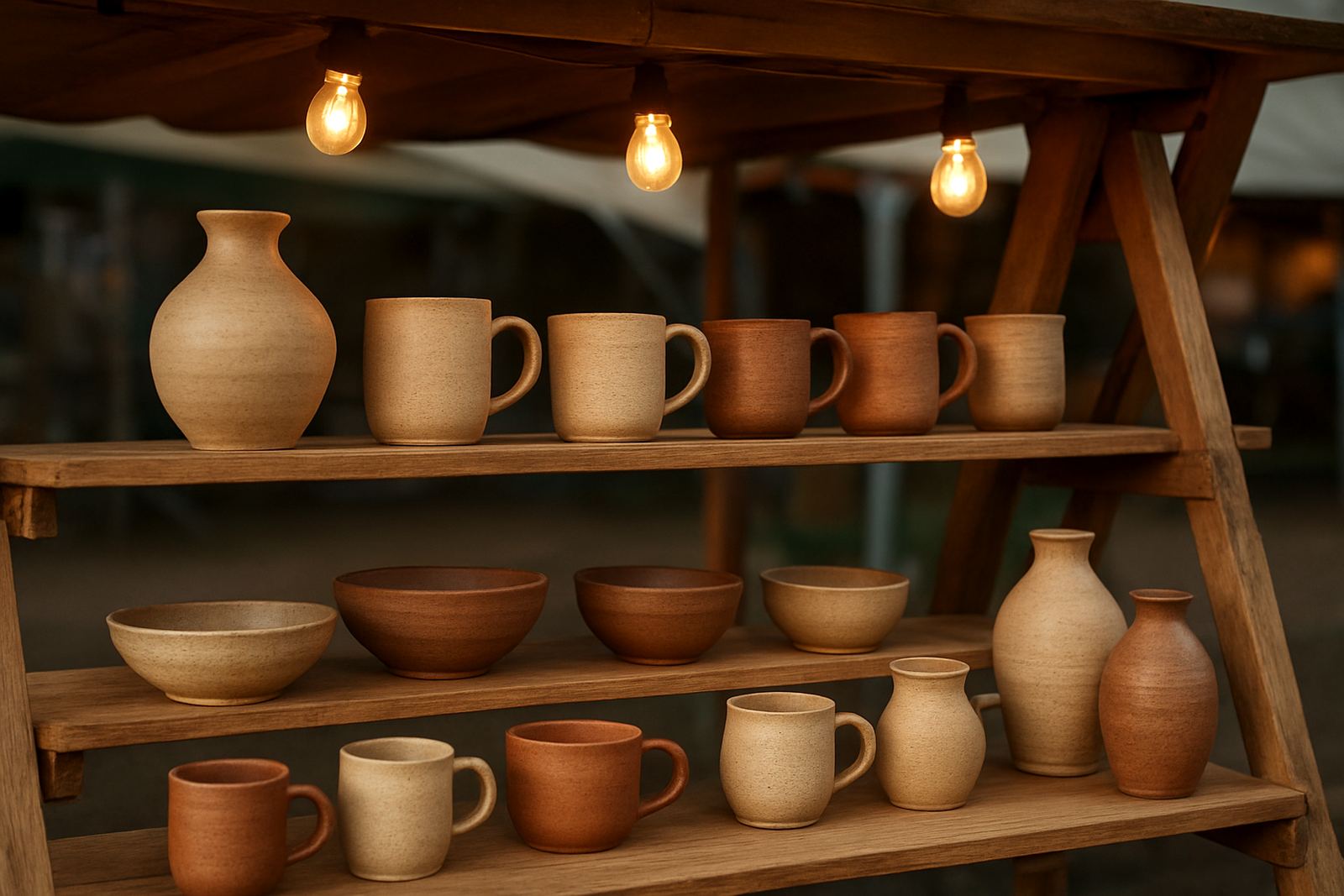
Pottery stalls work best when the customer path is clear and the most breakable items are not at elbow height. Start with heavier items at the back or on lower shelves, then move to medium pieces in the middle and smaller gift items near the front. Leave enough space between items so glazes can be appreciated individually. If every mug is touching the next mug, the display starts to read as bulk stock instead of handmade work.
A good plan also considers crowd flow. Weekend markets in Hatfield and nearby areas often bring browsers, students, families and repeat buyers into the same row, so the stall needs a one way feel. Keep the payment point to one side and the wrap-up area behind the table. That stops customers from reaching across stock while you are packing. For pottery collections with different ranges, group by use rather than only by colour: mugs together, serving bowls together, vases together and sculptural pieces together.
Useful spacing rules for ceramic displays:
- Leave at least 5 to 8 cm between smaller items so the eye can separate them
- Keep larger bowls and vases 10 to 15 cm apart where possible
- Place fragile handles, rims and spouts away from walkways
- Use one hero section rather than spreading special pieces across the whole table
- Pack reserve stock below the table in padded boxes, not loose bags
Common mistakes ceramic sellers make
The biggest mistake is overfilling the table. It may feel safer to show everything, but crowded ceramics sell poorly because buyers cannot see what makes each piece different. Another common problem is unstable stacking. A plate tower can look neat for five minutes, then tip when the crowd gets busy or the ground is uneven. In open markets, that can mean chips and unnecessary losses before lunch.
Some makers also underprice pieces because they compare them only to mass produced stock. Hand thrown work, hand glazing and careful firing carry real labour and material costs, especially if a piece has a second firing or detailed decoration. On the other hand, some sellers price too high without explaining the work involved. Simple tags that note clay type, firing method or whether a piece is dishwasher safe help customers understand value without a hard sell.
Another issue is poor protection from weather. Coastal humidity can affect packaging and comfort, while hot inland afternoons can soften adhesives and make paper labels curl. If the market is outdoors, bring table weights, a cloth cover that does not snag on rims, and boxes that close properly. At indoor maker nights, the challenge is often lighting and storage, so keep a tidy under-table area and do not leave loose stock where it can be knocked.
Budget ranges for ceramic market set-up
Budget depends on how much stock you carry and how polished you want the stand to look. A basic ceramic market set-up for a first outing can be kept fairly lean, while a mature collection with custom displays and transport boxes needs more investment. Most makers should budget for both presentation and protection because broken stock eats into profit quickly.
As a working range, a simple stall can start around R1 500 to R3 500 if you already have tables and only need cloths, labels, padding and a few crates. A more organised setup with layered risers, stronger packaging, a card machine backup battery and printed signage usually sits between R4 000 and R9 000. If you need custom plinths, branded display boards or dedicated transport cases for fragile collections, the spend can go beyond R10 000.
It also helps to plan running costs per market day. Entry fees, fuel, packaging, card charges and breakage allowance should be counted before you price stock for weekend markets in Pretoria or nationwide pop-ups. If you sell heavier planters or large serving dishes, transport costs can rise quickly, so make room for that in your margin. Keep a small breakage reserve too, because one cracked platter can remove a large part of the day’s profit.
How Local Makers Market supports ceramic collections
Local Makers Market works with makers who need more than a table and a crowd. For ceramic sellers, that can mean help with stall styling, pricing products, packaging for sales and customer conversation so the collection is presented clearly. If you are preparing for your first market, the First Market Prep workshop is a useful starting point. For those bringing a new range, Small Batch Branding and Seasonal Selling can help shape the offer for gifting periods, school holidays and year end trading.
Maker nights and weekend markets across Hatfield, Brooklyn, Lynnwood, Menlyn and Centurion give ceramic makers different customer types and sales rhythms. Some venues suit decorative pieces, while others do better with practical mugs, serving ware and gift sets. The key is matching the display to the audience and keeping the layout calm enough for careful buying.
For ceramic collections, that means fewer distractions, better spacing and a stall that lets the pieces speak for themselves. When the arrangement is right, customers spend longer at the table and are more likely to buy more than one item.