A tidy one-table setup for busy market days
The Artisan Table Kit is made for small-format selling where every centimetre matters. It suits makers who trade from a single trestle or folding table and need a clean, presentable layout for products, price cards, packaging and payment items. You get a simple kit that helps your table look organised from the first customer to the last.
For weekend markets in Pretoria, Hatfield, Brooklyn, Lynnwood, Menlyn and Centurion, this kind of setup works well because it packs down fast and fits into a hatchback or bakkie with other stock. It is also useful for nationwide maker nights, church bazaars, community halls and indoor craft fairs where space can be limited and access times are tight.
- Best for handmade products sold from one table
- Suitable for indoor and sheltered outdoor trading
- Easy to load, carry and pack away after trading
What the kit includes and how it is sized
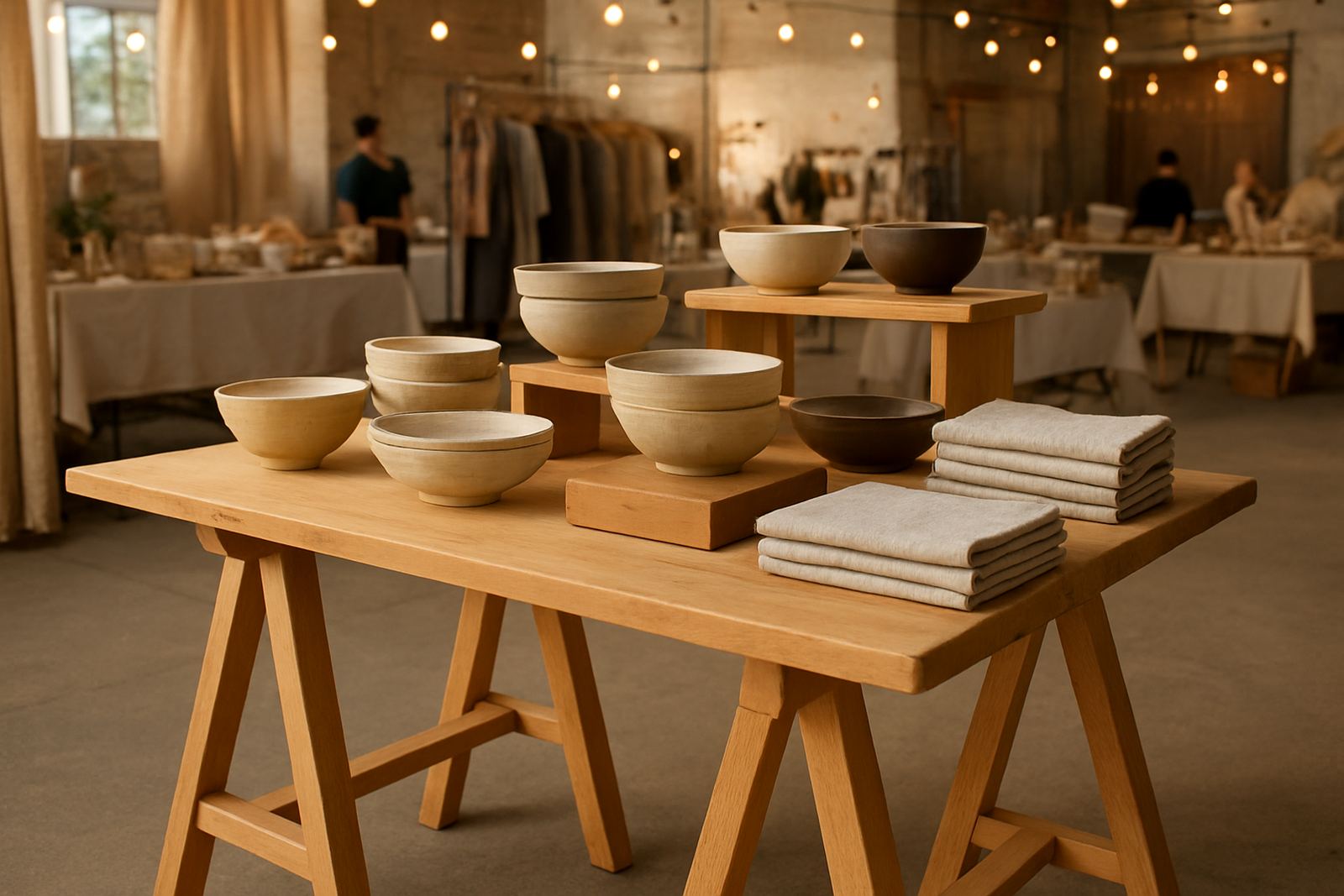
Most Artisan Table Kit setups are built around standard table sizes so you can work with what the venue gives you. A common table size is 1.8 m x 0.75 m, although smaller 1.5 m tables are often used at tighter events. The kit is planned to keep the display low enough for good sight lines, but tall enough to lift products off the table surface and create a proper sales area.
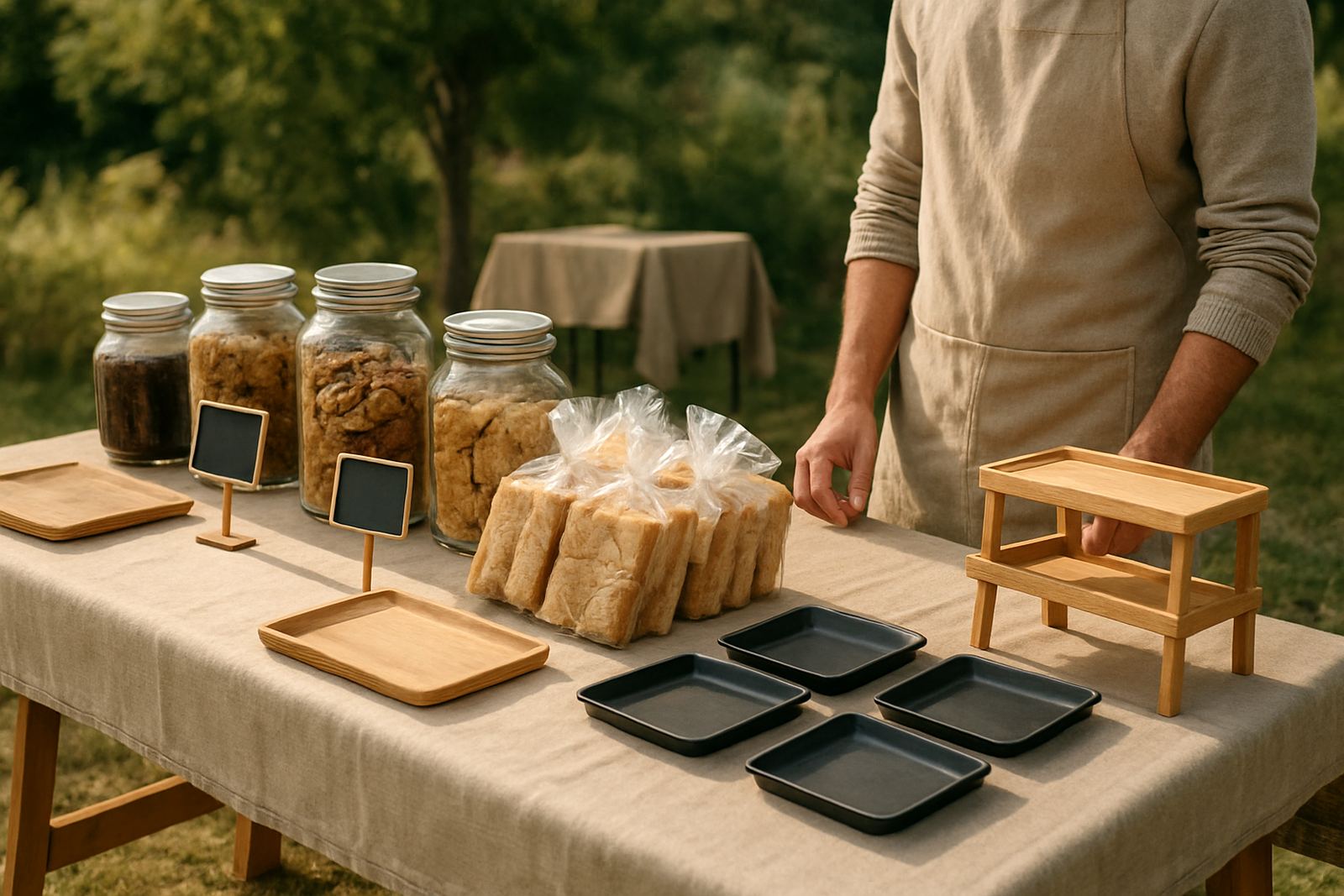
The package can include folding display risers, a table cover, small sign holders, product trays, storage boxes, and clip-on lighting where permitted. If you sell food items, the kit can also be arranged with food-safe tubs, scoop containers and a protected tasting area. For makers working with jewellery, skincare, candles, ceramics or small gifts, the layout helps separate product groups without taking up too much space.
- Fits standard trestle tables and fold-up tables
- Recommended clear trading depth: 600 mm to 750 mm
- Typical pack-down footprint: one medium storage crate plus flat parts
Where the Artisan Table Kit suits best
This kit suits makers who need a polished table without carrying heavy structures or hiring a full stand. It works particularly well at weekend markets in Hatfield and other Pretoria areas, as well as maker nights where buyers expect a neat display and easy browsing. If you sell in places with mixed foot traffic, the compact format lets customers stand close, look carefully and speak to you without feeling crowded.
It also suits coastal or humid areas where goods need to stay dry and off the ground. A raised display is useful for protecting packaging, labels and stock from damp tablecloths and condensation. At outdoor events, the kit can be used with weights, clips and a simple rain cover if the organiser allows it. For food sellers, it is important to confirm municipal rules, handwashing access and any temperature control requirements before trading.
- Ideal for craft, gift, jewellery, stationery and small-batch food stalls
- Works in community halls, school fairs, church markets and pop-up events
- Good option where stall space is measured and trading hours are short
Power, gas and on-site setup needs
The standard table kit is usually low-power and can be run without electricity, which makes it useful at venues with limited plug points. If you add lighting, a card reader charger or a small display fan, check whether the venue offers a 230 V supply and whether extension leads are allowed. Keep cable runs short and taped down properly so no one catches a foot on them.
Gas is generally not needed for a basic Artisan Table Kit. It only becomes relevant if you are using the table for live food prep, heating, or tasting elements that require cooking equipment. In those cases, you will need to follow the market rules, keep gas cylinders upright and secured, and make sure the event organiser allows open flame or gas use. Some venues do not permit gas inside halls at all, so it is worth checking before you load the vehicle.
- Basic kit can operate without mains power
- Lighting is optional and depends on venue permission
- Any gas use must follow event and municipal safety rules
Care, cleaning and regular servicing
Because the kit is used in transport and set up repeatedly, it should be wiped down after each market and checked for wear before the next one. Fabric covers can collect dust, crumbs and product residue, while trays and holders may pick up fingerprints or scuffs. In humid conditions, dry all parts fully before packing to avoid mould or rust marks. That matters especially if you trade near the coast or store stock in a garage.
Over time, inspect clips, hinges, fasteners and table legs for loosening. If you use printed signs or menu boards, replace faded inserts before they make the table look tired. A small repair kit with tape, spare clips, a cloth and a marker pen can save you a lot of stress on market day. Good maintenance also helps the stall look consistent from one event to the next.
- Wipe and dry all parts after use
- Check clips, corners and supports every few events
- Store flat parts away from moisture and direct sun
What to check before you order
Before choosing an Artisan Table Kit, confirm the exact table size, the space allowed behind the table, and whether the organiser provides chairs, linen or electricity. You should also check how much stock you plan to display at once, because overcrowding a one-table setup makes products harder to sell. A cleaner layout often works better than squeezing every item onto the table.
It helps to think through your product type, packaging and transport needs at the same time. For example, food sellers may need food-grade containers and sneeze protection, while makers of delicate goods may need padded trays or display risers. If you sell in more than one town, ask for a format that is easy to reset quickly, because different markets often have different rules and table dimensions. A little planning now can save time when you are loading at 5 am on a Saturday morning.
- Confirm table size, venue power and set-up time
- Check whether indoor and outdoor events need different parts
- Match the kit to your stock volume and packaging style