What the Ceramics Market Kit includes
This kit is made for handmade mugs, bowls, plates, planters, vases and gift sets that need a careful display. The layout keeps breakables off the floor, gives customers enough space to browse, and helps you pack up quickly at the end of trade. It suits makers who do their own selling, as well as teams that need a repeatable setup for more than one market in a month.
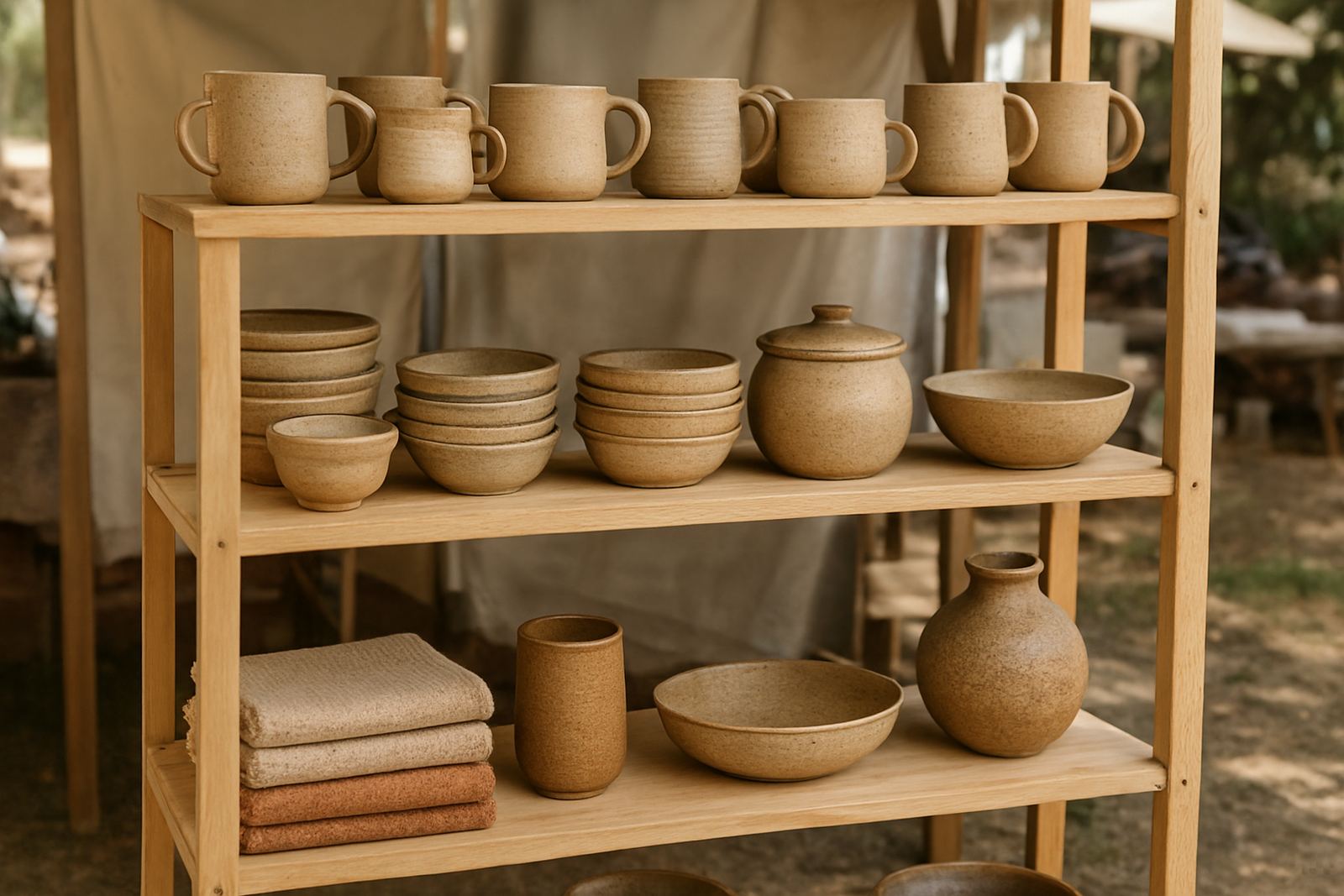
A standard kit can be arranged as table-top or mixed-height display, with shelf space for smaller pieces and stronger base areas for heavier stock. The look is simple and clean, so your glaze colours, texture and form stay the focus. If you trade in busy family markets or maker nights, this kind of setup helps reduce knocks and keeps the table looking tidy even after a full morning of sales.
- Display tables or table sections for main stock
- Raised stands and risers for visibility
- Crate-style or shelf-style storage under the table
- Protective packing space for breakables and wrap
- Sign holders for pricing and product notes
Sizes and layout options for different stalls
The kit works in compact 2 m by 2 m spaces as well as larger 3 m frontages. For smaller market bays, a narrow front table with vertical shelving is often best because it keeps stock visible without crowding the walk way. For larger stands, you can add side tables, a feature plinth, or a tasting style counter if you also sell tea cups, serving dishes or food-safe ceramics.
Many makers prefer a layout that uses three display levels. The eye is drawn to the top layer first, then to the mid-height shelves, then to the lower storage. This gives customers a clear path and it also reduces the risk of children reaching across the whole table. At Hatfield and other busy weekend venues, that small bit of order makes a big difference when the crowd picks up.
- 2 m x 2 m starter kit for tight stalls or first-time markets
- 3 m x 3 m extended kit for fuller collections
- Modular shelves for mugs, bowls and small gift packs
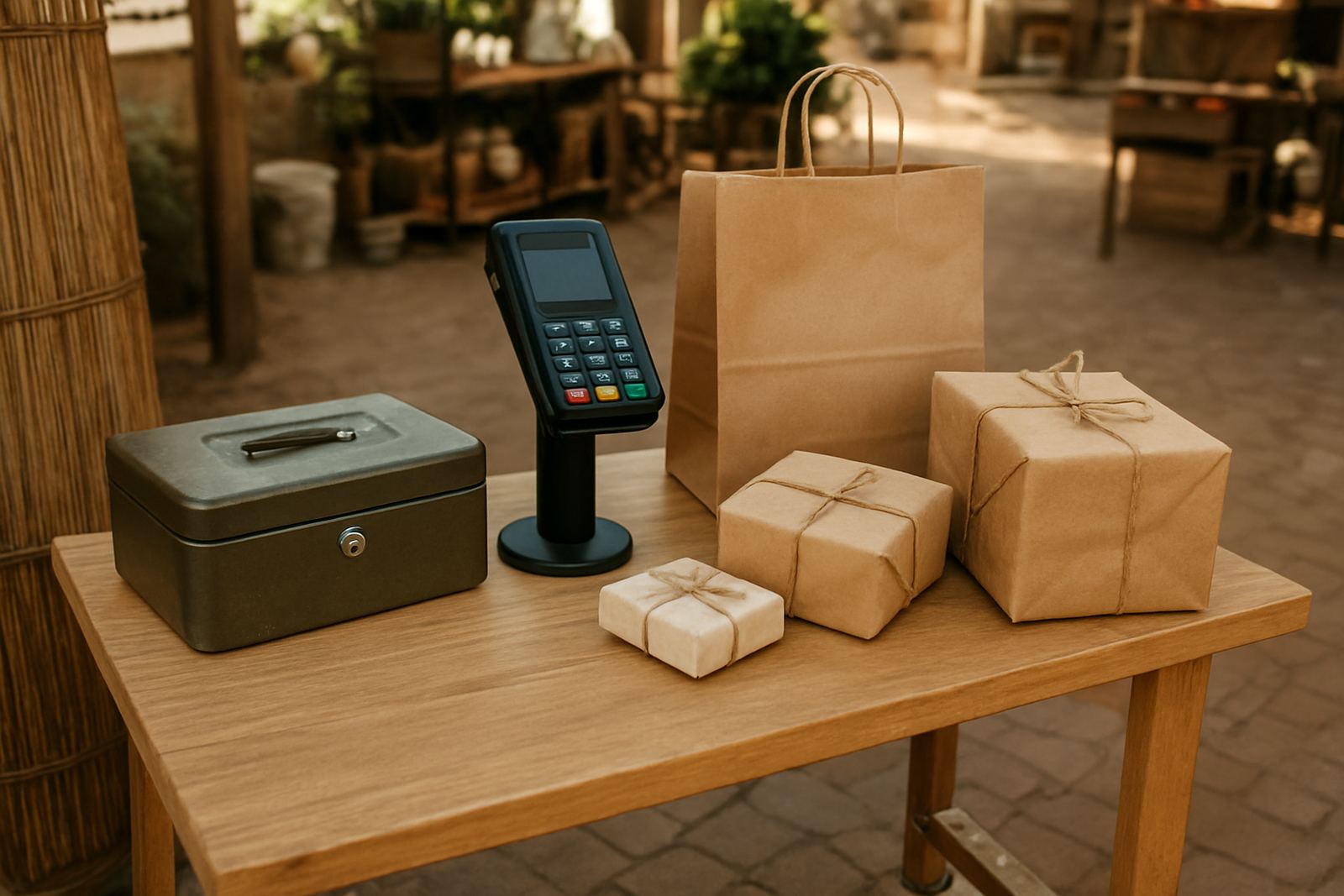
- Optional corner unit for wrap, bags and payment space
- Stackable transport boxes for safe loading and unloading
Where it suits best
This kit is a good fit for weekend markets, maker nights, indoor craft fairs and seasonal pop-ups across South Africa. It suits ceramics sellers who want a neat public-facing table at places with steady foot traffic, mixed age groups and a lot of handling. If you sell at family markets in Pretoria, church bazaars, school events or city-centre pop-ups, the layout helps keep fragile items in view without making the stall feel cramped.
It also works well for coastal events where humidity can affect packaging, labels and unsealed paper stock. In hotter inland spots, the kit gives you a cleaner way to manage stock because it does not depend on power for the main display. If you add lighting, it should be low-draw and easy to run from a charged battery pack or a small 220V supply where venue rules allow.
- Weekend makers markets in Hatfield, Brooklyn, Lynnwood, Menlyn and Centurion
- Nationwide pop-ups in malls, community halls and open-air venues
- Maker nights with a stronger evening display and slower browsing
- Indoor events where presentation matters more than bulk stock
Installation, power and event-day setup
The kit is designed for quick setup with basic tools only. Most stalls can be assembled by two people in 20 to 40 minutes, depending on the number of shelves and whether you are using transport crates, table cloths, lighting or back panels. For market days with early bump-in times, it helps to label each part and keep one bag for fasteners, clips and repair tape.
Power needs are low. The core kit does not need electricity or gas. If you choose to add LED lighting for evening markets, make sure the venue allows it and check that the cable runs do not cross customer paths. Gas is not needed for the standard ceramics display, though some makers use a small gas or electric item elsewhere on a shared stand for live demonstrations. In that case, follow venue safety rules and keep any heating source away from packaging and cleaning cloths.
- Setup time: 20 to 40 minutes for a standard stall
- Power: not required unless optional lighting is added
- Gas: not required for the kit
- Floor protection: recommended on tiled, polished or wet surfaces
- Anchoring: useful outdoors in windy Pretoria weather
Care, cleaning and servicing between markets
Ceramics sell best when the stall looks clean and calm, so regular care is important. Wipe shelves with a soft damp cloth after each event and dry them properly before packing. Check corners, joints and shelf brackets for wear, especially if the kit travels often or gets loaded in and out of bakkies and trailers. If you trade near the coast, keep metal fittings dry and store printed signs in a sealed folder so they do not curl or stain.
For the stock itself, keep enough bubble wrap, tissue or foam wrap in the kit to separate fragile pieces during transit. Do not overstack plates or nesting bowls if the bottom box is already full. If a shelf shows wobble or a clamp feels loose, sort it before the next market rather than trying to make do on the day. Small repairs are easier between events than during trade, and it saves a lot of stress when the morning crowd arrives.
- Wipe down after every market
- Check fixings, shelves and clips monthly
- Replace torn cloths, split boxes and worn padding early
- Store in a dry place away from damp concrete floors
What to confirm before you order
When ordering a ceramics kit, the most useful detail is your stock mix. A table full of mugs needs a different layout from one that carries bowls, serving trays and decorative pieces. It also helps to know your usual stall size, whether you trade indoors or outdoors, and how much stock you need on display versus in reserve. If you sell many one-off pieces, ask for more shelf depth and extra packing space. If you move repeat ranges, ask for stronger signage and a clearer price zone.
Before the order is confirmed, check transport length, weight limits and whether you need a folding option for smaller vehicles. It is also worth checking the surface you will stand on at your main venues, because uneven paving or wet grass can affect table stability. If you plan to use the kit for maker nights and daytime markets, ask for a layout that changes quickly without rebuilding the whole stand. That saves time, and it keeps your display looking consistent from one event to the next.
- Measure your stall frontage and depth
- List your main product types and average piece size
- Confirm whether you need indoor, outdoor or mixed-use parts
- Ask about storage space, transport weight and assembly method
- Check if you want optional lighting or extra signage
Key facts
| Product use | Market display kit for pottery and fragile handmade wares |
|---|---|
| Standard footprint | 2 m x 2 m starter layout, with 3 m x 3 m extended option |
| Main materials | Foldable tables, shelves, risers, transport crates and sign holders |
| Assembly time | 20 to 40 minutes for a standard setup |
| Power requirement | None for standard use; optional low-draw lighting can be added |
| Best suited for | Weekend markets, maker nights, pop-ups and indoor craft events |