A tidy way to show small pieces clearly
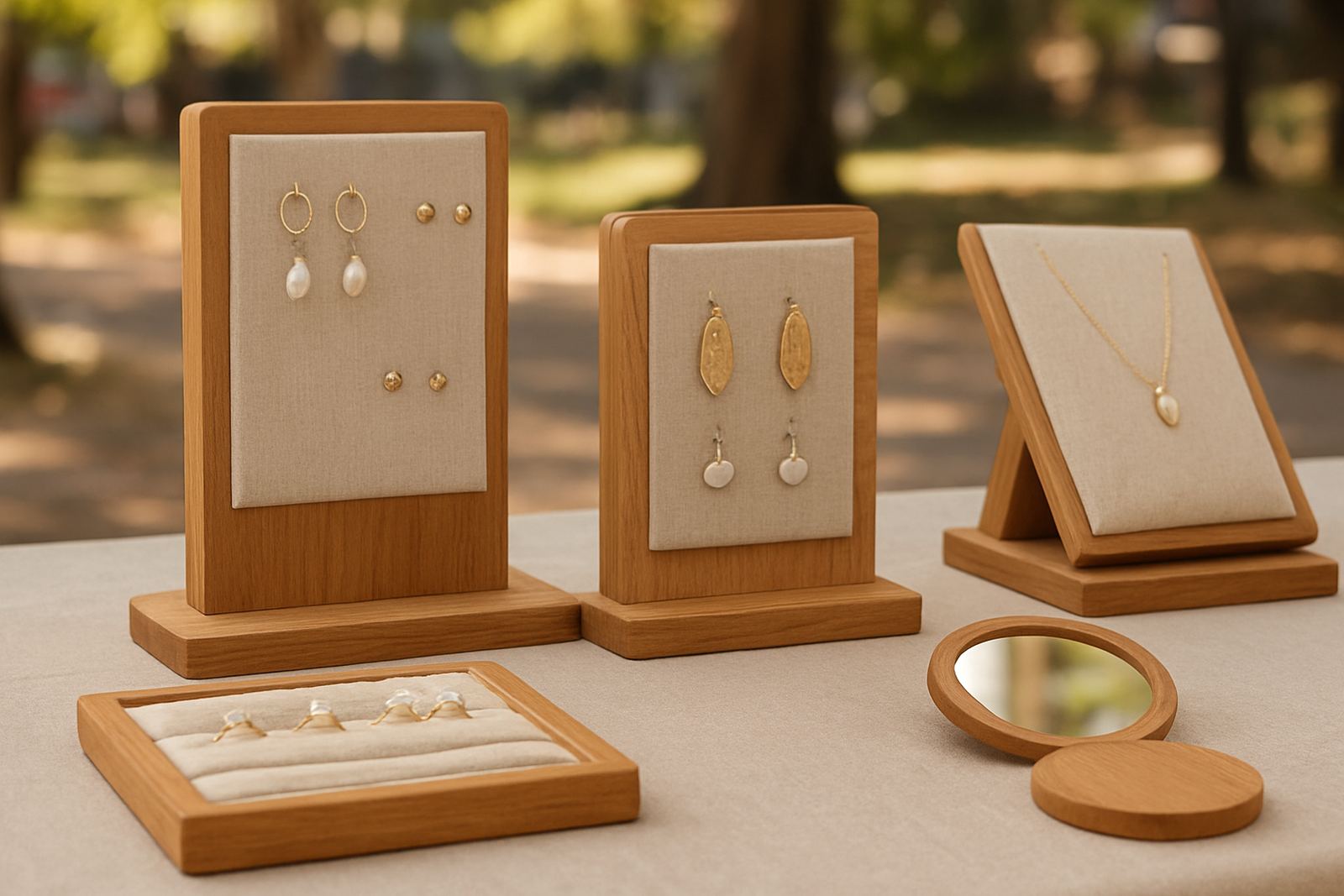
This kit is built for makers who sell items that need close viewing. Earrings must hang straight, necklaces need height so they do not tangle, and small accessories should sit at eye level where customers can compare styles. The set combines upright display forms, tray space and small stands so you can arrange a table in a clean, orderly way with out wasting space.
At Hatfield, Brooklyn or Menlyn weekend markets, a table can get busy fast. Shoppers often arrive in groups, and jewellery sells best when the display is readable from both standing and seated height. This kit helps you group pieces by metal tone, stone colour, collection or price band, so customers can move from one section to the next without asking you to lift everything out.
- Works for earrings, pendants, bracelets and hair accessories
- Supports both single-piece display and grouped collections
- Helps reduce tangling, tipping and table clutter
- Suitable for handmade, small batch and custom pieces
Sizes and display options for different market setups
The standard layout is sized to fit a 1.8 m market table, but each piece can also be used on a smaller half-table or on layered risers for tighter stalls. The main display panels are light enough to move on your own, but solid enough to keep a neat line when customers lean in. Most makers use the kit as a front table feature, then keep extra stock in labelled boxes below the table.
Options vary depending on the size of your range. A compact set suits first-time traders and smaller maker nights. A larger set gives more hanging area for statement earrings and longer chains. If you sell mixed items such as jewellery, keyrings and tiny keepsakes, you can use the tray sections for the smaller pieces and keep the hanging sections for the items that catch light best. Good spacing matters, especially in humid coastal towns where soft packaging and fine chains can look untidy quickly.
- Compact option for small tables and shared stalls
- Full market set for 1.8 m tables and pop-up counters
- Layered pieces for height without blocking sight lines
- Neutral finish for easy matching with most product styles
Where this kit suits best in Pretoria and beyond
For Pretoria weekend markets, this kit suits busy family traffic, craft-heavy aisles and stalls that need to stay presentable for long trading hours. It is a good fit for Hatfield, Lynnwood, Brooklyn, Menlyn and Centurion markets where shoppers browse with time, but still expect clear pricing and easy access. It also works well for nationwide maker nights where the display must be moved in and out quickly between setups.
For indoor venues, the kit can be used on polished floors, tiled halls and concrete event spaces without requiring anchors or wall fixing. For outdoor events, it does best under shade cloth, gazebos or covered walkways. Wind is always a factor in open spaces, so heavier stock should sit low and loose items should be clipped or grouped properly. There are no gas requirements and no special services needed, just a stable table and a dry packing plan between events.
- Good for weekend markets, pop-ups and maker nights
- Suitable for indoor halls and covered outdoor trading areas
- No gas supply required
- Best used with a stable 1.8 m table or counter
Installation, packing and power needs
Installation is simple. Place the main panels on a level surface, then set the trays and stands in the order you want customers to browse. Most makers can set up the full kit in about 15 to 20 minutes once they know their layout. If your stall uses battery lights for evening trading, keep the wiring clear of the hanging pieces so chains and hooks do not catch. No mains power is needed for the display itself, though many traders use a small light strip or clip light at night.
There is no plumbing or gas connection required. That makes it easy for school halls and temporary spaces where power can be limited. Keep an extension lead only if your own lighting or card machine needs it, and check venue rules before using any powered accessories. In some municipal spaces, public walkways must stay open, so your layout should leave enough room for customers to pass without leaning over stock.
- Set-up time: about 15 to 20 minutes
- Power: none required for the display kit
- Gas: not required
- Works with optional battery or mains lighting
Care, storage and servicing between events
Jewellery displays should be kept clean because fingerprints, dust and product residue show quickly on lighter finishes. Wipe the surfaces with a soft dry cloth after each event. If a piece picks up food grease from a market with gourmet stalls nearby, use a lightly damp cloth and dry it straight away. Avoid strong cleaners that can dull the finish or leave marks on earring cards and trays.
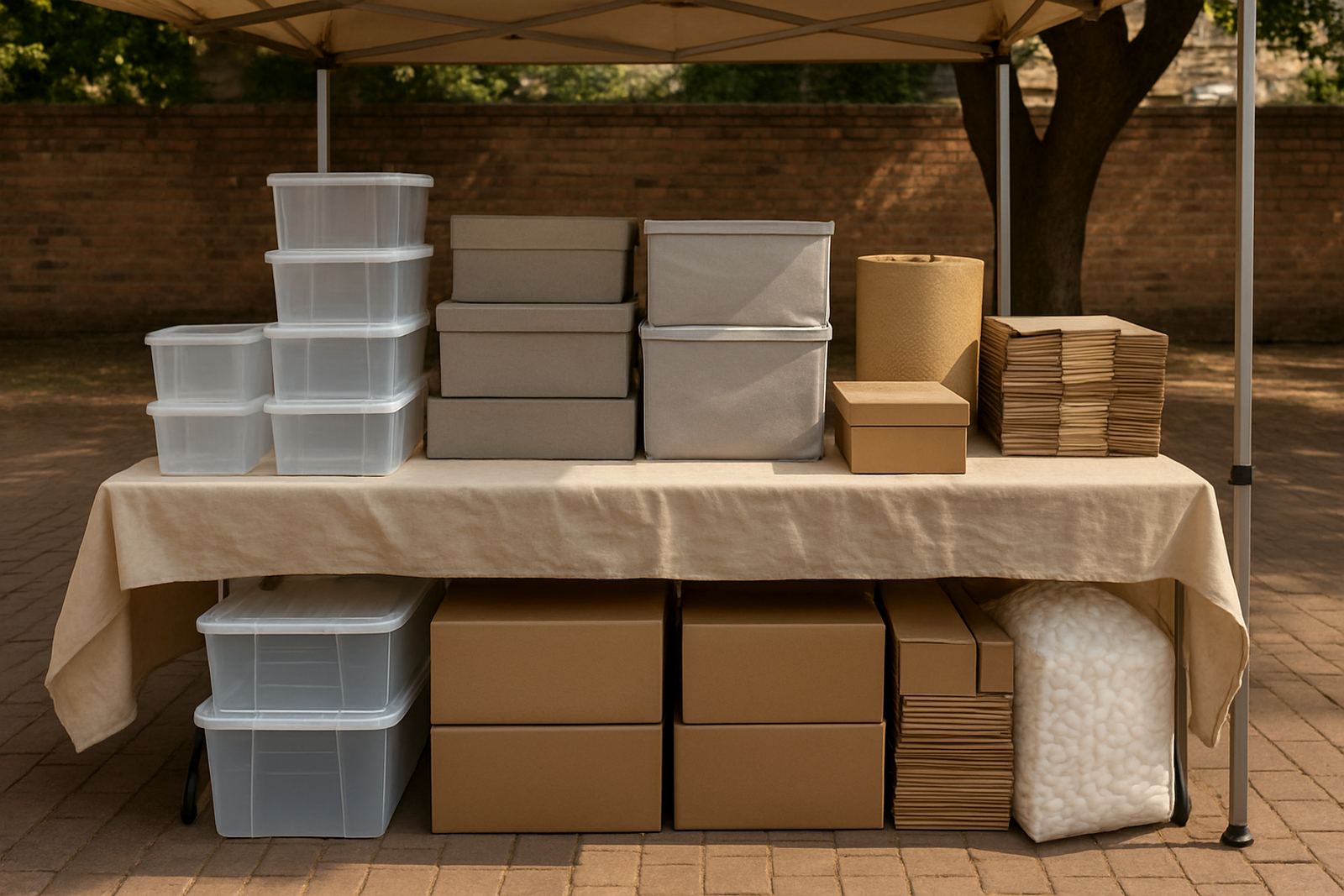
Store each part flat or upright in a labelled container so it does not bend, chip or scratch in transit. For coastal areas like Durban or the Garden Route, keep the kit dry before packing because humidity can affect adhesives, backing boards and some packaging materials. Check hooks, clips and stand joints every few markets so nothing works loose. If you move between Pretoria and outlying towns, a quick pre-market check saves a lot of trouble.
- Wipe down after every use
- Keep dry before packing and storage
- Check hooks, clips and joints regularly
- Use labelled containers to avoid damage in transit
What to check before you order
Before ordering, measure the table or counter you will use most often. A jewellery display can look neat on paper, but if your stall also holds packaging, payment gear and stock boxes, you need enough working space to move without knocking pieces over. Check how many earrings, chains and small accessories you want visible at one time, and decide whether you need a compact set or a larger market layout.
Also confirm your trading conditions. If you work outdoors, ask whether the venue has shade, wind exposure or a firm surface. If you trade indoors, ask about table size, access times and any rules for overnight setup. Many makers forget to ask about storage between market days, then end up carrying more than they planned. A clear count of panels, trays and stands helps avoid missing parts on the day, and it makes re-ordering simpler later.
- Measure your table or counter first
- Count the number of items you want displayed at once
- Check indoor or outdoor trading conditions
- Confirm what pieces are included in the set
Key facts
| Display use | Earrings, necklaces, bracelets and small crafted accessories |
|---|---|
| Standard fit | 1.8 m market table or equivalent counter space |
| Setup time | 15 to 20 minutes |
| Power required | None for the display kit |
| Gas required | No |
| Maintenance | Dry cloth wipe-down, regular clip and joint checks |