Start With One Clear Story Per Table
Ceramic stalls do better when the display has a clear idea behind it. Buyers should understand at a glance whether you are selling tableware, home décor, plant pots or gift pieces. If every item is mixed together, the table looks crowded and the work loses impact.
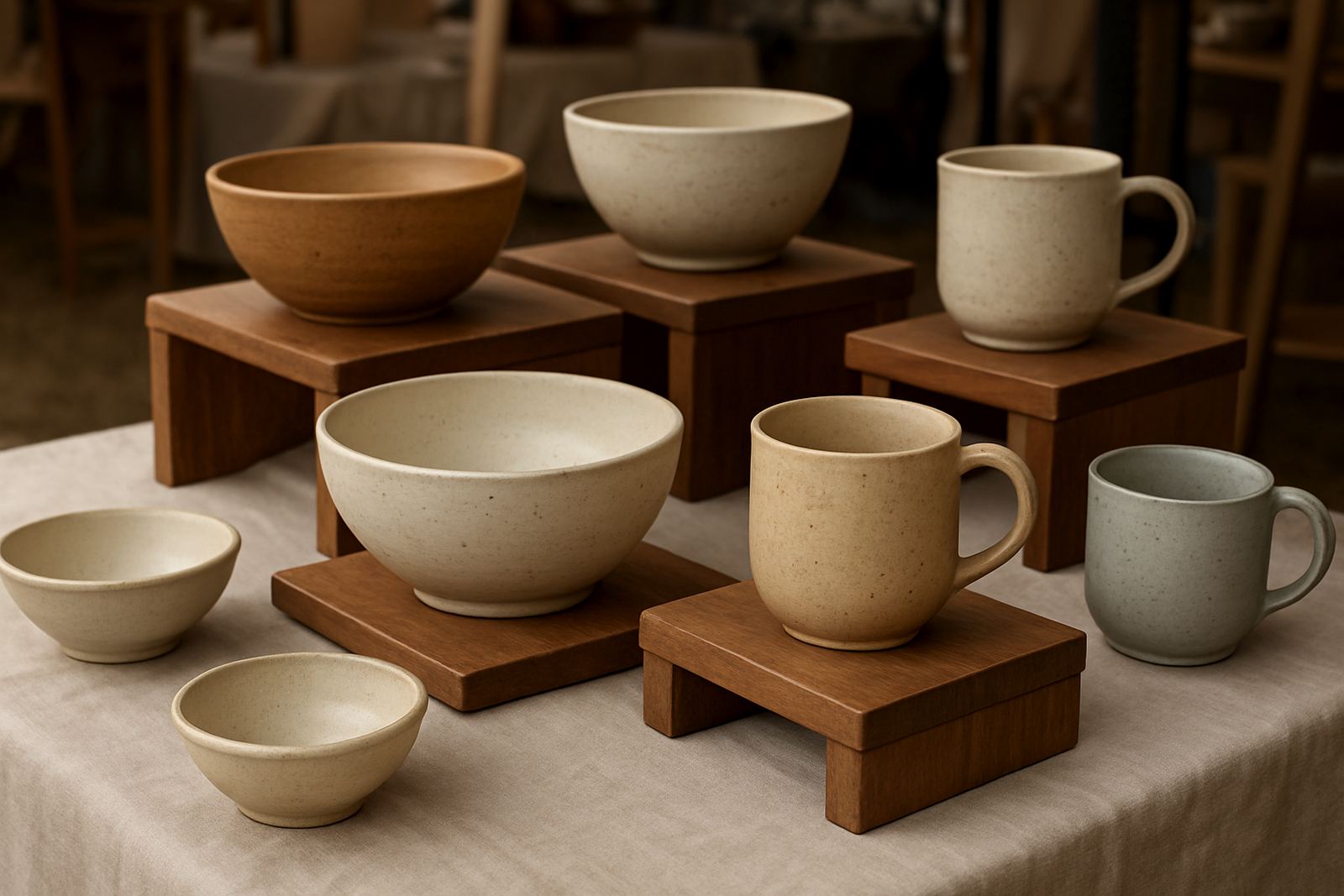
Use height, colour and function to separate ranges. Keep mugs near mugs, bowls near bowls and decorative pieces together. A simple tablecloth in a calm colour helps the glaze colours stand out, especially under bright market tents in Hatfield or Brooklyn where morning sun can flatten detail.
- Group by use first, then by colour or size.
- Keep your strongest pieces at eye level, not at the edge of the table.
- Leave some empty space so the work can breathe.
- Use one sign that tells shoppers what makes the range different.
Spacing Is About Safety As Much As Style
Ceramics need room between items. A crowded table invites breakages when people reach across stock, and it also makes pricing harder because shoppers cannot compare pieces properly. A little open space helps customers focus and gives you time to lift and wrap items without a scramble at checkout.
For markets with narrow walkways, such as busy pop-ups in Menlyn or Centurion, keep fragile stock back from the front edge by at least 10 to 15 cm. Use trays, low crates or risers so you can create levels without stacking heavy items on top of one another. In windy conditions, especially on open lawns, heavier items belong lower down and lighter decor pieces should be secured with museum putty or wrapped between sessions.
- Leave a hand-width between larger items.
- Do not stack rim-on-rim unless the pieces are packed for transport.
- Place handling signs near samples if people may pick up the work.
- Keep a clear path for your own movement behind the table.
Build Groups That Help Buyers Compare
People are more likely to buy when they can compare similar pieces side by side. Put three matching mug shapes together in different glazes, or show a set of bowls from small to large. This makes it easier for a customer to choose a size and price point without needing a long explanation.
A useful method is the rule of threes. One group can hold three to five items that share a purpose, while the next group shows a different purpose or finish. At a weekend market in Hatfield, for example, a ceramic seller might place breakfast bowls on one side, serving dishes in the centre and small gift pieces on the other. That structure helps shoppers move naturally across the table and notice the full range.
- Show one full set, then two or three variations.
- Keep bestsellers together so new stock can support them.
- Use small cards to explain glaze, firing or food-safe use.
- Separate higher-value pieces so they are not lost among low-cost items.
Use Displays That Can Handle Weather
South African markets are not always gentle on stock. Coastal humidity can soften packaging and make paper labels curl. Dust and heat are part of the job too, so your display should work without electricity and still protect your pieces if the venue goes dark or the weather turns.
Choose display items that are stable on uneven ground. Wooden crates, coated metal stands and thick plinths work well if they do not wobble. Avoid tall, narrow supports that can tip when a customer leans in. If you use lights, make sure your display still looks finished without them. In the late afternoon, an unlit stall should still feel organised and easy to shop.
- Keep wiping cloths nearby for dust and fingerprints.
- Use moisture-resistant labels and wrap spare stock in sealed tubs.
- Bring cable ties, blu tack, tape and a small toolkit.
- Test your setup at home before market day, not while customers are arriving.
Price Tags Must Be Easy To Read And Hard To Lose
Pottery buyers often decide quickly, so pricing should not make them work. Small handwritten tags are fine if they are neat and legible. Tie them through handles or place them behind each item in a consistent spot. If customers keep asking the same price question, the tag is doing too little.
For ceramics, clarity matters because similar items can differ in size, glaze and firing marks. Give each line a simple structure: item name, size, price and if relevant, whether it is dishwasher safe or microwave safe. At a market in Lynnwood or a maker night in Pretoria east, that kind of detail saves time and reduces confusion when a group is comparing several pieces at once.
Make pricing visible from a standing position. If people have to bend down or lift items to find the tag, they may put the piece back and move on. A clean tag system also protects you from underpricing, which is common when makers guess rather than cost properly.
A Hatfield Example That Works In Real Time
Picture a Saturday morning in Hatfield. A ceramic maker sets up on a 1.8 metre table with a narrow back rail, five matching risers and two lidded tubs under the table for spare stock. Front row items are the most affordable, mid-table holds the core range and the tallest pieces sit safely at the back. The tablecloth reaches the floor, hiding bags and giving the stall a neat line.
By 10am, the space is busy. Parents walk through, students stop for gifts and a regular buyer returns for a serving bowl. Because the ranges are grouped clearly, the maker can point to the right section in seconds. Nothing is overpacked, nothing needs reshuffling and no piece sits where a shoulder bag can knock it off the edge. That is the kind of display that keeps sales moving without stress.
This approach also works well for maker nights nationwide, where lighting is lower and browsing is slower. If your grouping is strong and your stock is safe, the stall can handle both a quick rush and a long conversation.
Before The Doors Open, Check These Seven Things
A ceramic display is only as good as its last check before trading starts. Walk around the stall and look at it from a customer’s angle. If a buyer cannot understand the range in ten seconds, adjust the layout before the first sale.
- Are the tallest pieces stable?
- Can prices be read from standing height?
- Is there enough space between fragile items?
- Do the colours and groupings make sense?
- Is spare stock stored safely out of sight?
- Are wipes, wrapping and bags easy to reach?
- Will the setup still work if the power goes off or the wind picks up?
Good ceramic merchandising is not about filling every centimetre. It is about showing the work clearly, protecting what can break and making it easy for people to choose. When a stall is spaced properly, grouped sensibly and set up for local conditions, the pottery does the selling.