Why the first glance decides so much
Most market visitors do not read a stall from top to bottom. They scan across the aisle, glance at faces, then catch the tallest point on the table before looking down at the finer details. That is why display height matters. It creates a clear visual path, especially in crowded halls where many stalls are competing for the same attention.
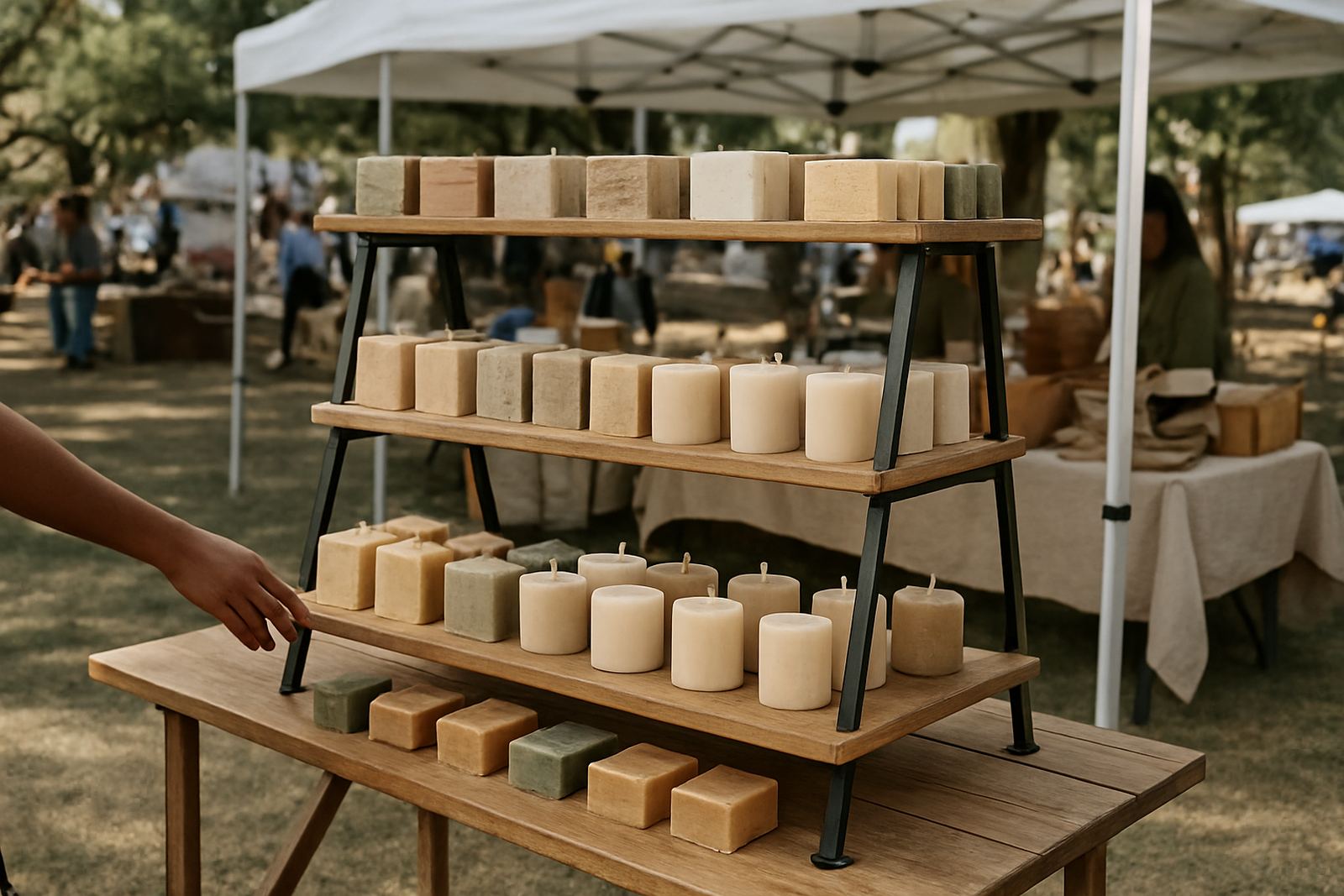
At weekend markets in Hatfield, Brooklyn or Menlyn, shoppers often arrive with a list in mind but still make impulse choices. A candle placed low on a flat cloth can disappear beside a busy neighbour. Put that same candle on a small riser, a stack of sturdy boxes covered neatly, or a tiered stand and it becomes easier to spot from the walkway. The product has not changed, but its chances have.
Build levels, not clutter
Layering is not about cramming more items onto a table. It is about arranging products so the eye moves naturally from one level to the next. When you create height, you also create breathing room. That makes the stall look planned rather than packed, which helps handmade goods feel more considered.
- Start with a strong back row: framed signs, hanging items or taller stock boxes.
- Use a middle layer for the main sellers, such as soaps, ceramics, biscuits or small gifts.
- Keep a front layer for hand pickable items that invite touch and quick decisions.
- Leave at least one clear space on the table so the stall does not feel crowded.
- Repeat colours or materials across levels so the display feels like one story.
If your table is only one height, the eye can flatten out and leave without stopping. Even two or three levels can make a big difference at a maker night or indoor pop-up where lighting is often uneven.
Use height to guide the customer journey
A good display does more than look neat. It helps shoppers understand what you sell, what costs more, and where to start. Height can be used to lead people from a quick scan to a closer look, then to a sale.
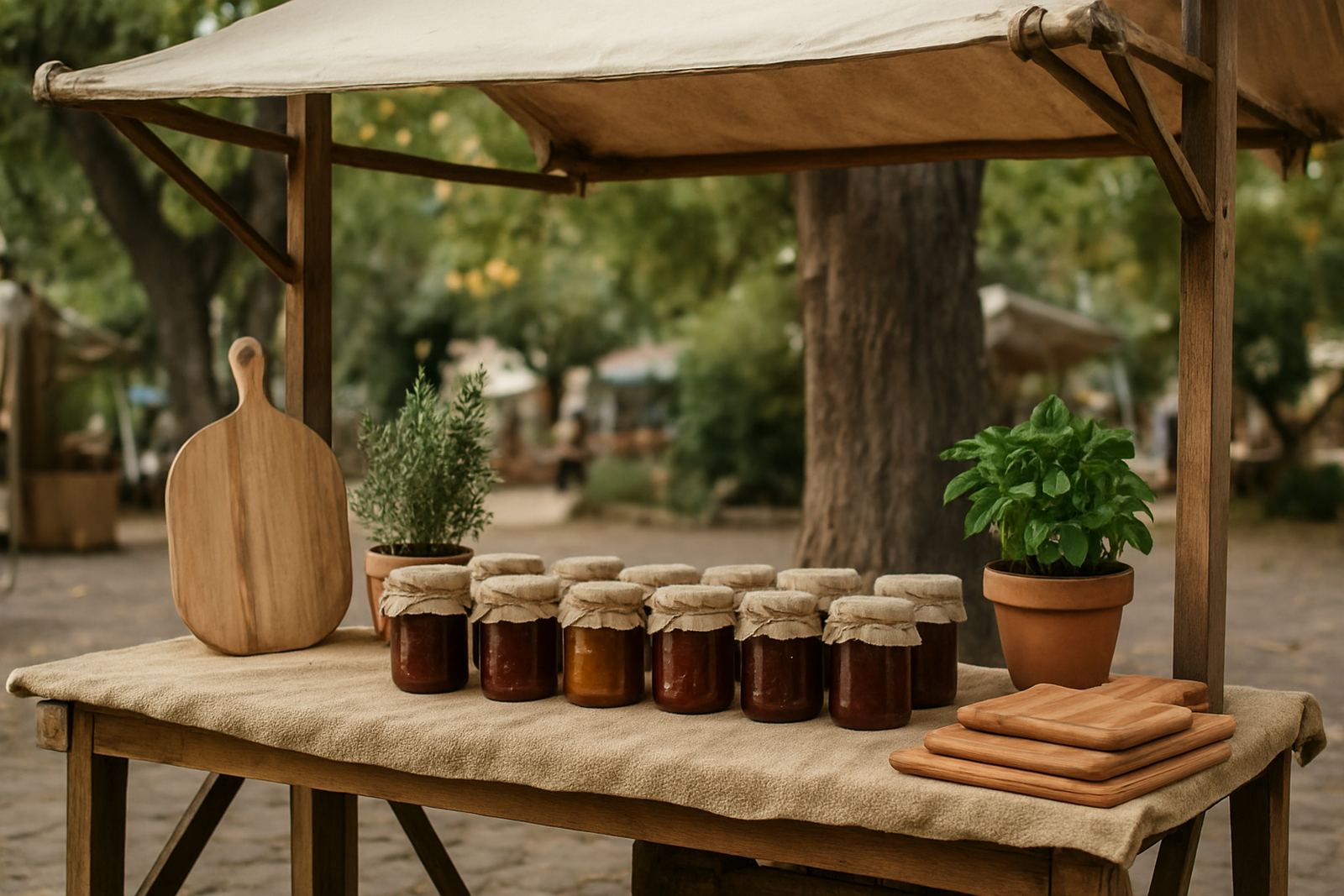
For example, a food maker can place jars, loaves or spice packs at the back, sampling bowls in the middle, and pricing at the front. A craft stall might use the tallest point for the hero item, then step down to smaller gifts and add-on pieces. This makes it easier for a customer to compare options without asking for every detail first.
- Put your strongest product at eye level or just above it.
- Use signs on higher points to explain materials, sizes or local ingredients.
- Keep prices visible on the lower level so shoppers do not need to ask straight away.
- Group products by use, not only by type, so buying feels simple.
At a Centurion market, a visitor carrying coffee and a child’s snack has little time for a long chat. Clear height zones let them understand your stall in seconds, then come back for a proper conversation if the product catches their interest.
Practical materials that work in South African conditions
Display height has to hold up to real conditions. In Pretoria summer heat, in coastal humidity, or during a breezy outdoor pop-up, light items can shift, bend or tip. That is why your risers, crates and stands should be stable enough to survive a full day of trade and packing up after dark.
Simple materials often work best. Wooden crates, painted boxes, metal stands and solid plinths can all be useful if they are sized properly for your table and load. If you sell food, keep surfaces easy to wipe clean and avoid anything that absorbs spills. If you sell ceramics or glass, make sure the base is wide and level. Nobody wants broken stock because a table wobbled when a customer leaned in.
For outdoor markets, think about wind, dust and uneven ground. A display that looks neat inside may need extra weight, non slip feet or cable ties outside. If you trade at an evening market, test how your display looks under warm lamps and low light. Tall shapes can cast shadows, so place your key products where people can still see the detail.
A Hatfield example that shows the difference
Picture two stalls at a Hatfield weekend market. Both sell handmade bath products and small gift sets. Stall A lays everything flat on a single tablecloth. The labels are tidy, but the display sits low and the products blend together. Stall B uses a simple back shelf, a centre riser and a small front tray. The taller bottles sit behind the gift sets, while the smallest items are grouped near the edge.
From the aisle, Stall B is easier to read. The height gives the stall shape, and the customer knows where to look first. By the time they reach the front, they are already interested. In a busy market hall that small advantage can mean a sale, or at least a longer conversation.
This is not about buying expensive fittings. It is about using height with intent. A stack of neat boxes covered in plain cloth can do the job if it is steady and well placed. The trick is to make every level earn its spot.
A quick checklist before your next market day
Before you load the car, walk through your display plan and check the basics. A stall that is easy to set up will also be easier to keep tidy when the hall gets busy and the queue grows.
- Can your tallest item be seen from three to four metres away?
- Have you created at least two different display heights?
- Will your risers stay steady on a tiled floor or uneven paving?
- Have you left space for pricing, sampling and packing?
- Can you pack the whole display quickly at the end of trading?
For makers who trade often, the best display is one you can repeat without stress. Once you know the heights that suit your products, you can use the same structure at Hatfield, Lynnwood, Brooklyn, Menlyn or a nationwide pop-up without starting from scratch each time.
Height helps the handmade feel worth stopping for
Shoppers come to maker markets looking for something different, but they still respond to clear presentation. Height gives handmade products presence. It helps the table feel organised, the products feel valued and the stall feel worth a second look. When people can see, understand and reach your items easily, they stay longer and buy more often.
That is the real value of layering. Not decoration for its own sake, but a display that makes good products easier to notice in a crowded space.