Start With Materials That Match the Product
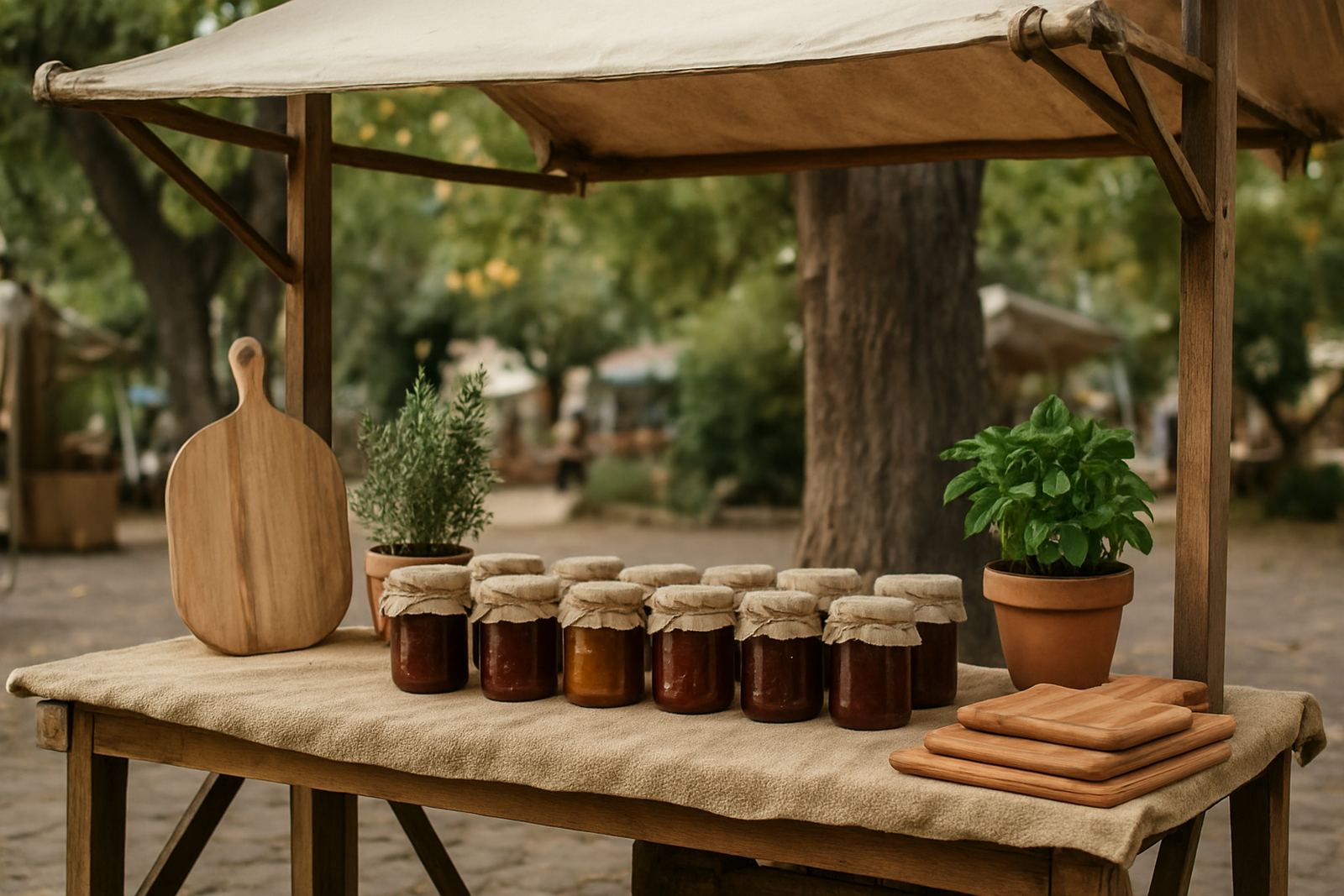
For fresh produce, preserves and country crafts, the stall should feel like it belongs in a working market, not a shopping mall. Think untreated timber crates, hessian runners, galvanised buckets, enamel trays and plain labels that are easy to read from 2 to 3 metres away. The aim is to make the goods look fresh and handmade, while still keeping everything neat enough for a busy Saturday crowd.
In Pretoria, where many weekend markets run through strong sun, dust and the odd summer storm, materials need to do more than look good. A timber table with a washable cover, a few stackable crates and weighted cloth signage will hold up better than fragile styling pieces. If your stall will also appear at maker nights, choose items that pack flat and set up fast, because tight bump-in times can make a slow setup feel twice as long.
Use Height and Layers to Guide the Eye
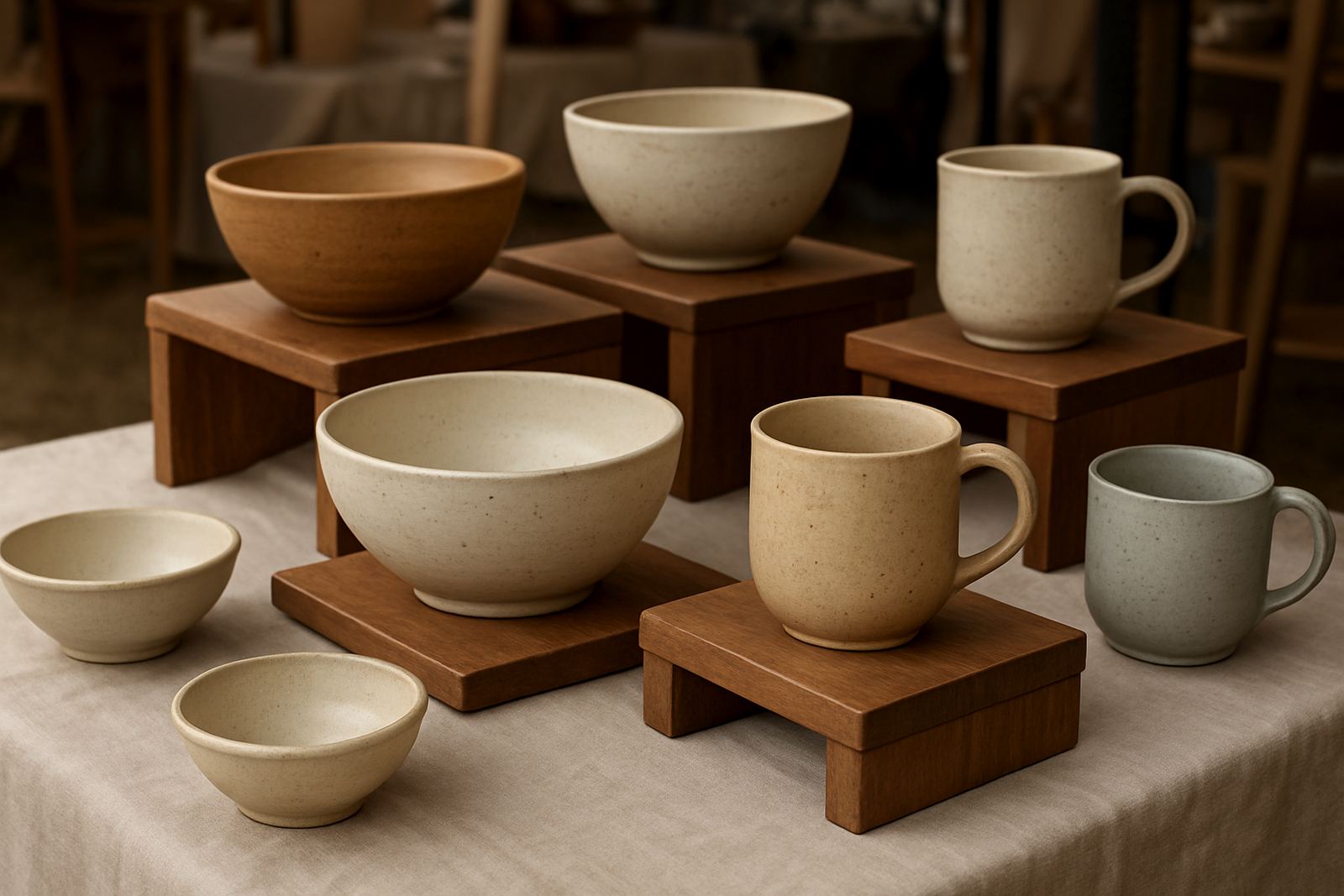
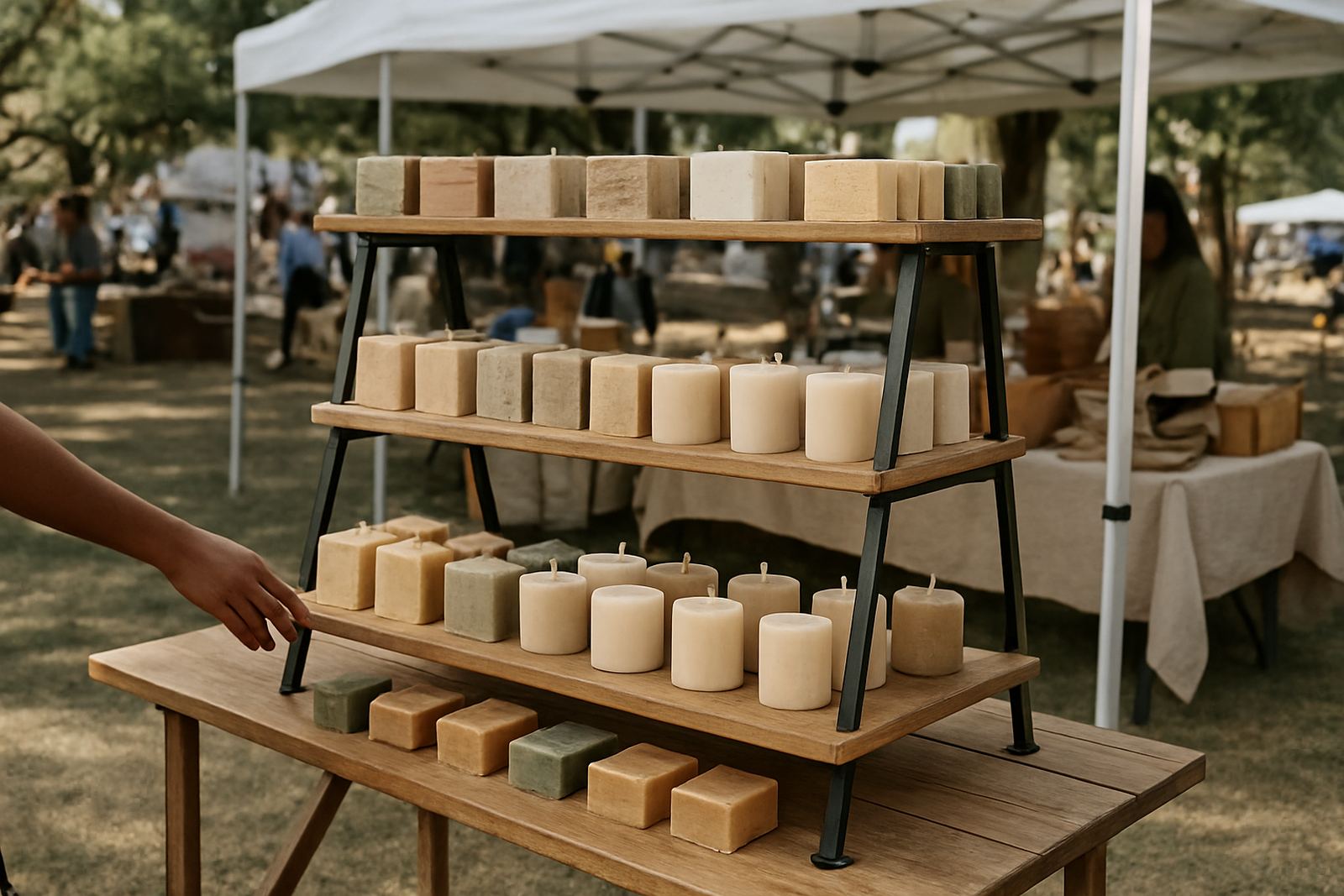
A farm market stall works well when customers can see different product levels without leaning in too far. Use a simple back row for taller items like chutneys, bottled sauces and dried herbs, then bring jars, fruit baskets and small craft items forward on crates or risers. This creates a natural rhythm and stops the table from looking crowded.
Layering is also useful when you are selling mixed stock. A maker who brings preserves, soaps and seed packs can group them by use rather than by size. Keep the food products together, place the craft items in one area and leave a small open space for browsing. That little gap makes the stall feel calmer and gives shoppers room to handle items without knocking something over.
- Use one tall point, one medium layer and one low layer on every table.
- Keep the front edge clear so people can step in and reach comfortably.
- Stack like items in threes or fives, not in long flat rows.
- Leave space for a basket, price sign and payment point near the front.
Colour Choices That Feel Fresh and Local
Rustic does not have to mean brown on brown. The farm market feel works best with natural tones that echo a local harvest table. Soft cream, sage, clay, charcoal and deep green are all useful because they let colour from tomatoes, berries, bottled relishes and handmade ceramics stand out. If you use printed cloths or signage, keep the pattern simple so it does not compete with the stock.
For makers selling baked goods or preserves, colour can also guide trust. A clean cream tablecloth under jars of jam reads as hygienic and well packed, while a faded floral cloth can make the whole setup feel tired. That is especially important in humid coastal weather, where fabrics can look worn quickly if they are not washed and dried properly. Fresh-looking cloth is part of the farm market feel, even if the stall itself is only 2 square metres.
Signage That Feels Handmade but Still Sells
Handwritten signs suit country crafts, but they must stay legible. Use a dark marker or paint pen on stiff card, then seal the signs if the market is outdoors. A customer should be able to read the product name, price and any key detail such as free-range, small batch or made in Gauteng without having to ask twice. If your lettering is too decorative it starts to work against the sale.
At Local Makers Market, many stallholders benefit from a short pricing and small batch branding workshop before peak season. That matters because farm-style stalls often rely on simple labels, and simple labels need discipline. If a sign says 250g fig preserve and the jar on the shelf says 300g, shoppers notice. Keep wording consistent across the table, the packaging and the payment board. Small details like that build confidence quickly.
- Put prices at eye level, not flat on the table where they get lost.
- Keep one sign for the stall name and one for the product range.
- Use plain wording, for example seed bread, plum jam or hand-thrown mug.
- Rewrite or replace any card that curls, fades or gets splashed.
Packaging That Fits Produce, Pantry Goods and Country Gifts
Packaging should feel practical, easy to carry and suitable for a market morning. Paper bags, kraft boxes, twine, compostable wraps and neat sticker labels all fit the farm market look when used with care. For food sellers, packaging also has to protect the product through heat and handling. A jar that rattles in a bag or a biscuit box that crushes in a car boot creates complaints before the customer even reaches home.
Food stall basics are worth sorting early, especially if you trade at weekend markets where people often buy several items at once. Keep a parcel area with bags, tissue, price tags and a small stapler or tape dispenser. If you sell in summer, test whether chocolate, butter biscuits or honey jars can stay stable for four to five hours in direct sun. Simple crate shading and a folded table cloth can help more than most people expect.
A Pretoria Example That Gets the Balance Right
At a Hatfield market, a maker selling fresh herbs, bottled salsa and woven table runners can create a convincing farm market feel with only a few pieces. A timber crate at the back holds the herbs in water jars, a middle shelf shows the salsa in grouped rows and a front basket holds the runners folded in thirds. A chalkboard-style sign lists the prices clearly, while a plain canvas cloth keeps the table from looking busy. The whole setup feels local, tidy and easy to shop from.
That same maker can then reuse the structure for a Maker Night, swapping produce for smaller gift items and adding better lighting. The styling does not need to change much, only the emphasis. This is why stall styling workshop support, market photography and first market prep are so useful. Once you understand the layout, the same basic farm look can carry across Brooklyn, Lynnwood, Menlyn and Centurion without starting from scratch each time.
- Keep the same core colours across different markets for easy recognition.
- Swap only the hero products, not the whole stall layout.
- Take one wide photo before trading starts so you can review spacing later.
- Pack a spare cloth, clothespins and tape because weather always changes plans.
Keep the Rustic Look Practical for Real Trading
The best farm market stalls are the ones that can survive a full day of trading. Rustic styling should never block access to stock, make cleaning harder or slow down serving. If your display takes more than 20 minutes to build, it is probably too complicated for a weekend market routine. The strongest setups are easy to wipe down, easy to transport and easy to refill when a tray empties.
That practical side is important for small businesses working across South Africa, where one weekend may mean Pretoria and the next may mean a pop-up in another town. A good market setup is flexible enough to suit seasonal selling, customer conversation and the realities of weather and traffic. When the stall looks grounded and organised, customers read it as trustworthy. That is the real value of the farm market feel, not decoration for its own sake but a clear, appealing way to present honest goods.