Start With a Clear Front Edge
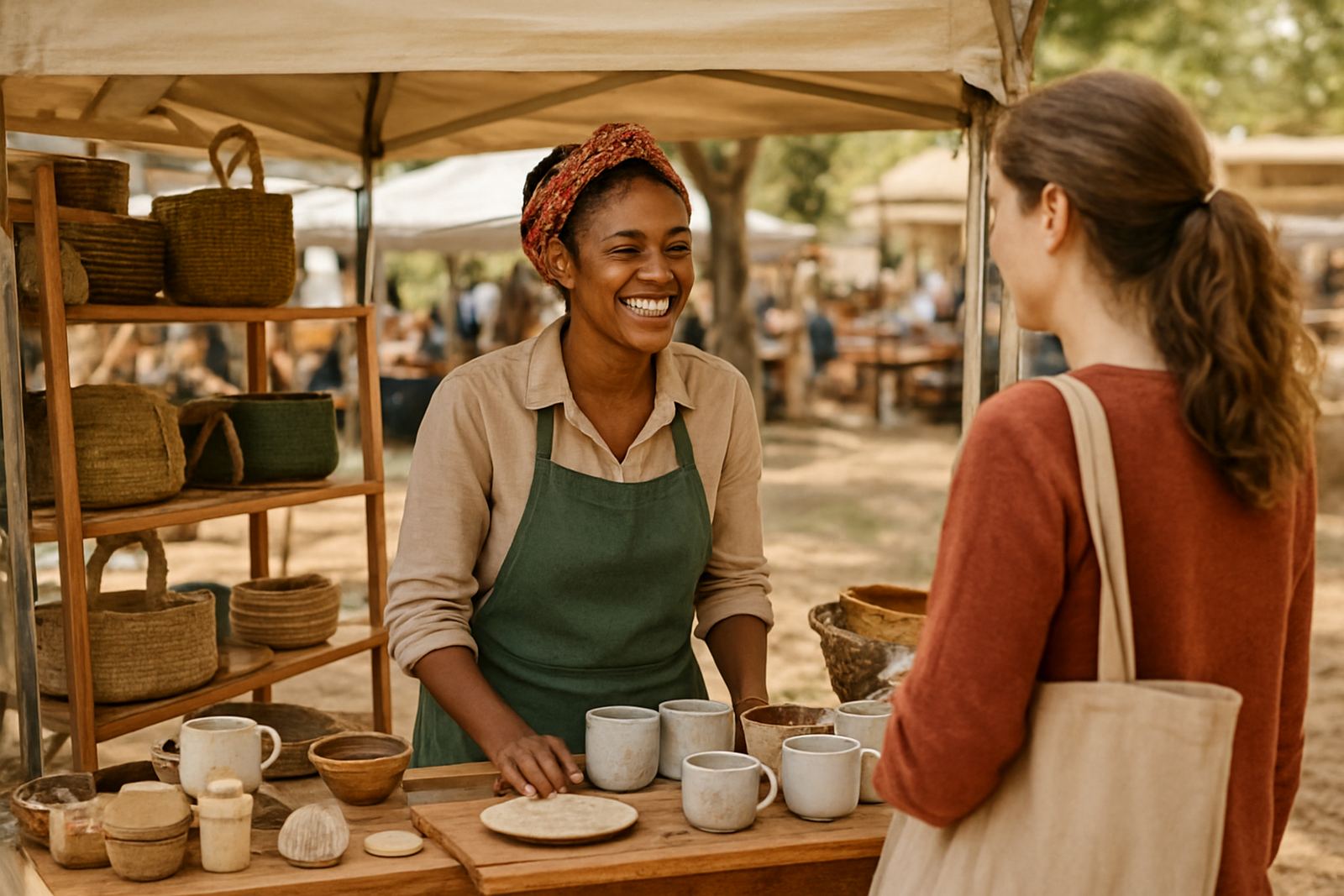
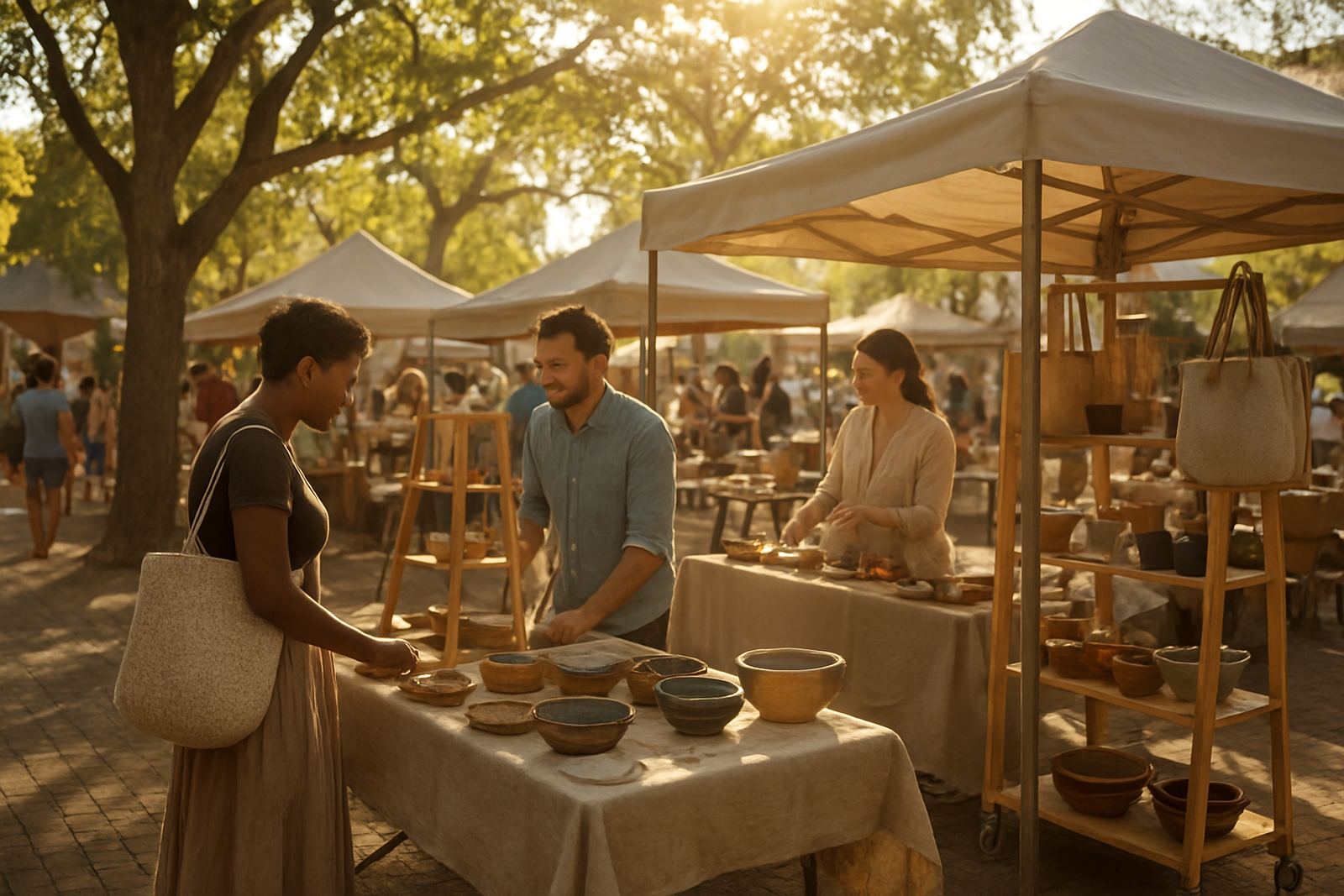
Your front edge should do one job only: invite people in. Keep the first 60 to 90 cm open where possible, with your best seller or a simple focal group just behind that line. If every item sits right on the table edge, shoppers stop moving, lean in too close and block the next person behind them.
At a Pretoria market, where families often arrive in small groups, that open front edge gives one person space to browse while another stands back and asks questions. It also helps on windy days in Hatfield, because a small buffer reduces the chance of stock being knocked by bags, prams or elbows.
- Leave a clear entry point at one corner or the centre.
- Use one eye level feature to draw attention inward.
- Keep payments, bags and packaging away from the front browsing zone.
Build A Simple Path Through The Table
Think of your stall like a short walking route. A shopper should be able to arrive, scan the display from left to right or front to back, then reach a natural stopping point where they can ask for help. Long, flat rows of identical items slow people down, while small groups with breathing space make the table feel easier to read.
If you sell jars, soaps or small handmade goods, place the lowest-cost impulse items near the approach point and the higher-value pieces further in. That gives people a reason to step closer without crowding the whole surface at once. It also works well for maker nights, where visitors tend to linger but still need an obvious flow.
- Group stock in threes or small clusters, not long lines.
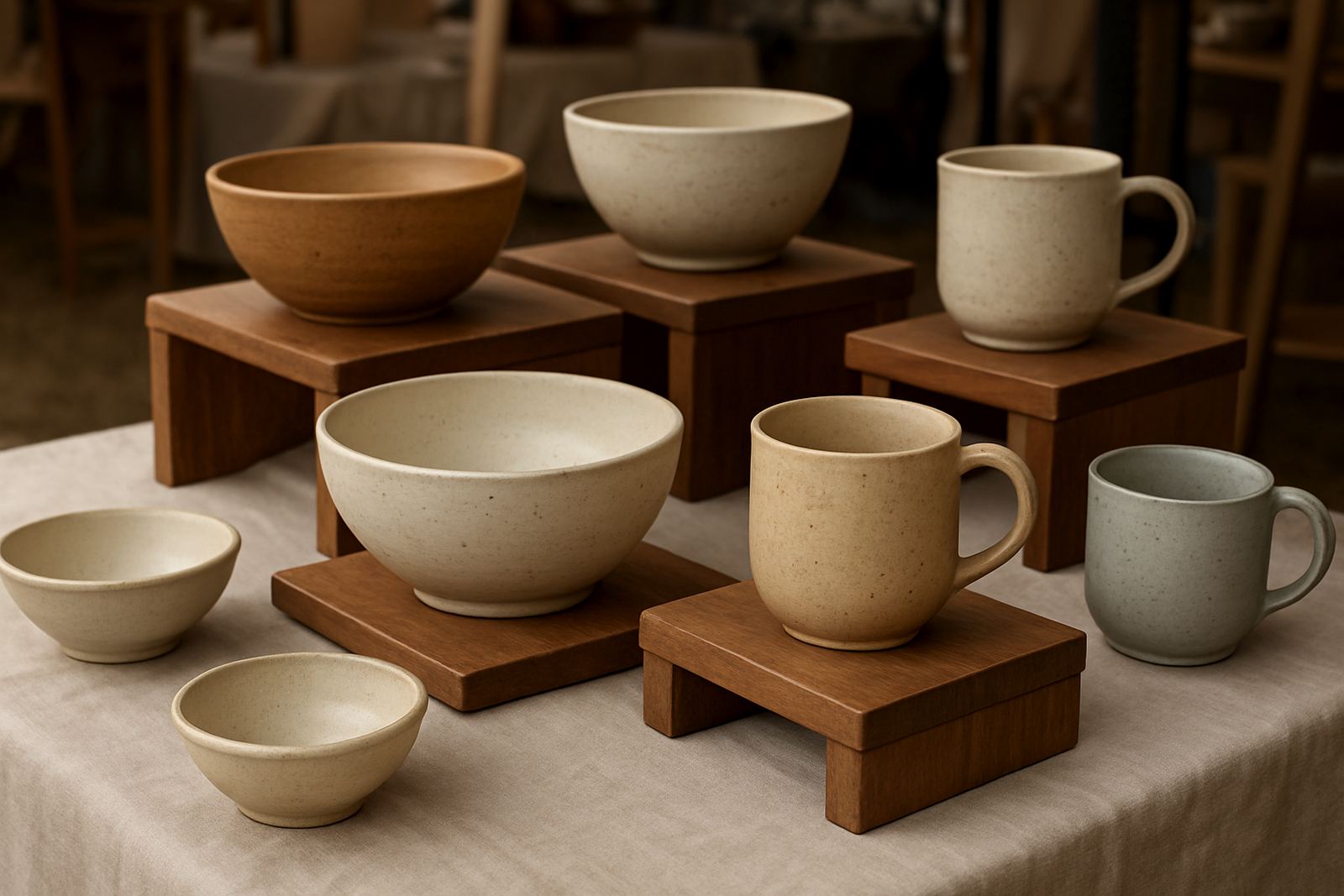
- Use height changes, such as crates or risers, to break up the table.
- Keep one side slightly more open so movement does not dead-end.
Make Room For Two Conversations At Once
Good stall flow is not only about customers moving, it is also about how you talk to them. In a busy market, one person may be asking about ingredients or sizes while another is already ready to pay. If your setup has a clear side for chatting and a separate side for payments, you can serve both without sending people back and forth.
This matters at events across the Gauteng winter season, when shoppers do not want to stand around too long in the cold. A neat conversation point near the side of the stall keeps the centre open and makes your table feel calm, even when there is a queue.
- Keep your main greeting spot slightly off-centre.
- Place prices where they can be read without waiting for help.
- Have bags, tissue paper and payment gear ready before the rush starts.
Use Signage To Reduce Table Edge Pressure
When people cannot see what something costs, they lean closer and crowd the display. Clear signs solve that problem fast. Put readable prices on the front of each category, and add one short line that explains the product if it needs it. For food stalls, this is especially useful when ingredients, portion sizes or heat levels matter.
In Pretoria, many shoppers decide quickly, often while holding children, coffee or shopping bags. Small signs save everyone time and stop the front edge becoming a traffic jam. They also help in outdoor markets where noise from music or nearby traders makes verbal explanations harder.
- Use bold, simple price cards with large numbers.
- List key details like size, flavour, material or care notes.
- Keep signs upright and away from spills, wind and hands.
Plan For Real Market Conditions
Good flow changes with weather and crowd size. In summer heat, people want to move quickly and not stand in tight spaces for long. In dim conditions, stalls can become darker and more cramped if lighting is not planned properly, so a clean layout becomes even more important.
At outdoor markets near Hatfield and Menlyn, a practical flow setup also has to handle dust, moisture and uneven paving. Leave enough room for a trolley, cooler box or stock crate to pass without catching on chair legs or packing boxes. If a space feels tight before trading starts, it will feel worse once the crowd arrives.
- Allow extra walkway space when rain or wind is expected.
- Keep cables taped down and out of the route.
- Position fragile goods away from the most travelled edge.
A Pretoria Example That Works
Picture a Saturday morning in Hatfield. A family stops at a stall selling printed textiles, soaps and small gifts. If the front row is packed edge to edge, the parents pause outside the table and the child reaches in before anyone has time to look properly. If instead the stall has a clear opening, one feature display and a small payment point on the side, the family can enter, browse and buy without pressure.
That kind of flow does more than improve comfort. It often increases sales because shoppers stay longer, ask better questions and notice more than one product. For makers who trade regularly in Pretoria or travel to pop-ups nationwide, a good layout is one of the simplest ways to make the same stock work harder.
- Open the front, guide the eye inward and keep payment off to one side.
- Make the route obvious even if the table is only 1,8 m or 2,4 m long.
- Test the setup with a friend walking through before the market opens.