Why simple packaging often sells better
At weekend markets, shoppers make quick decisions. They pick up a jar, turn over a candle tin, ask about the ingredients and decide in a matter of minutes. Packaging that is neat and easy to read helps them understand what they are buying without working too hard for the sale.
Simple packaging also keeps your costs under control. When you are still testing products, every extra Rand spent on wraps, inserts and labels has to be earned back. A clean bag, a clear sticker and a tidy finish can carry the same sense of care as a more expensive setup, especially when the product itself is well made.
For makers trading at Hatfield, Brooklyn or Menlyn, this matters even more because customers often move between several stalls. If your table looks organised, your stock is easier to browse and your products are easier to remember after they walk away.
Start with the product, then choose the pack
The best packaging starts with what the item actually needs. A brittle biscuit pack, a soap bar, a jar of chutney and a handmade notebook all need different levels of protection. Trying to use one standard format for everything usually wastes money or leaves products under-protected.
Before you buy anything in bulk, work through the practical questions below:
- Does the product need moisture protection, crush protection or both?
- Will customers carry it around the market before going home?
- Can they see the product clearly without opening it?
- Will the pack survive a hot day in Pretoria or a damp morning near the coast?
- Does it need ingredients, contact details or care instructions on the label?
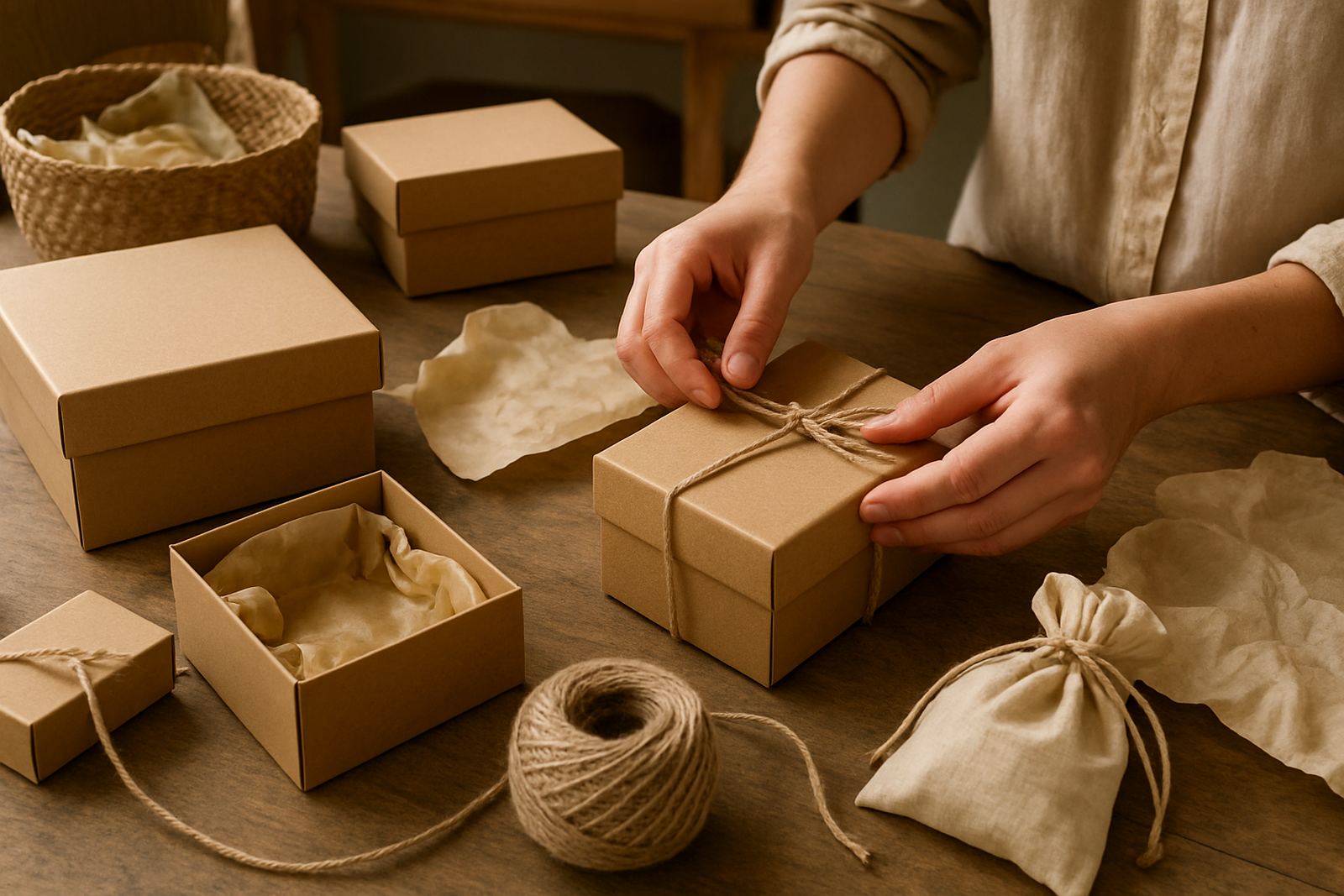
Once those basics are clear, you can choose a pack that fits the job. That might be kraft paper, a glass jar, a food-safe pouch or a folded box with one well placed sticker. The point is to spend where it matters and leave out anything that is only there for show.
The small details that make a stall look considered
People often think packaging is just the outer wrap. In practice, the details around it can make the difference between a casual table and one that feels properly prepared. A consistent label size, the same colour palette, and a repeatable way of sealing products all help create order.
You do not need a full design system. You need a few repeatable choices that you can use every time. For example, use one label shape, one font style, one bag type and one tape colour. That consistency makes even a mixed product range feel more collected.
Here are a few low-cost details worth keeping consistent:
- Use the same sticker placement on every pack
- Keep printed labels neat and easy to read from a short distance
- Choose packaging colours that suit your product and table cloth
- Carry a small cloth to wipe fingerprints off jars and tins
- Store empty packs in sealed boxes so they do not pick up dust or damp
What to do when your margins are tight
Many small businesses assume packaging must be upgraded all at once, but that is not the only way. It is often better to improve one layer at a time. Start with the item that helps the customer most, usually the label or the outer bag, then move to presentation inserts or ribbon only if the numbers still work.
If your margins are already thin, packaging should not become a hidden problem. Set a packaging budget per product and keep it visible in your costing. If a jar or bag adds too much, look for a simpler option rather than trying to recover the cost later with a higher price no one wants to pay.
Useful ways to save money without looking cheap include buying plain packs in bulk, using one label across multiple flavours, and choosing packaging that serves more than one purpose. A box that protects, stacks and labels well is often worth more than a prettier option that fails in transit.
Pretoria market conditions change the packaging choice
Local conditions matter. In Pretoria, a sunny Saturday in Hatfield can mean warm tables and busy foot traffic, while a winter morning at a pop-up may be dry and dusty. For food makers, heat can soften seals and affect finishes. For candle makers and soap sellers, exposure to sun and handling can mark a pack quickly.
That is why a practical pack usually performs better than a delicate one. If you are trading at a market night, shoppers may be carrying items back to a car or between stalls, so packaging should be easy to hold and not spill. If you are sending goods to a maker night or a seasonal pop-up, choose packs that stack safely in crates and do not collapse under light pressure.
For one Hatfield trader selling small-batch preserves, moving from decorative jars with loose tags to simple jars with tight lids, printed labels and a clean kraft wrap made the display easier to manage. The product still looked cared for, but setup time dropped and breakages went down, which mattered on busy market mornings.
A practical packaging checklist for makers
If you are preparing for your first market or tightening up your current range, use a simple checklist and test it before you buy in volume. Packaging should help you sell, not slow you down.
- Can one person pack the product quickly?
- Does it survive handling, heat and transport?
- Can the customer understand the product in 5 seconds?
- Does it match your price point?
- Can you repeat it next month without stress?
- Will it fit neatly into your stall layout, storage and stock counts?
When the answer is yes to most of those points, you probably have a pack that works. It may not be fancy, but it will be useful and that counts for a lot at a market where buyers are comparing many different makers in one walk through.
Simple packaging wins because it respects the product, the customer and the budget. That is the sort of choice that holds up when trading gets busy and your table needs to work hard.