Why buyers back the maker, not just the recipe
People at weekend markets do not buy gourmet food only because it is different. They buy it because it feels honest, carefully made and easy to trust. A good small batch story starts with that simple idea: show what is in the jar, how it is made, and why it will taste the same next time. If a customer buys a chilli jam in Hatfield on Saturday and returns in Brooklyn a month later, they want the same balance of heat, sweetness and texture, not a surprise. Consistency is what turns a curious taster into a regular buyer.
For food makers working from home kitchens or small production spaces, trust also comes from basic things people notice straight away. Clean labels, neat seals, sensible pricing and a table that is not cluttered all matter. So does how you answer questions. Buyers want to know if the biltong was made in small batches, whether the baked goods are fresh that morning, and how long the preserve will last once opened. Straight answers build confidence faster than fancy wording.
Flavour first, but make it easy to understand
At a market stall, flavour has to do the heavy lifting. The challenge is not only making something tasty, but helping a passer-by understand why it is worth trying. Keep the product story short and specific. Instead of saying a chutney is special, explain that it was cooked in small pots, uses local fruit when available, and works with braaied chicken, cheese boards or sandwiches. That kind of detail helps buyers picture the food in their own kitchen.
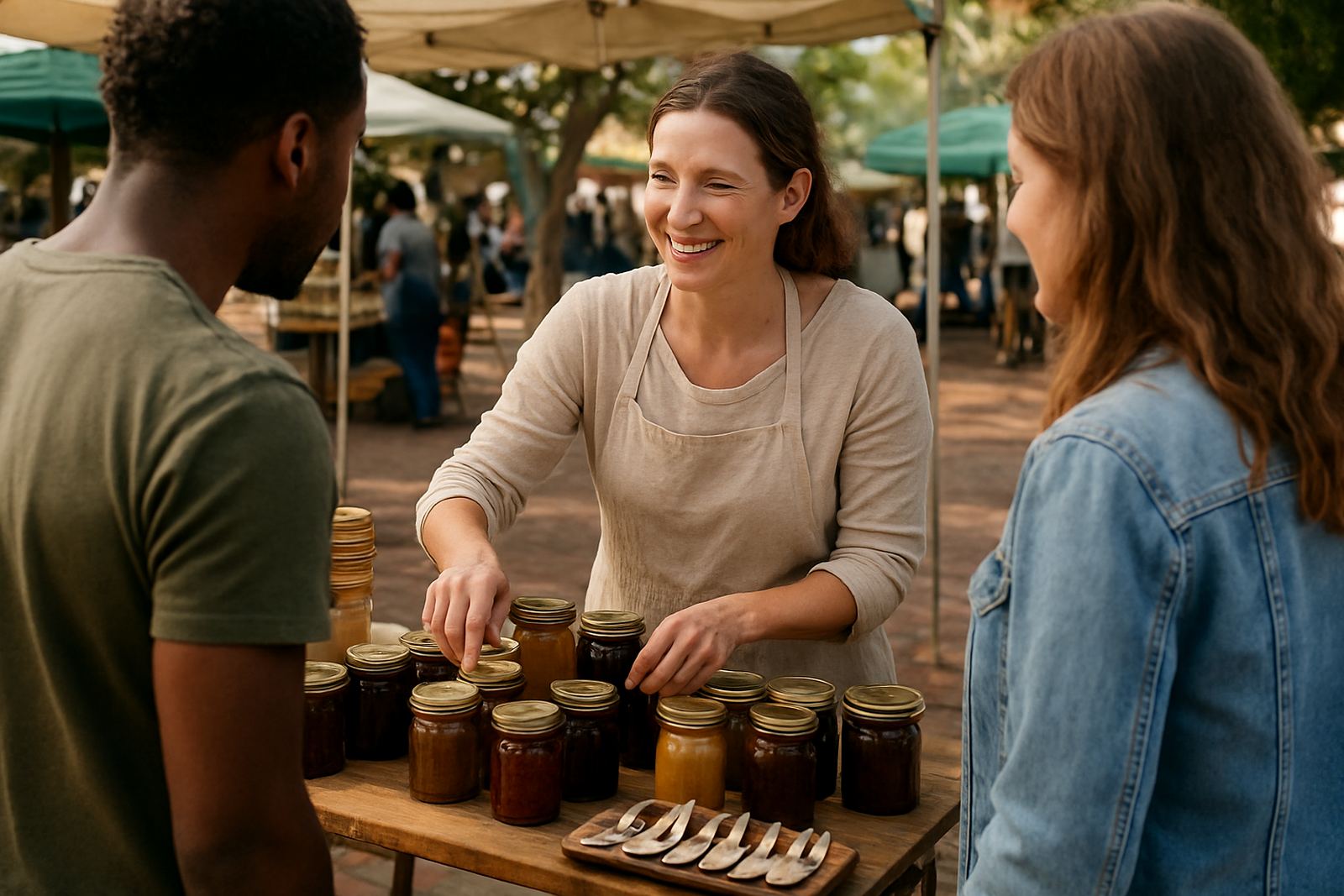
- Use tasting spoons or sample slices where food safety allows, and keep portions small enough to stay fresh through the morning.
- Write simple flavour notes on table cards, such as smoky, tangy, peppery or sweet with a sharp finish.
- Show serving ideas beside the product, for example on toast, with crackers, over roast vegetables or in a lunch box.
- Keep the story true to the food. If it is hot, say it is hot. If it is mild and rich, do not oversell it.
Clear flavour language saves time and reduces hesitation. A buyer who knows what to expect is more likely to pay the asking price without needing a long explanation.
Presentation that looks cared for in Pretoria heat
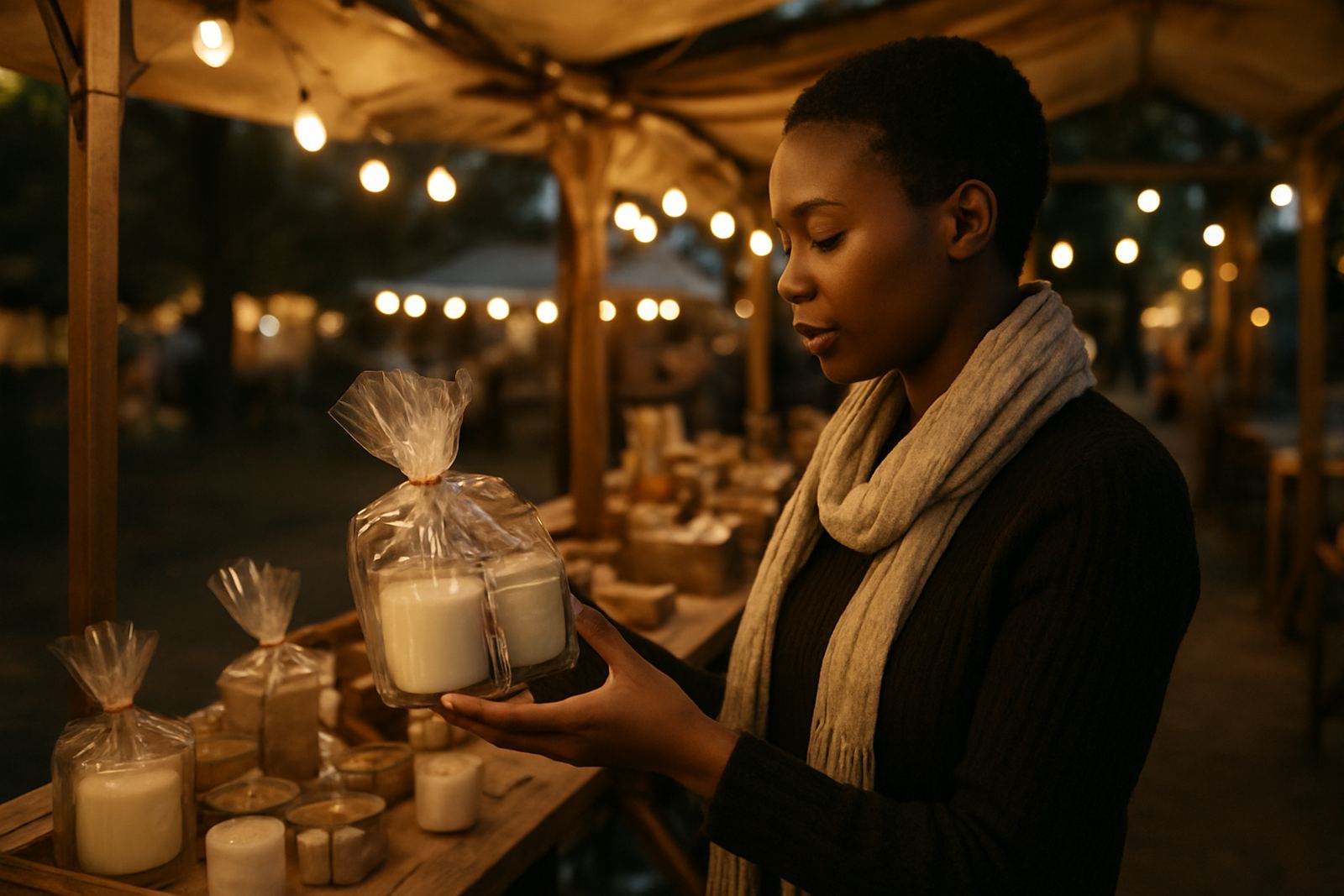
Presentation is not about looking glossy for the sake of it. It is about showing that the food has been handled properly and will travel well in South African conditions. In Pretoria, especially at outdoor weekend markets, sun and dust can punish delicate packaging. If your jars haze up, your labels peel, or your baked items soften before 11am, buyers notice. Use packaging that suits the product and the weather. That might mean tight lids for preserves, food-safe wrap for brittle and sealed containers for spice blends or dry mixes.
Table layout matters too. Keep similar items together, use height to separate price points, and leave enough space so customers can read labels without knocking things over. A neat display makes a small batch range feel planned rather than random. It also helps during busy periods when queues form and people need to choose quickly. In Hatfield markets, for example, a maker selling seeded crackers, onion marmalade and herb salt can create a simple tasting board that tells a strong story in under 30 seconds.
Good presentation also supports municipal and hygiene expectations. Food should be protected from handling, packaged clearly and displayed so that allergens can be identified. If you sell from a pop-up event or a maker night, bring the same tidy setup every time. Repeatable presentation gives your food a familiar look, and familiar is often what buyers trust most.
Consistency is a sales tool, not just a kitchen habit
Small batch makers sometimes think consistency means making everything identical. It does not. It means the customer gets the same standard each time, even if the batch size changes. That is the part that makes a maker easier to trust from one batch to the next. If your berry compote is slightly seasonal, explain the variation but keep the sweetness, acidity and texture within a known range. If your savoury tartlets sell out by midday, note the sell-through pattern and plan the next batch around it. Reliable stock levels make it easier for buyers to trust your stall as well.
Consistency also helps with pricing. When your process is controlled, your yield becomes more predictable, and you can price properly instead of guessing. Count packaging, ingredients, transport, market fees and time. Many new makers underprice because they only think about the ingredient cost. That is a quick way to lose money and confidence at the same time. A steady product with a fair margin lets you reinvest in better labels, tighter seals and safer storage, which then improves the whole offer. It is a simple loop but it matters alot.
- Weigh ingredients before production so each batch starts from the same base.
- Record cook times, temperatures and yields after every run.
- Test shelf life in warm and cool conditions, not only in a fridge.
- Keep a basic batch code system so you can trace any problem fast.
How to speak to buyers without sounding salesy
Many food makers know their product well but struggle to talk about it in a useful way. At a market, the best conversations are short, warm and practical. Ask what the buyer is planning to eat it with. Explain what makes the product suitable for home use, gifts or entertaining. If someone is looking for something to take to a family braai in Centurion, give them one or two clear options rather than a long list of everything you make. People appreciate guidance when they are standing in front of a busy stall.
Share the small story behind the product, but keep it grounded. Maybe the recipe was refined during weekend testing with neighbours. Maybe the spice mix was made for a family table and then adjusted for market sales. Maybe the baking started in a home kitchen and grew through local demand. These details feel real because they are real. The point is not to sound grand, but to sound like someone who knows their craft and can stand behind it. Buyers respond well to that kind of confidence.
A Hatfield market example that shows the difference
Picture a Saturday morning in Hatfield. Two stalls are selling homemade preserves. One has unlabeled jars, mixed prices and no tasting notes. The other has clean labels, sample crackers, a small sign explaining that the fruit is cooked in small batches, and a clear note about allergens and storage. The second stall does not need a loud pitch. The customer can see the care immediately. A parent buying for a school picnic, or a young couple looking for a hostess gift, can decide quickly because the product feels organised and trustworthy.
That same approach works across weekend markets and maker nights nationwide. Whether you are in Lynnwood, Menlyn, Centurion or at a pop-up in another province, the formula stays the same: strong flavour, thoughtful presentation and repeatable quality. Add good packaging, a fair price and honest conversation, and you give people a reason to come back.