Lead With The Thing Buyers Can See
At a market, people decide fast. They pick up a jar, a bowl, a print or a loaf and want to know three things straight away: what it is, what makes it different, and whether it suits their home or table. Start there. If your candle uses soy wax, say so. If your bag is stitched by hand in small runs, say that. If your chutney is cooked in batches of 20 litres, say it plainly.
Shoppers do not need a speech about your whole life story. They need a clear first line that helps them understand the product in 10 seconds. A simple opener like “This is a small-batch chilli sauce made in Pretoria using local produce” does more work than a long paragraph. It gives context without sounding forced.
- Name the product type first
- Give one process detail
- Share one reason it matters to the buyer
Explain Process Without Sounding Pretentious
Process is often where the story lives. People at Hatfield Markets or Maker Nights in Johannesburg and Durban like knowing how something is made, but only if the explanation is useful. Focus on the parts that affect quality, durability, taste or finish. A hand-thrown mug feels different from a mass-pressed one. A fermented hot sauce has a different profile from a cooked sauce. Say what changed because of the process.
Try to avoid vague words like “premium” or “artisanal” unless you can back them up. It is better to say “dried slowly over 48 hours” than “carefully crafted”. Better to say “sealed in a kitchen registered for food sales” than to make a grand claim. Buyers respect specifics, especially when they are spending R80 to R350 at a weekend market and want confidence in the product.
- Use numbers where you can: days, litres, metres, stitches, batches
- Explain one step that takes time or skill
- Keep the sentence short and easy to repeat
Purpose Works Best When It Is Real
Purpose matters, but it should be grounded in what you actually do. If your business supports local farmers, explain how. If your packaging is reusable, say what customers should do with it after use. If your workshop teaches young makers in Pretoria, mention the practical outcome, not a big mission statement. Purpose lands when it feels like part of the work, not a slogan.
South African shoppers are used to checking value carefully. They know a product can look pretty and still be poorly made. So when you speak about purpose, connect it to real decisions. For example, “We use glass jars because they keep the product better in warm weather and can be reused at home” is more helpful than “We care about sustainability”.
- Link purpose to a buying choice
- Show the local impact, not just the intention
- Use everyday language a customer would use themselves
Use Market Conversations To Tell The Story Naturally
The best product stories often come out in conversation. At a stall, customers ask simple questions: How is this made? Can I freeze it? Will this fit on a balcony shelf? Can I use it for gifting? Answering well matters more than memorising a pitch. A friendly, direct response feels honest and helps the buyer remember you later.
In Hatfield, where weekend traffic includes students, office workers and families, the same product may need three different angles. A student may want price and convenience. A parent may ask about safety or ingredients. A gift buyer may want packaging and presentation. Listen first, then give the one part of the story that solves their question.
Keep a few short lines ready for repeated questions, but do not sound rehearsed. If someone hears the same line twice in the same minute, it should still feel natural, not sold to death.
Local Example: A Candle Maker In Pretoria
Take a maker selling hand-poured candles at a Pretoria market. Instead of saying “luxury home fragrance”, they might say, “These are poured in small batches in Hatfield, using wax that burns evenly in cooler evenings and sealed lids for transport.” That tells the buyer where it is made, how it performs, and why it suits local conditions.
If the maker adds one more practical note, the story becomes even stronger. For example, “I test burn each scent for 4 hours so I know how it behaves in a small room.” Now the customer understands the care behind the product. No oversell, no drama, just a useful reason to trust the item.
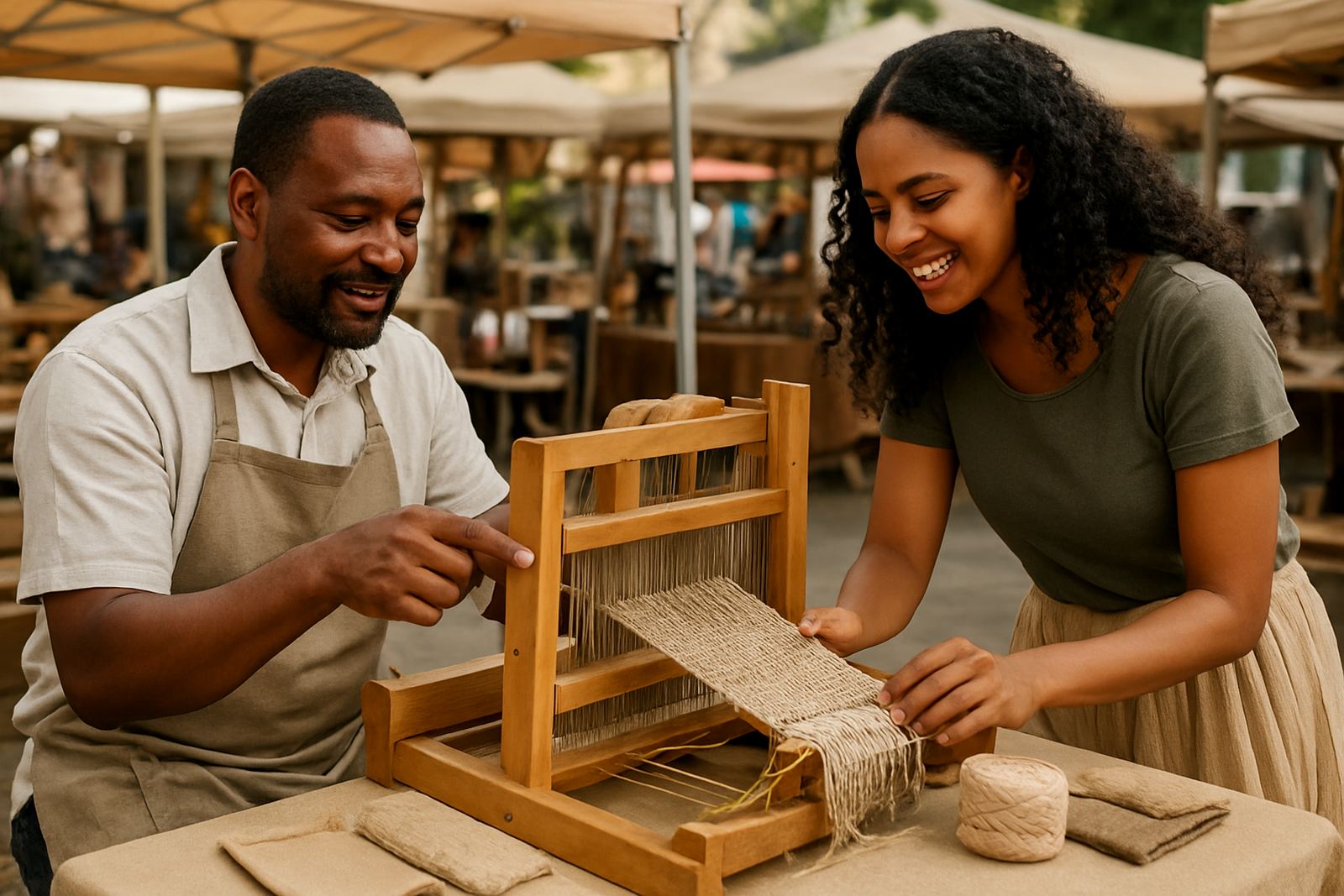
This approach works across categories, from food to fibre crafts. The exact words change, but the structure stays the same: what it is, how it is made, and why that matters to the person buying it.
Make Your Story Easy To Repeat And Remember
If a customer cannot repeat your story to a friend, it is too long. Aim for a sentence or two that fits on a label, a price tag, or a short chat across the table. The message should be simple enough for a first-time buyer and specific enough to separate you from the next stall.
Helpful story points to keep in mind:
- Where it is made
- What makes the process different
- Who it is best for
- How to care for it, use it or store it
- Why the price reflects the work involved
That last point matters. Many makers undersell because they worry a plain explanation sounds weak. In truth, a clear process story often supports a fair price better than any discount. When buyers understand the hours, ingredients and handling behind a product, they are less likely to compare it only on price.
Keep refining your words after each market. Notice which questions come up most often and which line gets people to nod, smile or pick up the item again. That is the story worth keeping.