

Start With What Actually Sold Last Time
Before you pack for the next weekend market, go back to the last three events and look at what moved. Do not only count total sales, split them by product size, price point and time of day. A maker selling candles may find that smaller jars move first before lunch, while larger gift sets only go after 11:00 when families have settled in and are ready to spend more.
Use your own records, even if they are messy. If you sold 18 soap bars at Hatfield, 12 at a Brooklyn market and 24 at a maker night in Centurion, the pattern matters more than the perfect spreadsheet. One quiet day can pull the average down, so look for repeatable demand rather than one lucky weekend.
- List units sold, not only Rand totals.
- Separate each market by area, weather and event type.
- Mark when stock ran out and when stock came home again.
- Track add-on items like gift bags, cookies, ribbons or sample sizes.
Plan For The Day, Not Just The Month
Busy days do not all behave the same. A Saturday in Hatfield with university foot traffic looks different from a Sunday family market in Centurion or a maker night where people browse after work. The crowd size might be similar, but the buying mood changes with time, temperature and whether people are there to shop or simply pass through.
A practical method is to set three stock levels: minimum, normal and busy-day stock. Your minimum is what you can comfortably display without bare tables. Normal stock covers an average market. Busy-day stock is the extra 20% to 40% you only bring when the weather is good, the event is well promoted and you know the area usually draws strong foot traffic. This keeps you from overpacking every single time.
- Minimum stock: enough to keep your stall full for 4 to 5 hours.
- Normal stock: your regular weekend quantity.
- Busy-day stock: the amount you only load when demand is likely to be strong.
- Reserve stock: sealed backup in the car or storage box for top sellers.
Use Simple Maths That Work Under Pressure
You do not need complicated formulas. Start with the average units sold per market, then add a buffer based on how reliable the event is. If you usually sell 30 units of a product and the last two markets were stronger than average, planning for 36 to 40 units may be sensible. If the item is heavy, fragile or time-consuming to make, the buffer should be smaller and more careful.
For food items, work from portions. If you sell bakes by slice, pack for full trays plus a few extras. If you sell bottled sauces or preserves, think in cartons and case counts so loading stays practical. Always include a little allowance for testers, broken packaging and customer requests. One missing lid or cracked jar can cost a sale quickly.
A useful rule is to prepare stock in batches that match your production time. If it takes you six hours to make another 50 units, do not build a plan that depends on replacing stock during a morning rush. Load what you can confidently finish, label and carry.
Match Stock To Stall Space And Trading Reality
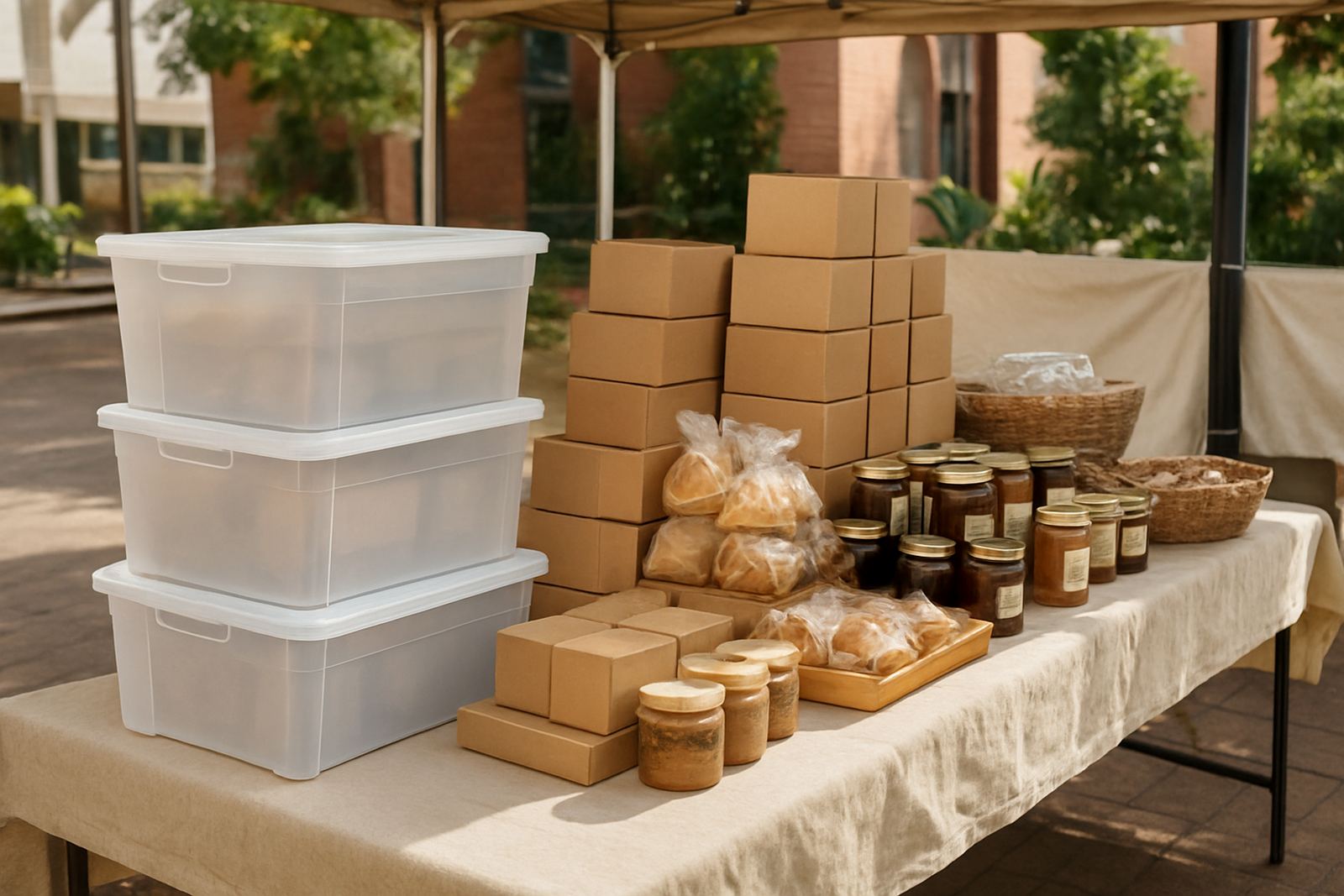
There is no point arriving with 300 items if your table and storage only make sense for 120. Stall space is part of stock planning. A neat display often sells better than a crowded one because customers can see the range clearly and handle items without knocking things over. If you are under a gazebo in windy Pretoria conditions, too much stock on the table can become a problem very fast.
If you need cold items, lighting, or a hot plate for tastings, plan stock so you can trade even if electricity is out. Keep enough pre-packed units, cash, labels and change for the day if card signal is weak or systems slow down. At coastal pop-ups, also allow for humidity by using sealed packaging and moisture-resistant labels where needed.
The aim is not only to bring enough stock, but to bring stock that still looks good after five hours of handling, sun and wind. That is where packaging and stock planning meet.
Watch The Product Mix, Not Just The Quantity
Busy days are won by having the right mix. A table full of one item can look impressive, but it may not suit different shoppers. Aim for a spread across entry-level, mid-range and gift-ready products. That way you can catch people buying a small treat and those shopping for a birthday, teacher gift or home hamper.
Think through how customers move through your stall. They often start with the cheapest item, then step up once they trust the quality. If you only pack your premium range you may miss the quick sale. If you only pack low-cost items you may leave money on the table. Balance matters.
- Entry-level items for quick decisions.
- Mid-range products for regular market shoppers.
- Gift sets or bundles for higher basket values.
- Sample sizes where tasting or testing helps close the sale.
It helps to group products by purpose, not only by type. For example, a soap maker can pack everyday bars, family packs and gift boxes. A baker can set aside snack portions, share sizes and celebration items. That is easier for customers to browse and easier for you to restock during the day.
Review The Misses After Every Market
The best stock plan is built after the market, not before it. Once you are home count what came back, what sold out early and what took up space without moving. Keep notes on rain, wind, temperature, traffic flow and any local event that may have helped or hurt foot traffic. Pretoria markets near schools, offices and residential suburbs can change fast depending on the calendar.
Try a simple review sheet with four questions: what sold first, what never moved, what ran out too soon, and what would you pack less of next time. Over a few months, you will see which products deserve larger batches and which ones are better kept as small-batch lines. That is how you stop guessing and start trading with more certainty.
When a maker knows their numbers, busy days feel less risky. You pack enough, leave the dead weight at home and keep your stall ready for the people who are actually ready to buy.