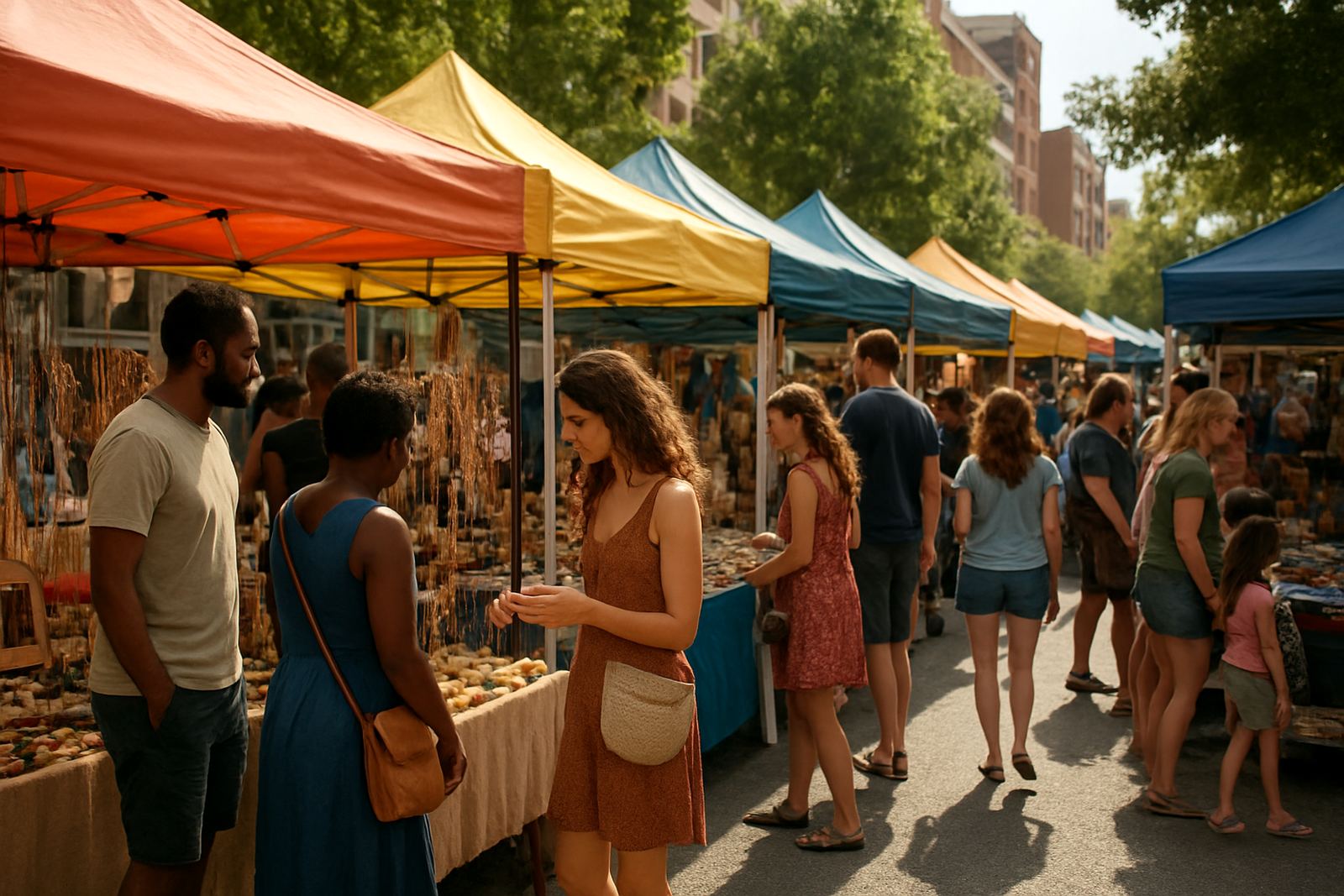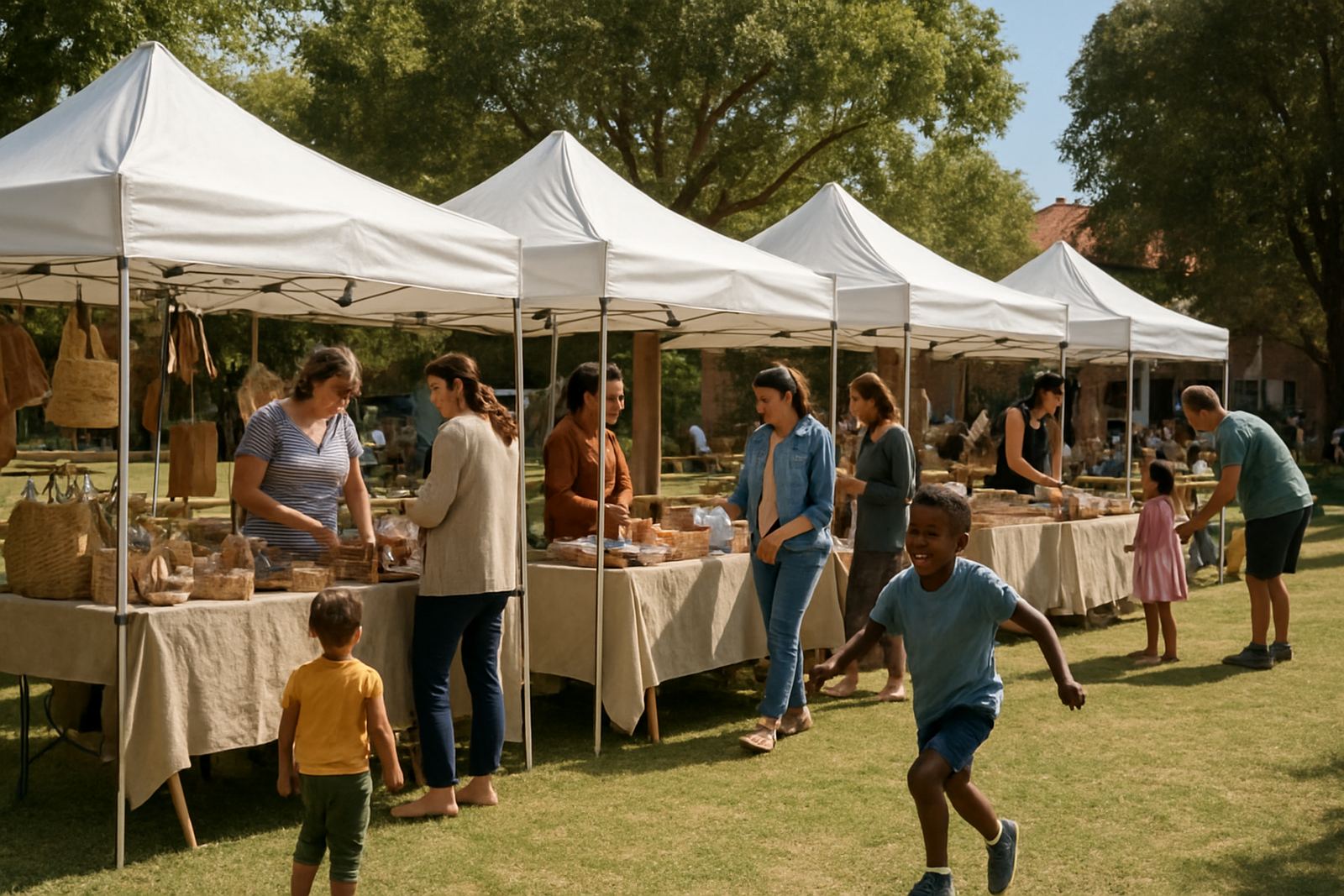


Midrand brief: a market that felt local but traded like a proper sales channel
The client wanted a market format that was easy for small businesses to join, but still strong enough to draw serious buyers from Midrand, Centurion and nearby Pretoria routes. The focus was visibility, not just a nice day out. Stalls had to suit first-time traders as well as makers already doing weekend markets in Hatfield, Brooklyn and Menlyn.
The brief called for a mixed-vendor event with a clear retail flow, good signage and enough structure for food sellers, craft makers and small product businesses to work in the same space without confusion. It also had to suit a public that comes out on weekends with children, grandparents and friends in tow, so the layout needed safe walkways, shade and simple queue control.
We treated it as a local commerce project, not a once-off fair. That meant the market had to support sales on the day and leave traders with something they could use again at future events. A few sellers were only moving 10 to 20 units a day at that stage, so every detail mattered.
What had to work on the ground in Midrand
Midrand can be demanding for outdoor trading. Summer rain, winter wind and mixed parking access all change how a market performs. We planned for clear vendor access and a layout that would still work if a section had to run with minimal electricity.
There were also practical restrictions around food handling, waste and early set-up times. Food stalls needed cleaner prep zones and better separation from craft sellers, while the event itself had to stay neat enough for municipal and venue checks. We worked with stallholders on packaging, pricing and the way stock was displayed so that people could buy quickly and move on with their day.
- Weekend trading format with mixed vendors
- Family footfall from Midrand and surrounding suburbs
- Outdoor trading conditions including wind and summer rain
- Planning for limited backup power
- Simple food safety and waste handling requirements
How we set up the event for sales, not just stalls
We supplied the market planning, vendor support and event-day coordination. That included stall allocation, trader communication, layout notes, set-up timing, and practical guidance for makers who needed help with pricing or packaging before the market opened. The aim was to make the whole thing feel organised without making it stiff.
Our team also supported seller readiness in the lead-up. That covered product presentation, first market prep, customer conversation and food stall basics. For some traders that meant fixing labels and pack sizes. For others it meant deciding how to display small batch goods so they looked tidy and were easy to take home. There was also a lot of coaching around pricing, because Midrand shoppers can compare quickly and move on if the value is not clear.
On the day, the event needed active floor management. Hennie Basson handled operations planning, Nompumelelo Mchunu worked on maker liaison, and Vuyo Bhengu coordinated the schedule with suppliers and traders. Thembisa Tshabangu oversaw the project direction and made sure the event stayed aligned with the broader market approach the business uses across Pretoria and nationwide.
- Stall setup guidance and vendor communication
- Pricing support for handmade and food products
- Packaging advice for quick takeaway sales
- Market photography support for trader promotion
- Event-day coordination and vendor flow management
Timeline and delivery over four weeks
The project ran over four weeks from the first briefing to event closeout. Week one covered planning, vendor types, site layout and the event rules. Week two focused on trader onboarding, so sellers understood their trading space, operating hours and what they needed to bring. Week three was for workshops and practical prep. Week four covered final confirmations, set-up and live event support.
That short timeline suited the format because most of the value came from tight organisation and direct seller support rather than long build-up. It also kept the traders engaged. People were able to adjust stock quickly, test new pack sizes and get ready with realistic expectations for a busy Midrand audience. We kept communication direct and timely, which mattered because many small operators are balancing day jobs, production and market prep at the same time.
By the end of the four weeks, the event had a clear trading rhythm and the vendors knew how to repeat the format at future markets. That is often where the real value sits. Not in one busy day, but in what makers can do with the learnings after the event.
What the market achieved for growing makers
The market gave small businesses a visible route to market in a town where many people want to buy local but need to see the product in person first. Traders used the event to test price points, get direct customer feedback and see which items moved faster in a live setting. For some, the most useful result was learning which products were better as gift lines and which worked as everyday buys.
We also saw stronger confidence from first-time sellers. Once they had a clear stall set-up and a better way to speak to customers, the selling became easier. The event helped makers shift from simply having stock to presenting a small business properly, which is often the step that turns weekend trading into repeat income.
- Better trader confidence on live sales days
- Clearer price testing for handmade products
- Improved packaging and presentation for takeaway sales
- More direct contact between makers and local buyers
- A practical model that can be repeated in other Gauteng locations
What we would do again for a market like this
We would keep the same approach: a tight trading layout, early seller preparation and direct support on the basics that actually affect sales. The mix of maker workshops was a good fit, especially pricing, packaging and customer conversation. Those are small things on paper, but they make a real difference when someone is standing behind a stall for six hours.
For a similar market, we would also keep the focus on weather readiness, power backup and simple signage. Midrand shoppers respond well to events that feel organised but still local, and that balance is important. Give people a clean place to walk, enough shade and easy parking and they stay longer. That is good for food sellers, craft traders and families alike.
Overall, the project showed that a mixed-vendor market can do more than fill a weekend. It can help smaller businesses move into a proper sales routine, build repeat customers and learn what works in a Gauteng trading environment. That is the sort of outcome worth repeating.
Key facts
| Project | Midrand Small Business Market |
|---|---|
| Client type | Mixed-vendor community market project for growing local makers |
| Town | Midrand, Gauteng |
| Timeline | 4 weeks from briefing to closeout |
| Services supplied | Stall styling workshop, pricing products workshop, packaging for sales, market photography workshop, customer conversation workshop, food stall basics, first market prep |
| Project lead | Thembisa Tshabangu, with Hennie Basson, Nompumelelo Mchunu and Vuyo Bhengu |