What a gourmet food stall needs on market day
Packaged foods and pantry goods sell best when customers can see what they are buying, read the label quickly and taste the product without confusion. At a busy Hatfield market or a maker night in a hall or courtyard, your stall has to handle foot traffic, warm weather and long trading hours. The setup should make it easy to serve samples, process payments and keep stock neat when the crowd picks up.
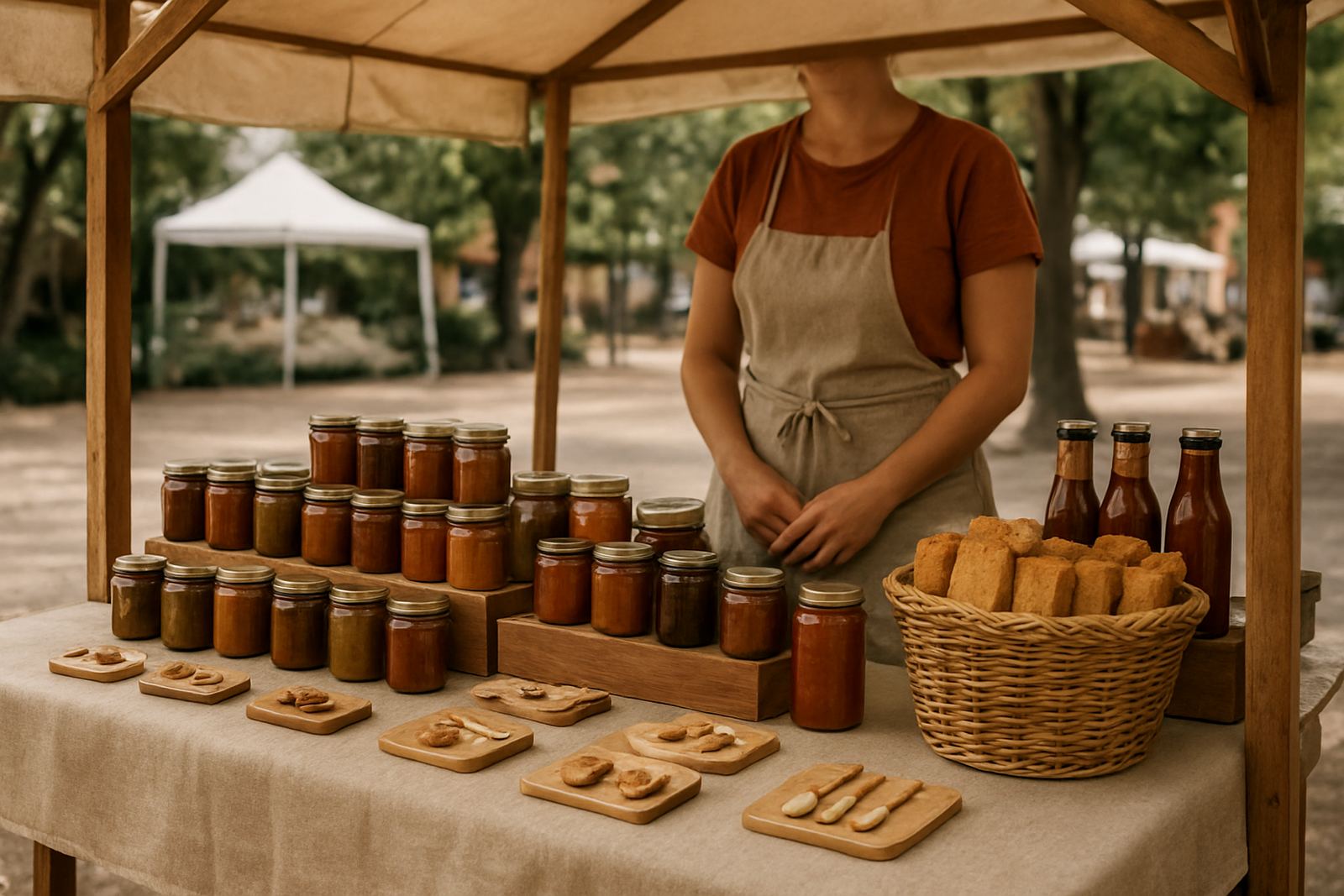
For most gourmet food makers, the stall should separate three things clearly: product display, tasting, and packing or payment. That keeps the table tidy and helps with hygiene. If you are selling biltong, preserves, spices, sauces, baked goods or dry pantry mixes, label size matters just as much as the product itself. Clear pricing and allergen notes also help customers decide faster, especially when they are moving between several stalls.
Typical equipment for pantry goods and tasting tables
The right equipment depends on whether you are selling sealed jars, open samples or heat-sensitive foods. In Pretoria summer heat, a covered table and insulated storage can make a big difference. For coastal pop-ups, humidity can affect labels, paper packaging and crisp products, so it is worth choosing materials that hold up in damp conditions.
- 2 to 3 trestle tables or folding tables, usually 1.8 m each
- Branded tablecloths or wipe-clean covers in neutral colours
- Clear price stands, menu cards and allergen notices
- Sample jars, tasting spoons, serviettes and small waste bins
- Storage crates under the table for back-up stock
- Battery lighting for late afternoon or indoor evening events
- Card payment device and a cash float in small notes
- Cool box or insulated carrier for items that need temperature control
If you are doing food stalls often, add a small shelving unit or riser boxes so jars and packets are visible from across the aisle. Keep the front row light and easy to reach, with extra stock tucked below the table. This helps when you are busy and trying not to block the table with boxes.
Layout advice for better tastings and faster sales
The best food stalls guide the customer from sample to sale in one smooth movement. Start with the tasting area on the left or right edge, not in the middle of the payment point. That lets people stop, taste and then step forward to buy without clustering around one spot. If you are trading near the Hatfield or Brooklyn areas, where shoppers often browse in groups, this small layout choice can reduce bottlenecks.
Use height to your advantage. A back row of crates, a middle row of shelves and a front row of smaller items creates depth and makes the table look fuller without cramming stock together. Keep the most popular items at hand level and the higher-margin products where people naturally pause. For food stalls, good layout also means keeping napkins, tasting utensils and hand sanitiser within arm's reach but not in the way.
- Place samples away from cash handling
- Keep allergens and spice levels clearly marked
- Leave a clear path for two people to stand at the stall
- Use one sign for the main offer and one for specials
- Keep fragile jars off the table edge
Common mistakes makers make with food stalls
One of the biggest mistakes is bringing too much stock to the table. A crowded stall looks busy but it slows down service and makes the display harder to read. Another common problem is poor labelling. If the customer has to ask basic questions about ingredients, shelf life or portion size on every item, sales slow down and queues build up.
Some makers also underestimate heat, dust and transport damage. Glass jars need padding, paper bags need protection from moisture and printed labels should stay legible after a full day outside. We also see stalls that mix tasting, packing and storage in one small corner, which usually ends with clutter. If you are doing maker nights or indoor events, check venue rules on food handling, open flames and refrigeration before you load the van.
For first-time sellers, another issue is pricing too low because the products are handmade and feel personal. A market stall still needs to cover ingredients, packaging, travel from Pretoria or nearby towns, stall fees and time. If you do not price properly, you can work hard all weekend and still not have enough left for the next batch.
Planning for Pretoria weather and venue rules
In Pretoria, summer afternoons can be hot and bright, so shade is important even for sealed goods. Use a gazebo or covered area where possible, and avoid placing food in direct sun. For winter markets, a small heater may be useful, but check venue rules and keep it away from packaging and stock. For evening maker nights, battery lamps and charged card devices are worth the extra spend.
Some venues allow food sampling only in defined zones, especially in school halls, municipal spaces and community centres. Others require gloves, hair coverage or covered waste bins. If you are selling across different branches like Centurion, Menlyn or nationwide pop-ups, it helps to pack one standard food stall kit that you can adapt quickly for each site. That saves time and cuts the chance of forgetting basic items.
Budget ranges for a practical gourmet food setup
A simple gourmet food stall can be started at a modest level if your packaging is already sorted. For a basic market-ready setup, many makers budget between R2 500 and R6 000 for tables, table covers, signage, sample containers and storage crates. If you need better lighting, a display shelf, branded signage and insulated storage, a mid-range setup often sits between R7 000 and R15 000.
For makers who trade often at weekend markets, maker nights and pop-ups, a more complete setup can run from R16 000 to R30 000 depending on the amount of stock display equipment and temperature control needed. The best place to spend first is on clear labels, neat packaging and a layout that makes restocking easy. Fancy extras can wait, but a clean, organised food stall pays for itself faster.
How Local Makers Market supports food makers
We work with makers who need practical help preparing for weekend trading, from first market prep to small batch branding and seasonal selling. For gourmet food sellers, that often means planning the stall flow, sorting the tasting area, improving product presentation and understanding what buyers expect at family markets and evening events. If you are new to market trading, a focused food stall basics session can save a lot of trial and error.
Our team in Hatfield, Pretoria works with makers across our markets and pop-ups nationwide, helping them present packaged foods and pantry goods in a way that is easy to shop and easy to manage. If you need help getting a food stall ready for an upcoming event, use our contact form and we can talk through your setup, display needs and budget before the next trading day.
- Stall styling for neat food displays
- Pricing guidance for packaged products
- Packaging advice for market sales
- Customer conversation tips for tasting tables