Why card payments matter
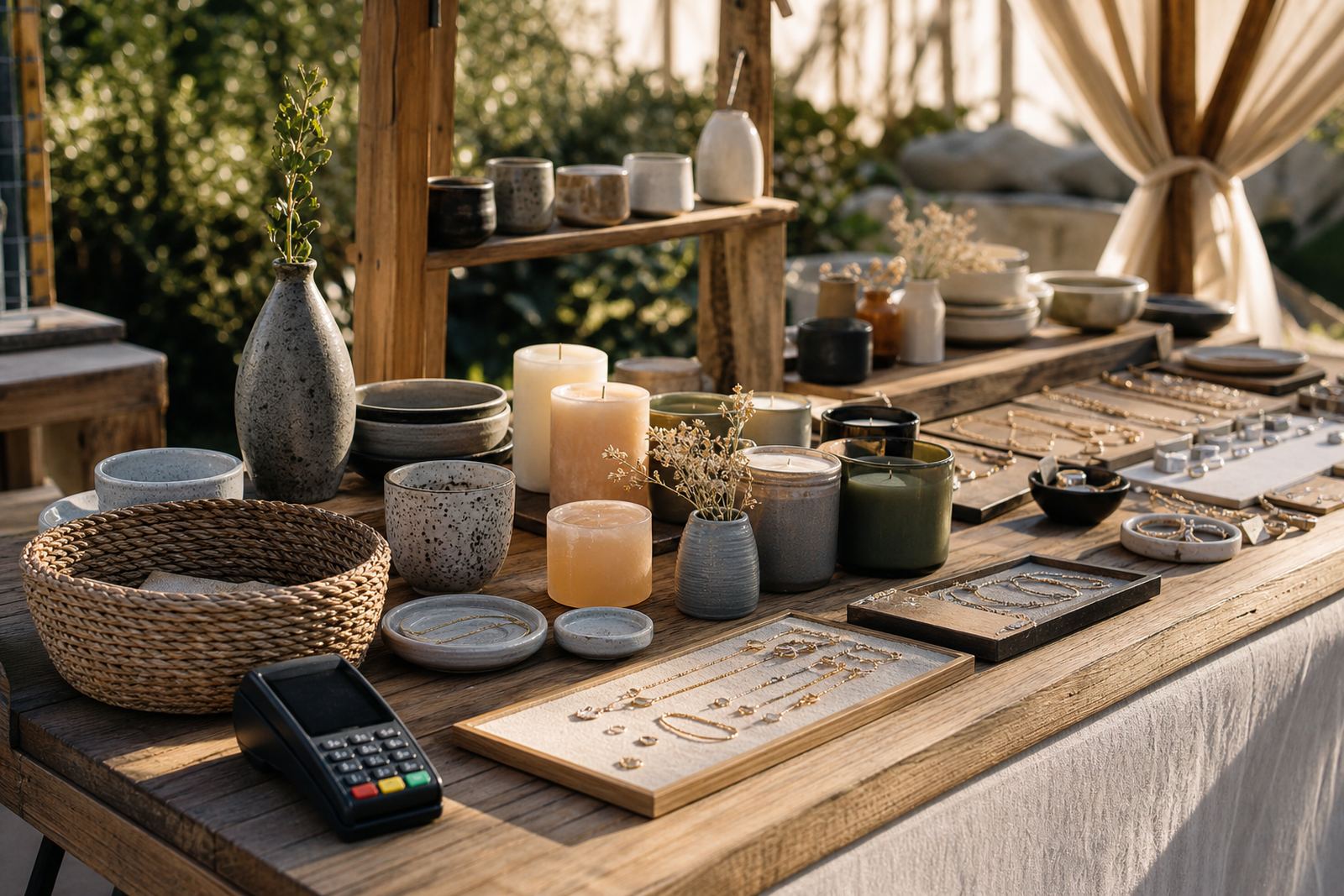
Handmade goods are often bought on impulse. A shopper falls in love with a ceramic bowl or a pair of earrings and wants to buy it now. If the stall only takes cash, they promise to come back after finding an ATM, and many never do. Card and tap payments also make it easier to sell higher value pieces and bundles, and to accept orders for custom work on the spot.
Choosing a card machine
Several South African banks and payment companies offer small portable card machines and phone based tap to pay apps. When comparing them, look at more than the transaction fee.
- Does it accept tap, chip and phone wallets?
- How long does the battery last on a full market day?
- Does it work on mobile data or need a phone connection?
- How quickly is money paid into your account?
- Is there a monthly fee when you are not trading?
Signal and power on the day
Some of our venues are in gardens and farm settings where signal can be patchy. Test your machine at the spot where you set up and keep a second option, such as a phone hotspot on another network. Charge everything the night before and bring a power bank and cable. A card machine that dies at three o'clock costs you the late afternoon shoppers.
Keeping records simple
Most machines and apps give you a daily summary. Write down cash sales separately so you can see your total for the day, and note which products sold best. Over a few markets this tells you what to make more of and what time of day is busiest. Keep receipts handy for customers who ask for one.
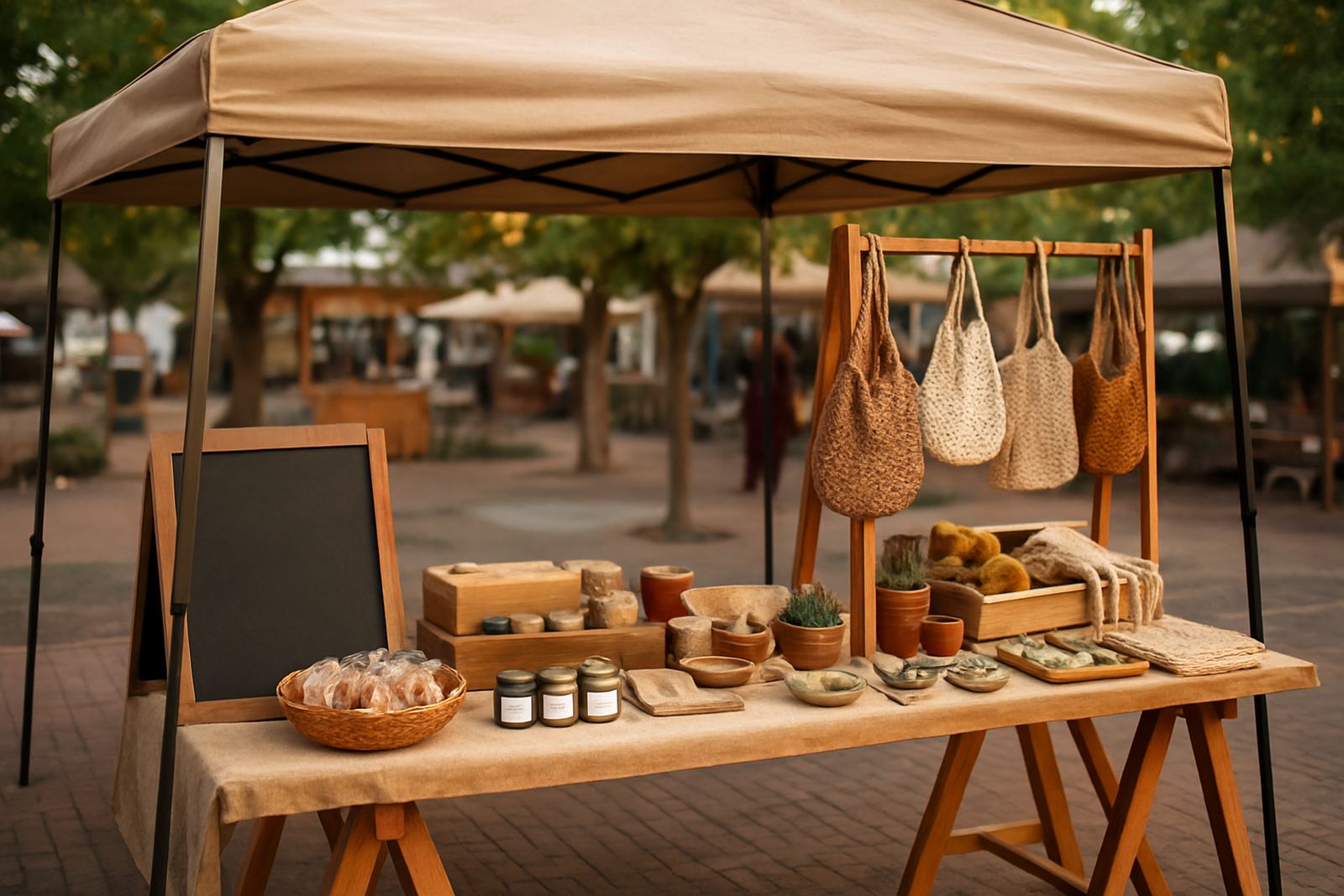
Make it obvious
Put a small sign on your table showing that you accept card and tap. Shoppers often assume small stalls are cash only. If you are new to our markets, ask the market team about the venues where signal is strongest and which stalls nearby can share tips. We are happy to help makers get set up before the festive market days.