
Start With One Clear Light Source Over the Main Display
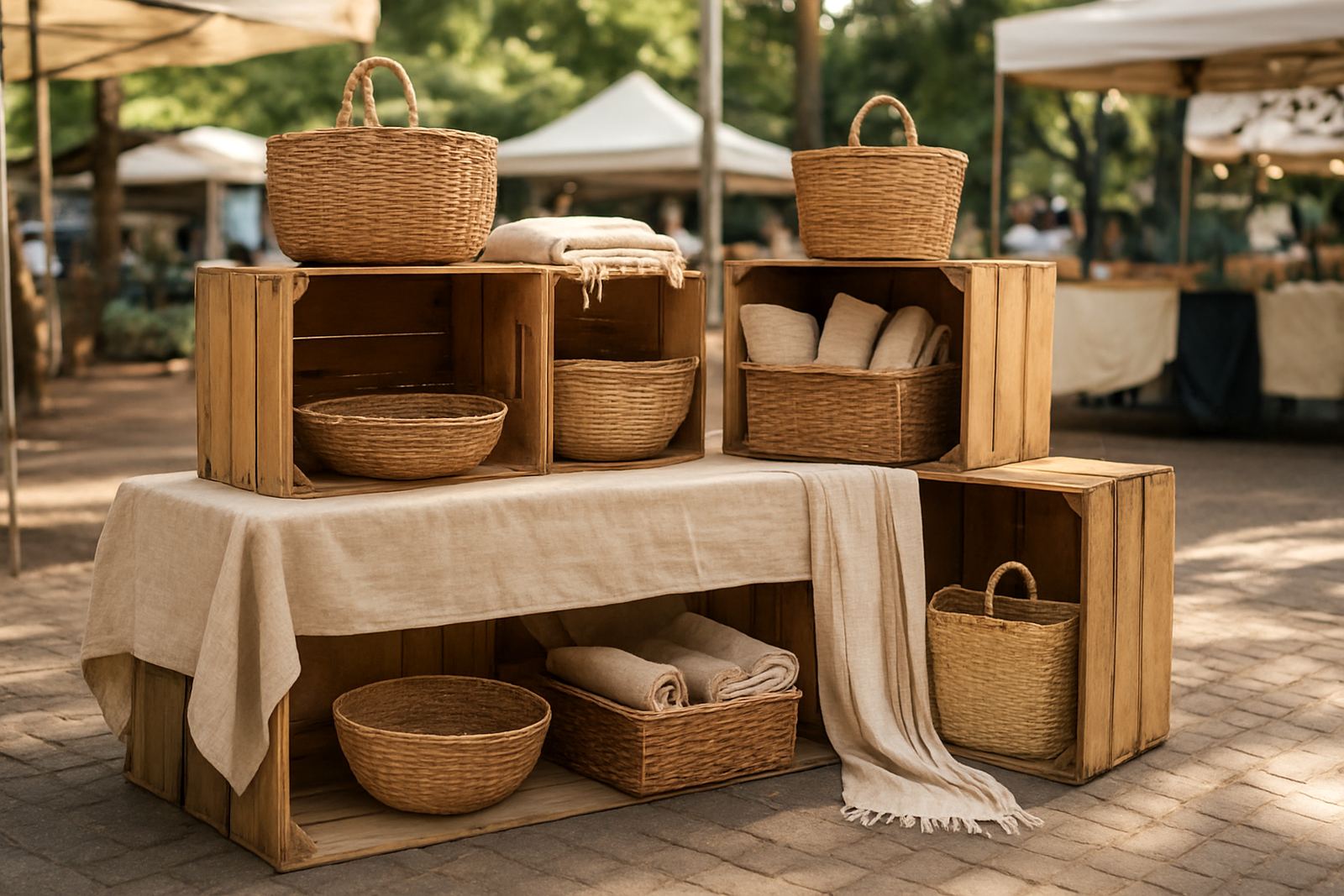
After sunset, customers first need to see what you sell, not guess at it. A single bright overhead or front-facing light aimed at the main display is usually better than scattering too many small lights around the stall. Keep the light focused on your bestsellers, the items with fine detail, and anything that needs texture to show properly such as fabric, wood grain, ceramics or jewellery.
If your market night is outdoors in Hatfield or in a covered courtyard with mixed lighting, test your stall from a few steps back. The display should still read clearly from the walkway. If the light is too high, your products can look flat. If it is too low, people may get glare in their eyes and move on. Aim the beam so it falls across the table at a slight angle, not straight into faces.
- Use one main light for the hero products
- Keep the beam angled across the table surface
- Check visibility from 2 to 3 metres away
- Make sure your prices can be read without squinting
Choose Warm Light For Food, Craft and Handmade Goods
Warm white lighting usually suits maker stalls better than very cool white light. It is easier on the eye and it makes baked goods, candles, textiles and handmade items feel more inviting. Cold blue-toned light can make food look dull and can leave natural materials looking a bit harsh, which is not the impression you want at a family market or a Friday maker night.
For a food stall, warm light helps breads, preserves and snacks look fresher and more appetising. For craft stalls, it brings out colour without making reds too strong or whites look harsh. If you sell a mix of products, go for one warm colour temperature across the whole stall rather than mixing different bulbs. Mixed light can look untidy and confuse the eye.
- Choose warm white for most evening stalls
- Use the same colour light across the table
- Avoid harsh cool light on handmade and food products
- Test how packaging colours look under the bulbs
Use Battery Lights and Backup Power
Evening markets in South Africa need a plan for limited power. Battery lights, rechargeable lamps and fully charged backup packs can keep your stall trading if municipal supply drops or the venue has limited sockets. If you rely on a plug point, ask in advance how much power is available and whether you need your own extension leads. Do not assume the whole row will stay lit.
For practical market use, keep at least one portable light for the counter, one for the payment point and one small backup for storage or packing. If you use a light stand, make sure the base is stable enough for uneven paving or grass. A light that tips over at 7.30 pm after a gust of wind is a headache no one needs. Charge everything the night before and pack spare batteries if your setup uses them.
- Carry rechargeable lights for each display zone
- Keep one backup lamp fully charged
- Pack extension leads only if the venue allows plugs
- Check that cables are taped down and out of the way
Make Product Labels and Prices Easy To Read At Night
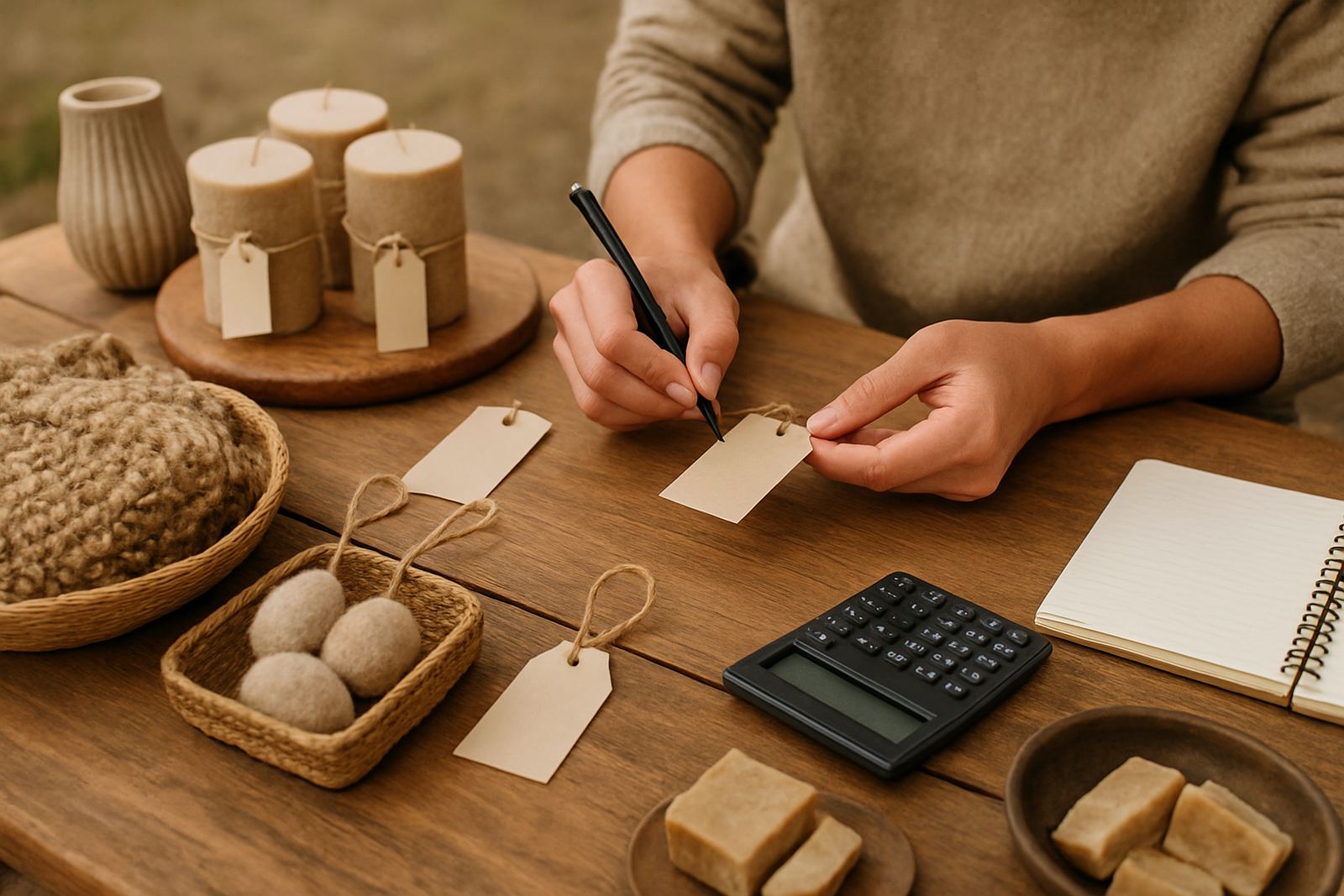
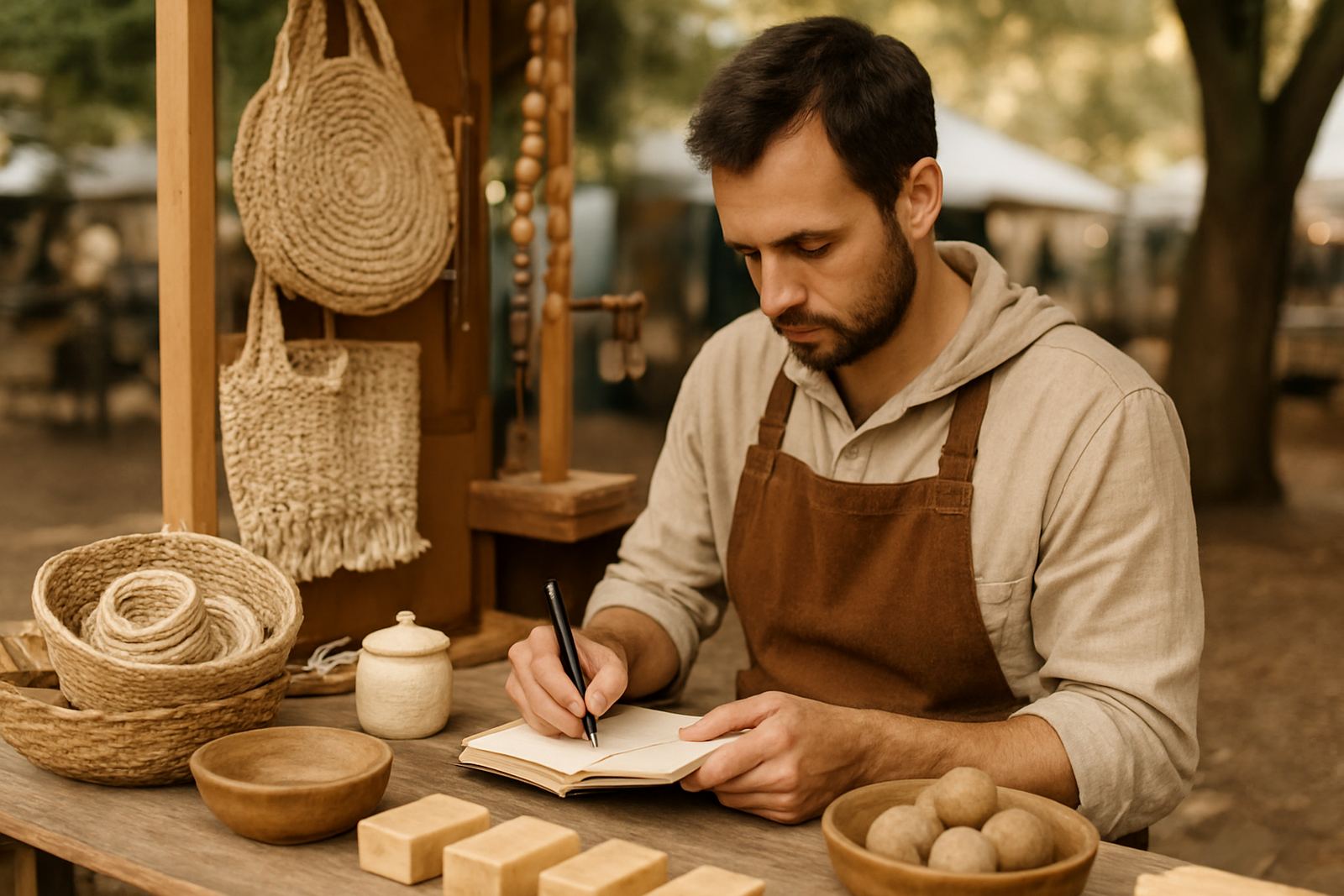
Lighting is only half the job. If customers cannot read your labels, they hesitate. In low light, use larger price cards with strong contrast. Black text on white card usually works well, as does white text on a dark board if the writing is neat and bold. Tiny handwriting looks fine in daylight but becomes hard to read after dark.
Keep labels close to the product they describe and avoid crowding too many signs together. When people walk past a busy market, they do not want to work hard to understand the stall. Clear prices also cut down on repeated questions, which gives you more time to chat about materials, sizes, flavours or custom options. That matters when the crowd gets thicker after 6 pm and everyone is moving at a different pace.
- Use large, simple price cards
- Keep the lettering bold and clean
- Place labels next to the correct product group
- Use one sign style across the whole stall
Layer Light To Create Depth Without Glare
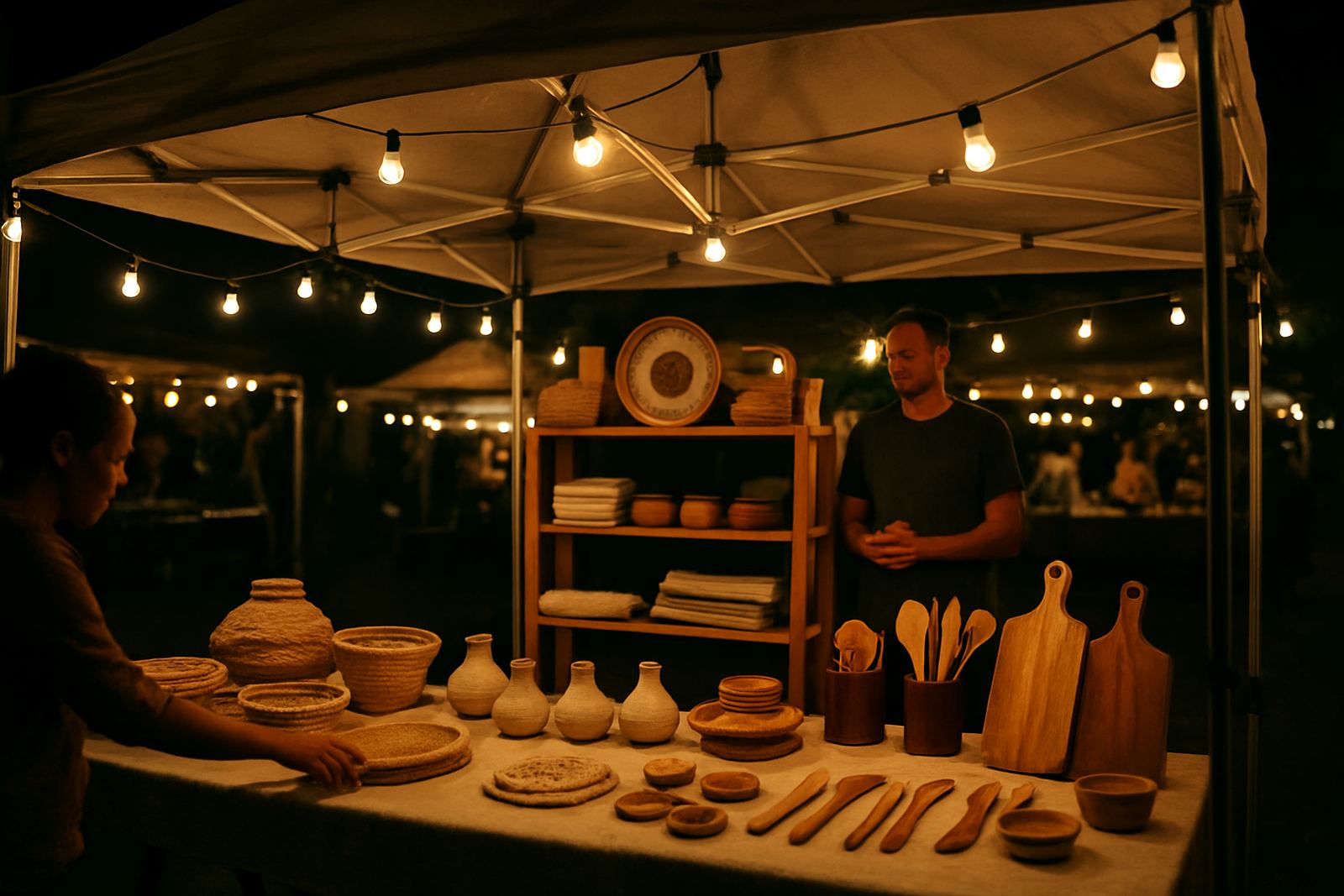
A good evening stall is rarely lit by one source only. Use a main light for overall brightness, then add a softer accent light to highlight a feature table, hanging items or your most detailed products. This gives the stall depth and helps visitors notice what is special without feeling like they are under a spotlight. The trick is to light the products, not the people standing in front of them.
If your stall has shelves, put the brighter light near the upper half so shadows do not swallow the bottom row. If you sell jewellery, try a small directed lamp that catches shine without reflecting straight back into the customer’s eyes. For clothing, light the front of the garment and let the rest fall softly into shadow. It is a simple way to make the space feel more considered, not overstuffed.
At a recent Hatfield market night, one maker selling handmade candles found that a small warm lamp behind the display made the glass containers glow just enough to pull people in from the walkway. The items were already good, but the extra layer of light made them visible from across the row and the table stayed busy well into the evening.
Keep Wiring, Shade and Weather Practical For South African Conditions
Evening weather can change quickly, especially in Pretoria where a calm sunset can turn into wind or dust later on. If you use table lamps or hanging lights, protect bulbs from knocks and keep cords neat so customers do not snag them while browsing. Outdoor markets near the coast may also deal with damp air and salt, so fittings should be handled carefully and packed dry after the event.
Shade matters too. A light under a tent roof may need a different angle from a stall in open air. Test your setup before the market opens, then walk around the stall in the same conditions customers will use. If something looks bright from inside the stall but dark from the front, adjust it before trade starts. Small changes often make a bigger difference than buying more lights.
- Keep cords taped down and tucked away
- Protect fittings from wind and dust
- Dry and pack lights carefully after coastal events
- Test the stall from the customer’s side before opening
Let Light Support Conversation and Sales
The best evening lighting does more than show product, it helps people feel comfortable enough to stop and talk. A well lit stall looks open, tidy and worth stepping into. That matters at maker nights and weekend markets where buyers often decide in seconds whether to engage. When your products are visible and your pricing is clear, you spend less time explaining basics and more time telling the story behind the work.
If you want to improve your setup, start with one stall and watch how people move. Do they stop at the front edge or walk straight past? Do they lean in to read labels, or can they see everything at a glance? That feedback is more useful than guessing. For many makers, the right evening light is not about buying more equipment. It is about arranging what you already have so it works harder after sunset.