Start With Height, Not More Stuff
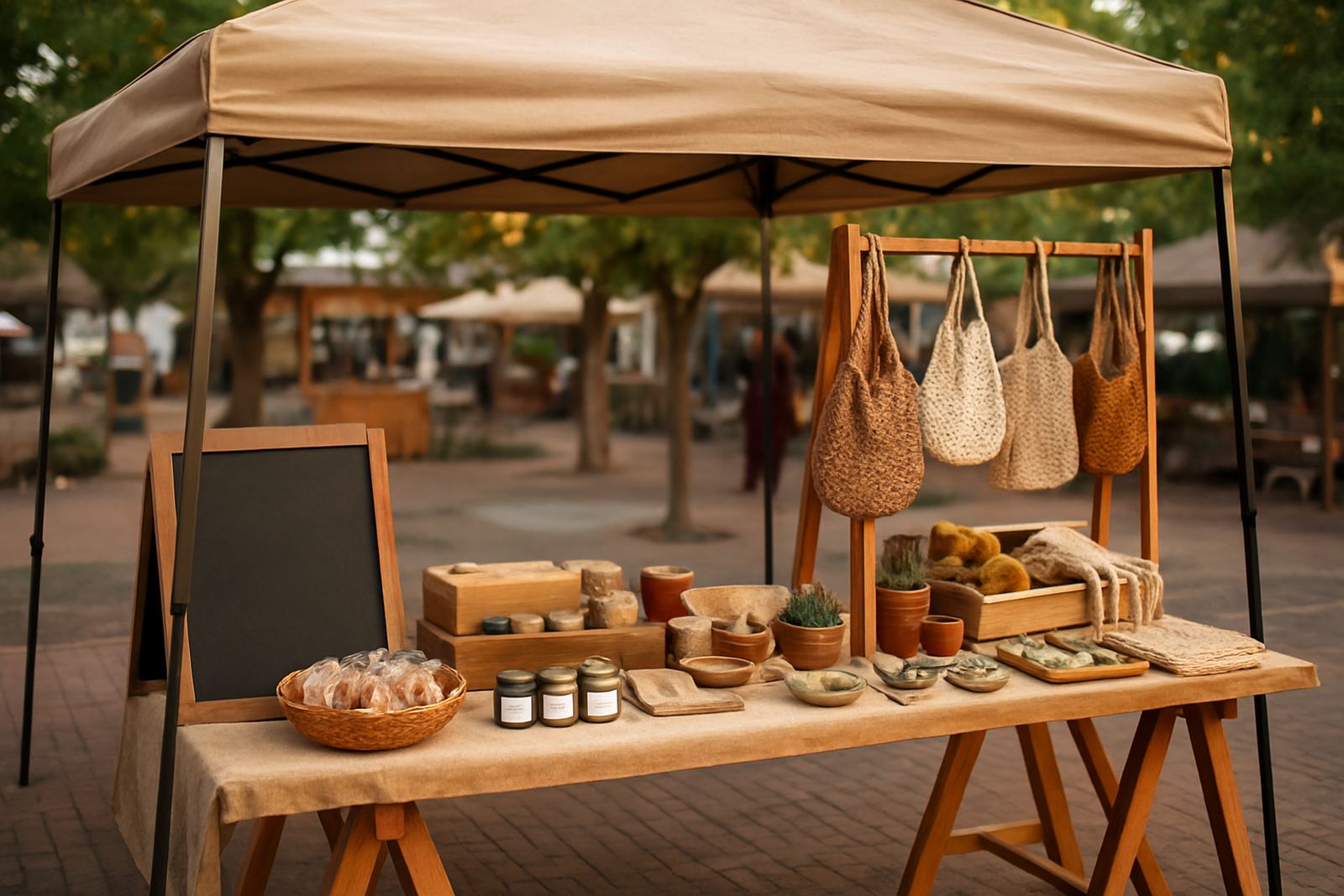
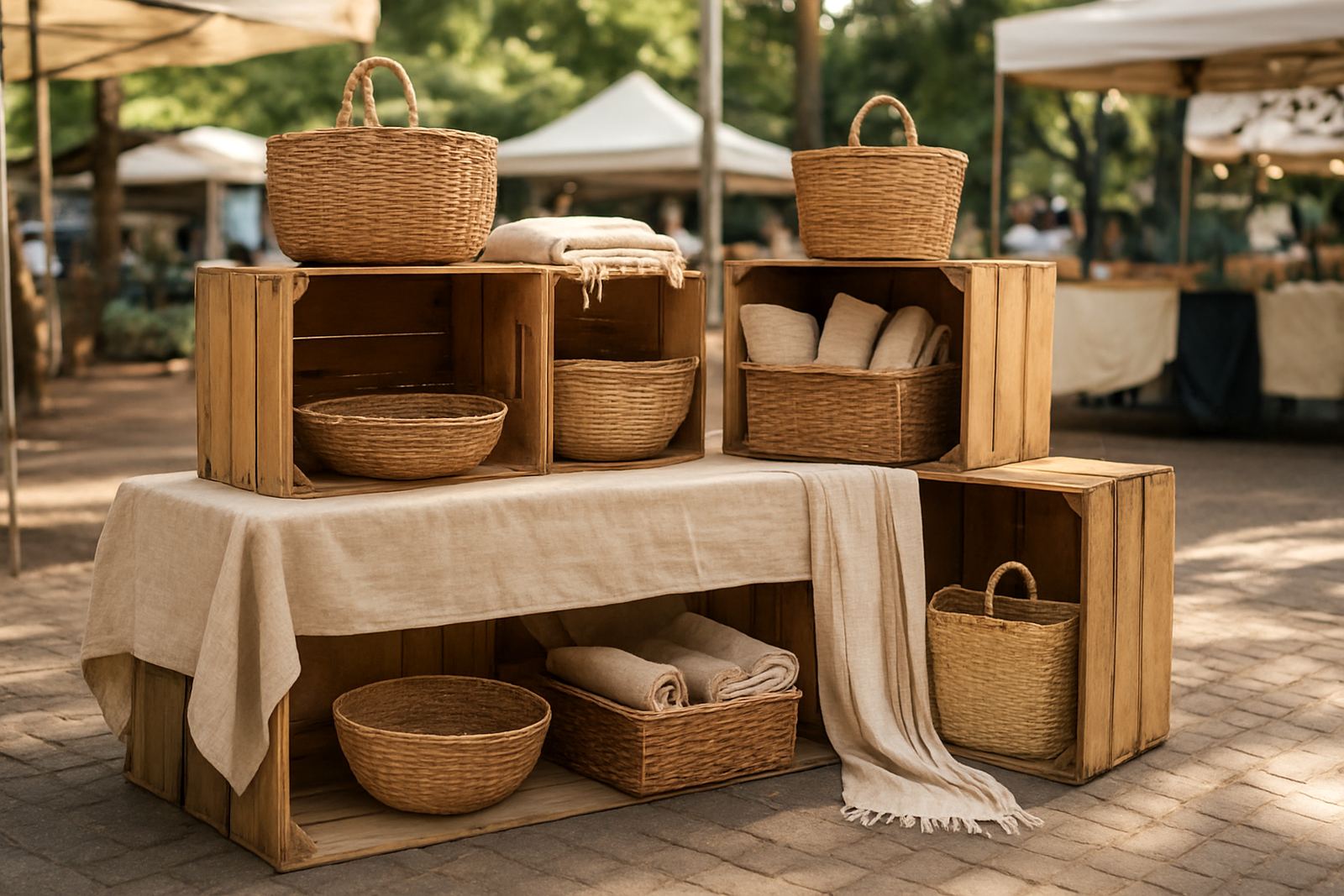
The quickest way to improve a table is to add different heights. Flat stock disappears into one layer, while a mix of crates, boxes and simple stands gives the eye somewhere to move. You do not need custom fittings. A sturdy wooden fruit crate, a covered cardboard box or a plain plinth wrapped in calico can lift key items without adding much to your setup cost.
Think in layers. Put the smallest or most detailed items at the front, then raise larger pieces behind them. If you sell candles, soaps or small homeware, use two or three heights only, not six. Too many levels can look busy and make it harder for shoppers to touch the product. At a Hatfield weekend market, a maker selling handmade mugs used two crates under a neutral cloth and suddenly the whole table looked more considered, even though the spend was under R300.
- Use stackable crates for heavy items like ceramics or jars.
- Wrap plain boxes in kraft paper or fabric offcuts for a cleaner finish.
- Keep taller risers near the back so stock stays visible from a distance.
- Check stability if the table may get knocked during busy trading hours.
Choose Props That Do Double Duty
Low cost display props should work hard. A basket can hold stock, carry back-up items, and act as a feature piece. A tray can group small products and stop them from sliding around. Even a simple chopping board can become a riser for packaged snacks or skincare samples. The trick is to buy or bring items that support selling, not just decoration.
In South African market conditions, props also need to cope with dust, wind and long hours in the sun. Coastal humidity can warp untreated cardboard and make paper labels curl. In Pretoria heat, wax wraps or soft packaging can sag if they sit too close to warm surfaces. So use materials that can be wiped down and packed away quickly. That makes your table easier to reset after a gust of wind or a sudden rush of customers.
- Wire baskets for breads, fruit, napkins or wrapped items.
- Shallow trays for samples, jewellery or mini products.
- Wooden boards for grouped goods that need a solid base.
- Glass jars for loose items such as sweets, buttons or bath salts.
Let Labels Do Some Selling For You
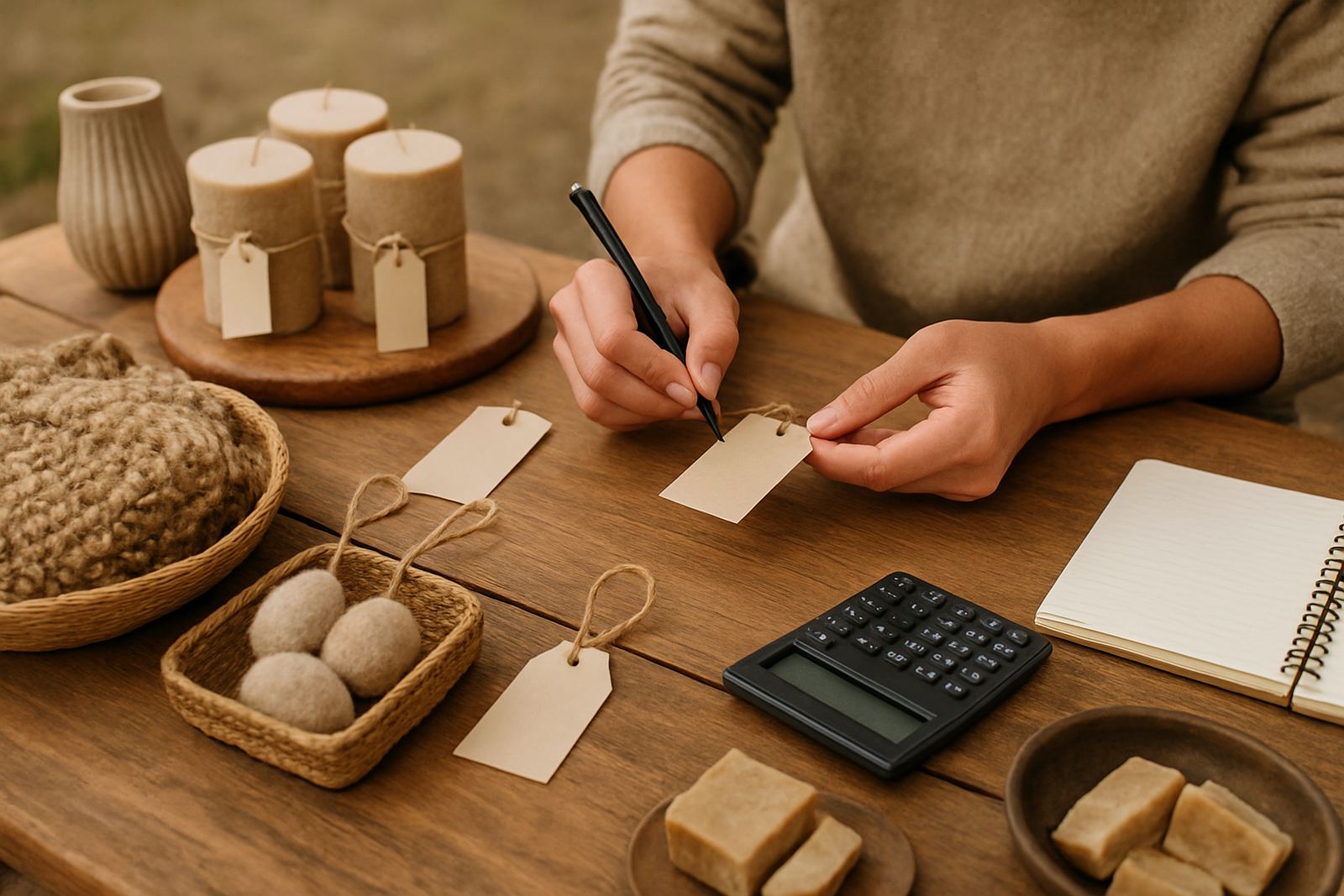
Clear pricing and simple labels can make a basic table look organised straight away. Shoppers want to know what an item is, how much it costs and what makes it different. If they must ask about every piece, the table feels harder work than it should. Printed cards, clipped tags or handwritten signs on neat card stock can all help, as long as they are easy to read from a standing position.
Keep the wording short. Product name, price, size and one short benefit are often enough. For food stalls, add ingredients and any important note on storage or heat sensitivity. For handmade gifts, mention if the item is one of a kind or available in small batches. That little bit of clarity can lift sales without adding extra display cost, and it saves time when you are busy at a Centurion market on a Saturday morning.
- Use one font style or handwriting style across the whole table.
- Print prices large enough to read without leaning over.
- Clip labels to baskets, jars or stands so they do not blow away.
- Include card payment or cash notes only where needed, keep it tidy.
Use Colour in Small, Controlled Ways
Colour can sharpen a display, but too much of it can make a table look crowded. A better approach is to choose one or two base colours and repeat them in cloths, tags or backing boards. Neutral bases such as white, black, sand or grey usually work well because they let the products carry the main colour. Then add one accent colour that links to your range, like green for plant items, navy for ceramics, or terracotta for food and home goods.
If your products already have strong colour, keep the display simple. That is especially useful for handmade jewellery, crochet goods or bright packaged treats. A plain tablecloth, a few natural props and clean light can do more than a pile of extra decor. It also helps on maker nights when the lighting may be mixed and you want your stock to remain easy to read. Dont fight the product with busy cloths and shiny bits, let the work show.
Set Up for Easy Handling and Faster Sales
A good display is not just about looks. It should make it easier for people to pick up an item, compare options and move to payment without confusion. If a customer has to lean across a table or ask you to move things out the way, you may lose the sale. Keep the most tempting items at the front and leave enough space for hands, bags and card machines.
For market days with limited power or fading light, simple solutions matter even more. Battery lights, clip-on lamps and paper price boards all help when the venue is dim. If you sell chilled food or heat sensitive products, plan your layout so the most vulnerable items sit in shaded spots and away from hot surfaces. A table that works in daylight should still make sense at 6 pm when the crowd changes and the light drops.
Build a Repeatable Kit, Not a One-Off Setup
The cheapest display is the one you can use again and again. Rather than buying random decor each month, build a small kit that packs flat and suits different markets. That might include two cloths, three crates, a tray, a few clips, spare labels and a roll of tape. With that base, you can adjust for Hatfield, Brooklyn or a nationwide pop-up without starting from scratch every time.
If you want to keep costs down, track what actually gets used. Some props look good in photos but do very little on a busy table. Others, like risers and clear labels, pull their weight every weekend. Over time you learn what suits your product range and what just takes up space in the bakkie. That is how a lean setup becomes a better looking one, without chasing expensive extras.
- Keep one foldable cloth in a neutral tone for most events.
- Store labels, clips and tape in a small container that stays with the stock.
- Test each prop before market day so there are no surprises.
- Replace damaged items quickly, a bent stand can spoil the whole table.