Start with a tasting station that looks under control
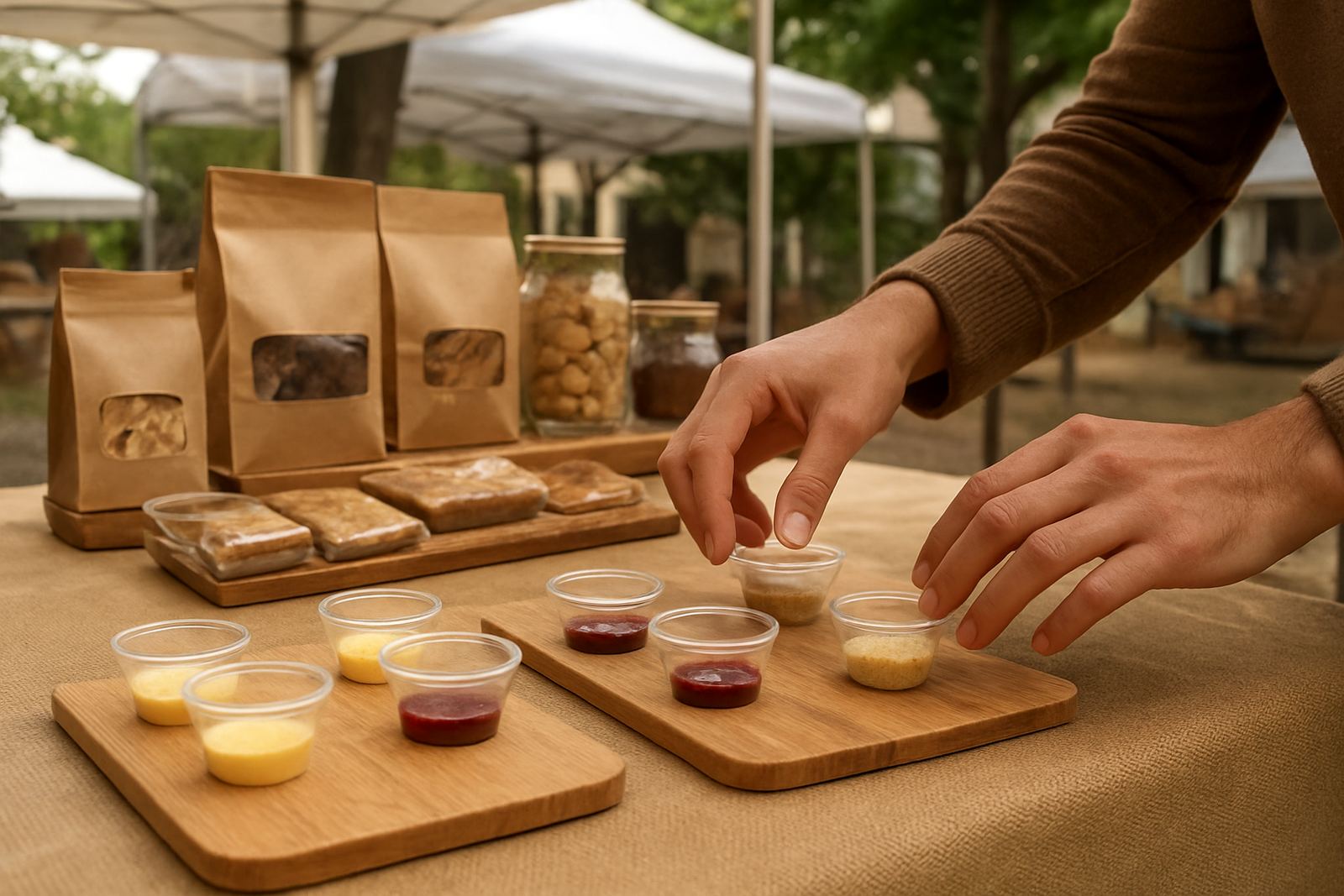
At a packed market in Hatfield or Menlyn, people decide in seconds whether to stop. A tasting table that is neat, labelled and easy to approach sends the right signal before anyone takes a bite. Keep the layout simple: samples in one place, serviettes in one place, and a clear space for customers to stand without blocking the walkway.
Use containers that close properly, a serving spoon for each item, and a waste bin close by so crumbs and toothpicks do not end up on the ground. If you are outdoors, think about wind, heat and dust. A light cover over uncovered food and a weighted tablecloth can save you from constant fixes when the afternoon breeze picks up.
- Label each sample with the product name and any key ingredients.
- Keep serving tools separate for sweet, savoury and allergen-heavy items.
- Use one tray for clean stock and another for used utensils.
- Leave enough space for two people to stand side by side without crowding the table.
Offer small bites that are easy to handle
Sampling works best when it feels effortless. The food should be bite-sized, tidy and quick to finish in one or two mouthfuls. At a Saturday market, a customer does not want to juggle a full tasting plate while carrying a child, a coffee and a tote bag. They want a small, clean taste that gives them the flavour without the faff.
Think about texture as well as portion size. Sticky, drippy or very oily samples are harder to manage and often leave a poor impression. If the product needs dipping, provide the dip in tiny cups rather than asking people to share a communal bowl. For sweets, cut pieces in advance. For savoury items, use small skewers, paper cups or lined tasting trays.
- Keep portions consistent so no one feels short-changed.
- Cut samples before the rush starts, not while customers are waiting.
- Have a backup batch ready in a cool box or insulated tub.
- Avoid samples that melt fast in Gauteng heat or spoil quickly in coastal humidity.
Respect hygiene as part of your sales pitch
People notice clean hands, clean surfaces and clean habits. Even if they never say it out loud, hygiene affects whether they trust your food enough to buy it. Wash or sanitise hands regularly, especially after handling money, rubbish or packaging. If you are serving over several hours, change gloves often and do not treat gloves as a substitute for handwashing.
Use tongs, spoons or skewers instead of fingers, and keep cash handling away from the tasting area where possible. If a sample falls on the table, discard it. If a serving utensil drops on the ground, replace it. These small actions show that you are not cutting corners.
- Keep a bottle of sanitiser within arm’s reach.
- Store food below 5 degrees Celsius or above 60 degrees Celsius where required.
- Cover exposed items when you step away from the stall.
- Bring extra paper towels, cloths and sanitiser wipes for spills and sticky fingers.
Talk to people without crowding them
Sampling is not just about the food, it is about the conversation around the food. A friendly greeting can turn a quick taste into a proper sale, but there is a line between helpful and pushy. Let customers approach at their own pace. Offer a sample, explain what it is, then give them space to taste and decide.
Keep your wording short and useful. Mention one or two facts that matter, such as the main ingredient, whether it is handmade in small batches, or how it can be used at home. If someone looks unsure, answer their question and let them move on. People at maker markets often enjoy browsing first and buying later, so do not corner them.
- Use open questions like, “Would you like to try the mild or the spicy one?”
- Keep your voice clear, but not loud enough to bother nearby stalls.
- Do not interrupt people who are talking, eating or pushing a pram.
- Thank each person whether they buy or not.
Handle allergens and dietary questions carefully
Food sampling etiquette also means being honest about what is in the product. At local events, customers often ask about nuts, dairy, gluten, eggs, sugar content or chilli. If you are not sure, check your ingredient list before answering. Guessing is risky and can create problems later. Clear signs and calm explanations help people make safe choices.
If a product is suitable for vegetarian, vegan or halaal customers, say so only when you know it is true and you have checked the full process. Cross-contamination matters too. A customer may be interested in your sample but need to know whether the same tongs were used for another item. It is better to explain your process plainly than to overpromise.
- Write allergen information on a small sign near the samples.
- Keep separate utensils for different products where possible.
- Use clean serving papers or cups for each sample.
- If a customer asks a question you cannot answer, take their details and follow up after the market.
Make the sample lead naturally to the sale
A tasting station should do more than give away product. It should help the customer understand why your item is worth taking home. Once they have tasted, point them to the next step with a simple offer. Maybe that is a full-size jar, a family pack, a gift box, or a pantry bundle priced a bit better than the single item. Keep the handover smooth so the buying moment feels easy.
At a Pretoria weekend market, a maker of savoury relishes might offer a tiny spoonful, explain that the jar keeps for several weeks once opened, and then show two sizes for home use and gifting. That is practical, not pushy. It helps the customer imagine where the product fits into real life, whether they are heading back to Arcadia, Centurion or further afield.
- Place pricing where it can be seen before people ask.
- Have stock ready in clean, closed packaging for quick sale.
- Suggest a natural next product, such as a spice mix, dip or preserve that matches the sample.
- Keep a card or sign with your market name and contact details for later orders.