Start With One Clear Story Per Table
Jewellery sells better when the table tells shoppers what kind of pieces they are looking at within the first few seconds. At a Saturday market in Hatfield, people are often walking past with coffee in one hand and a child in the other, so they do not have time to decode a crowded spread. If your pieces are hand-forged silver, beadwork, resin, brass, or mixed materials, group them by style instead of mixing everything together.
Keep one message at the front of the table. For example, if your line is lightweight everyday wear, let that be obvious through the layout, not just the price tag. A short sign, a consistent colour palette, and a repeat of the same display height can help shoppers understand what you make before they start asking questions.
Use Height To Stop The Table From Flattening Out
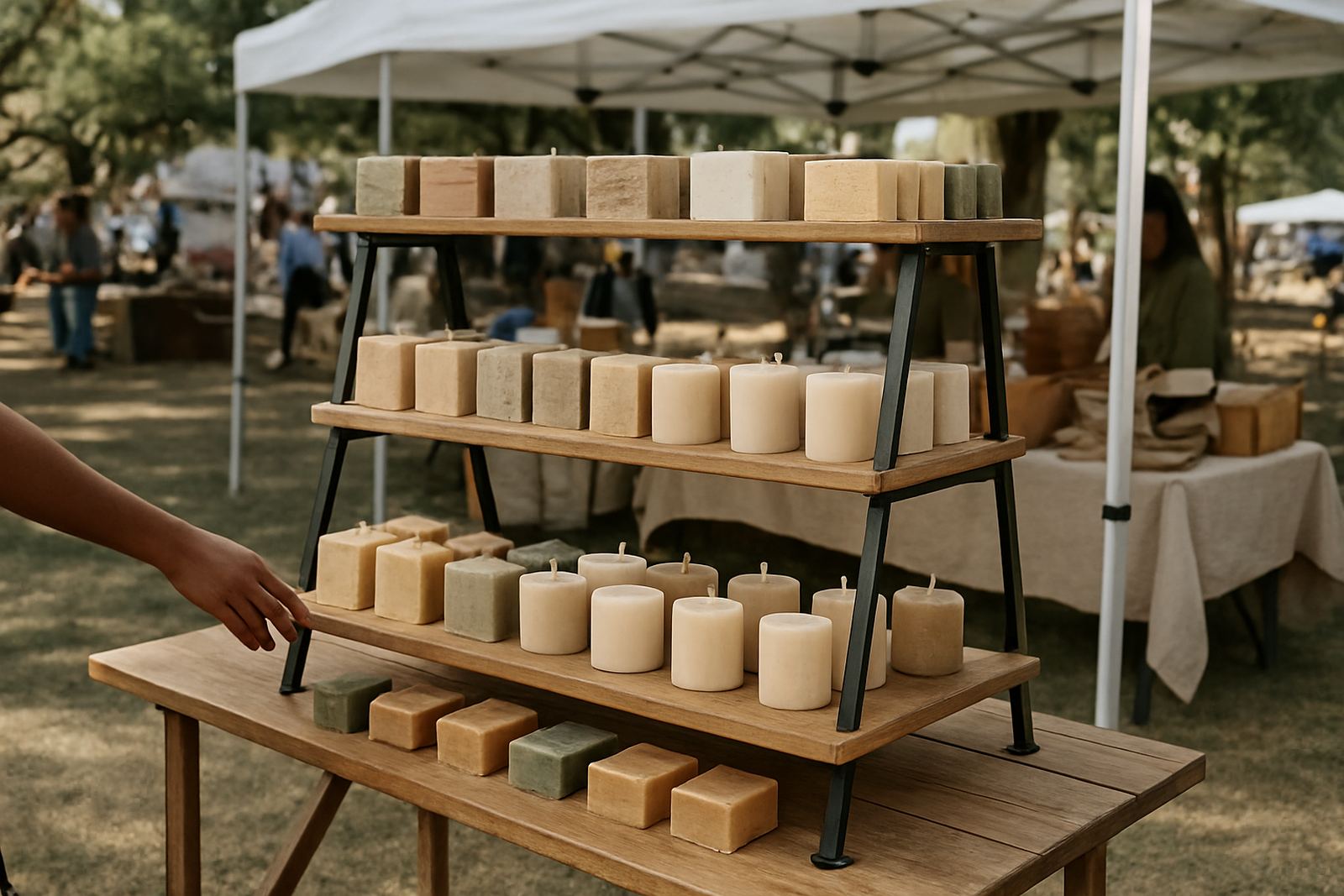
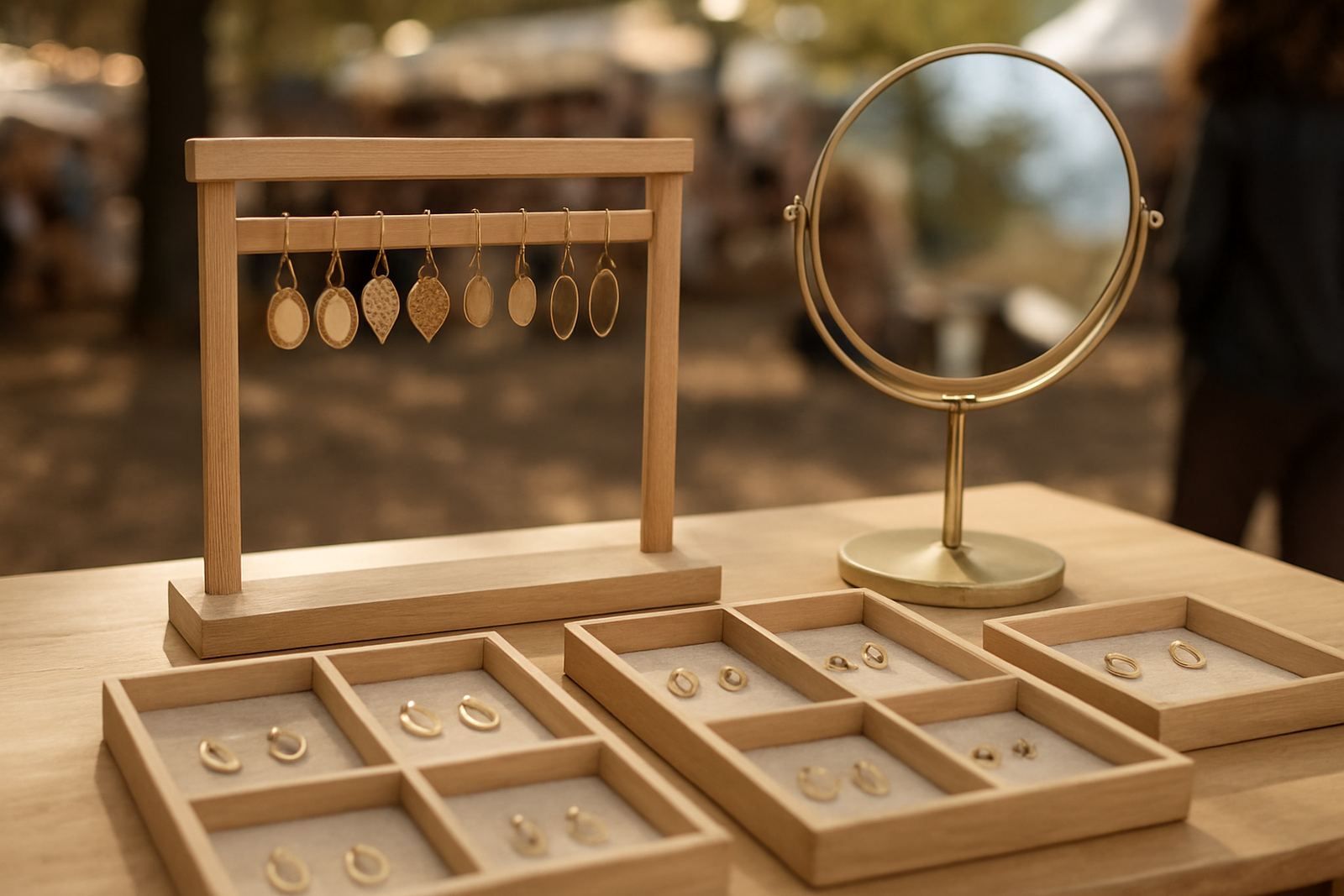
Flat tables make jewellery look like stock rather than craft. Even small changes in height can make the display easier to browse and nicer to photograph. Use stands, risers, stacking boxes, small plinths or fabric-covered crates to lift some items above the table edge. You do not need expensive fittings, just enough level changes so the eye can move.
In a Pretoria weekend market, people often stand in bright sun for long periods, so glare matters too. Matte backdrops, soft cloth and brushed holders usually work better than shiny surfaces. Try to avoid anything that throws reflections across polished metal or stones, because customers will move on if they cannot see the detail properly.
- Place your best-selling earrings at eye level, not flat on the cloth.
- Group necklaces at different heights so chains do not tangle visually.
- Use one taller feature stand for hero pieces and keep the rest lower.
- Leave small gaps between clusters so the table doesnt feel packed.
Make It Easy To Touch Without Messing Up The Set-Up
People buying jewellery want to feel the weight, test the clasp and check how a piece sits against the skin. If they cannot reach items easily, they may walk away rather than ask. The trick is to invite touch without letting the display become untidy by lunchtime. Keep one sample of each style clearly reachable, then store the backup stock in labelled trays or boxes under the table.
For rings, bracelets and small pendants, a compact try-on area works well. A mirror, a sanitiser bottle and a cloth for quick wiping are basic, but they make the table feel considered. In summer, especially at outdoor markets in Centurion or Menlyn, dust and sunscreen can build up quickly, so having a small cleaning cloth close by saves time.
- Show one sample per design range and restock from below.
- Keep clasps open only when a customer is trying a piece on.
- Have a clean mirror that does not wobble on the table.
- Use a small dish or tray for earrings customers have handled.
Price Tags Must Answer Questions Before They Are Asked
Clear pricing helps jewellery move faster than almost anything else. If people have to hunt for a price, they often assume it is too expensive or that they must ask permission to browse. Visible tags should be neat, easy to read and attached in a way that does not damage the item. For delicate pieces, a simple card behind the product usually works better than stickers or bulky clips.
It helps to include more than just the Rand amount. A short line on materials, size or finish gives customers a reason to compare one piece against another. For example, a buyer choosing between two pairs of earrings may decide quicker if one says sterling silver hooks, nickel free, while another notes lightweight brass with sealed beads. Small details reduce hesitation and build trust.
If your price points range widely, create bands instead of scattering items randomly. That makes the table feel more organised and can help you hold your margin without endless explainers. A shopper looking for a R250 gift should be able to find it quickly.
Packaging Should Match Market Conditions
Good packaging is not only about taking a purchase home neatly. It also protects the piece from wind, humidity, heat and being crushed in a tote bag on the way to brunch. In coastal areas, metal findings can discolour faster if they are left in damp paper bags, while beaded items can snag if the packaging is too loose.
At a maker night or weekend market, choose packaging that closes properly and still looks tidy at the counter. Small boxes, recyclable envelopes, soft pouches and card inserts all have a place. If you sell food and jewellery side by side at the same event, keep the packing separate so scents, oils and crumbs do not affect the pieces.
- Use packaging that protects clasps and chains from tangling.
- Add a care card with simple cleaning and storage advice.
- Keep extra bags, tissue and tape inside a closed box under the table.
- Label the outside of each packet if you sell matching sets.
Light, Power And Weather Can Change A Sale
Market lighting is often uneven, and evening trading can make it worse at the exact time shoppers arrive. Battery lamps, clip lights and small backup torches can keep your table visible when the hall or outdoor strip gets dark. Jewellery relies on detail, so even a slight drop in light can make gemstones, engraving and texture harder to see.
If your market is outdoors, think about wind, rain and afternoon heat. Lightweight display stands can blow over, and some adhesives soften in the sun. In winter, cold air can make people browse faster, so a neat, well-lit table needs to do more of the work. A little planning here saves you from re-stacking pieces every ten minutes, which is tiring and looks untidy.
For events in Pretoria, it helps to arrive early enough to test how the sun falls across the table. A spot that looks fine at 8am can glare badly by 11am.
A Hatfield Stall Example That Keeps Browsing Simple
At a weekend market in Hatfield, one jeweller split the table into three clear zones. The left side held earrings on stands, the centre had necklaces at two heights, and the right side kept rings and bracelets in shallow trays. A small mirror sat near the front edge, with prices on each card and a cloth tucked beside the payment box. Customers could compare styles without waiting for help, and sales moved more steadily through the morning.
The same maker also kept one simple rule: if a piece was meant to be a gift, it went into a ready-to-wrap section with a neat tag and care note. That made the purchase feel finished. Family shoppers, especially those stopping in on the way to lunch, liked being able to pick, pay and leave in under five minutes. The set-up was not fancy, but it was easy to read and easy to buy from.
That is often what jewellery needs most. Not more product, just a calmer way to see it.