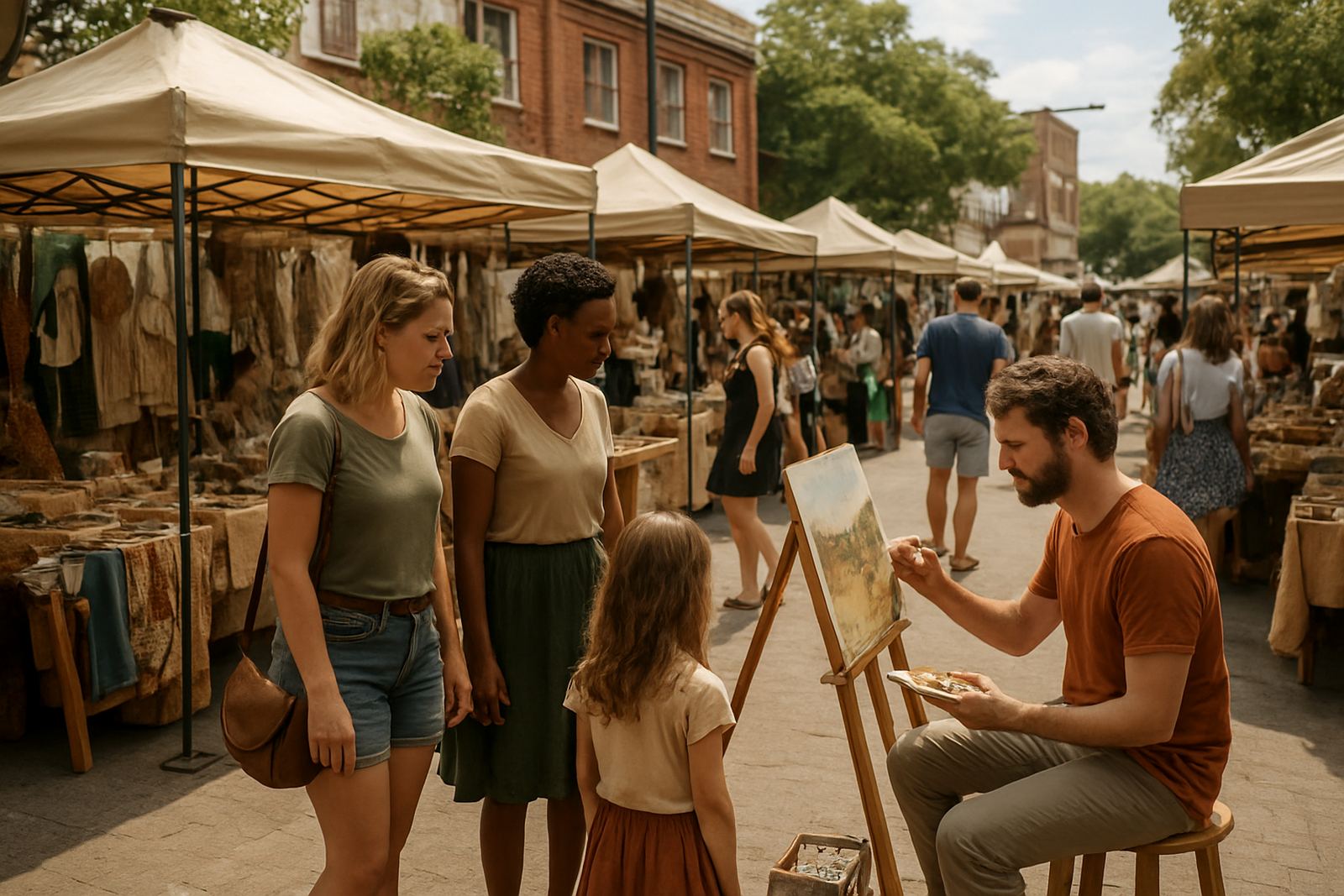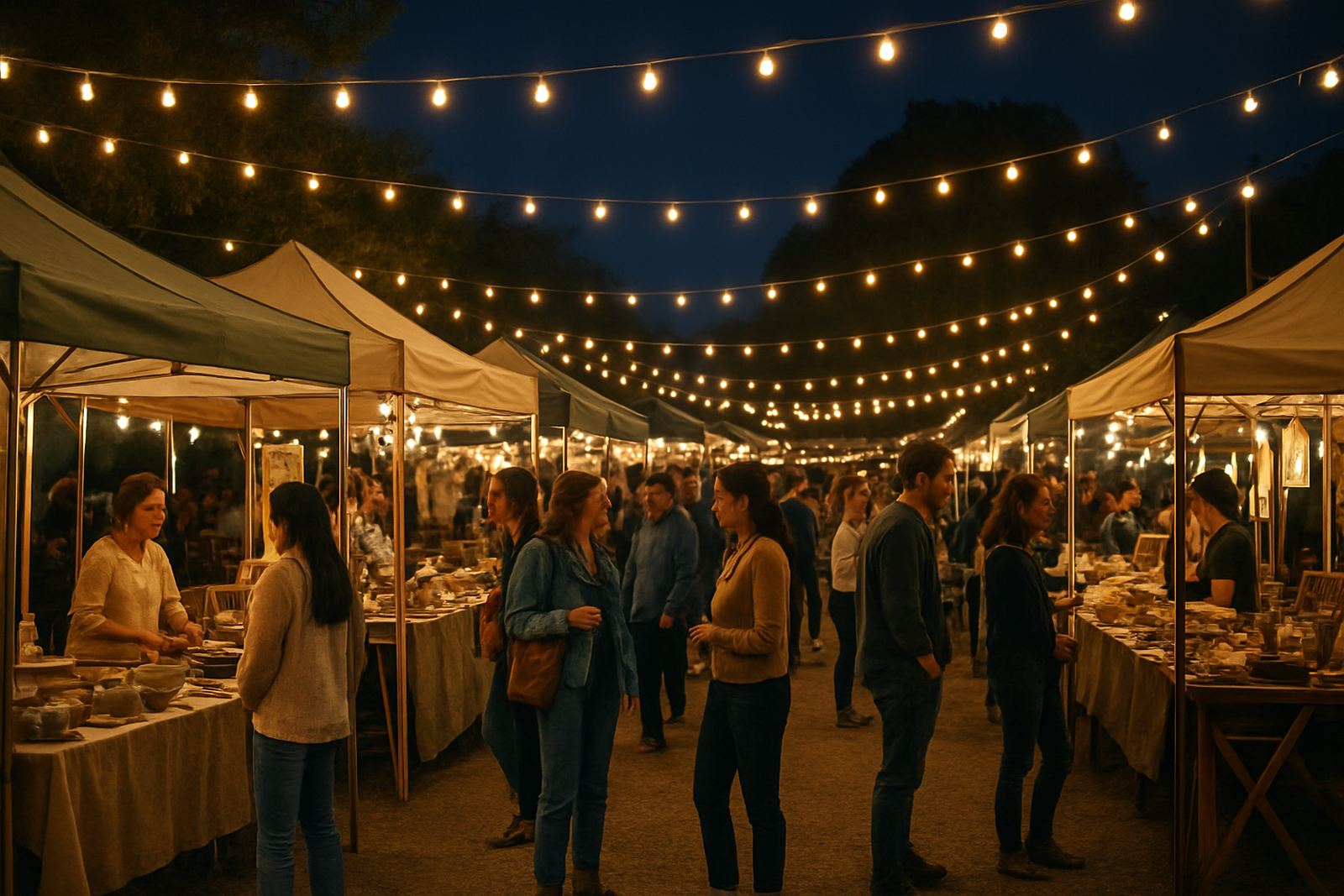
A Cape Town brief built for evening foot traffic
The client was a national events team running weekend markets and maker nights for artisans, food traders and small batch producers. For this project, the ask was specific: create a Cape Town night market that felt warm and social, but still practical for trading after dark, with clear flow, good lighting and enough variety to keep people moving through the site.
The event was aimed at buyers who wanted gifting, supper and a bit of atmosphere in one stop. That meant we had to think about more than stalls. We needed trading hours that suited post-work traffic, a layout that encouraged browsing without bottlenecks, and a list of vendor categories that gave the market enough range without crowding the food section or making the artisan stalls feel secondary.
What had to work on the ground
The main constraints were typical of a night market in a busy city setting. There were access limits for bump-in and bump-out, a hard finish time, and venue rules around noise, parking and waste removal. Because it was an evening event, lighting, power allocation and safe pedestrian movement mattered far more than they would at a daytime market. We also had to plan for summer weather, cooler coastal evenings, and the usual last-minute changes that come with food vendors and makers working from small stock positions.
We set the project up around a few non-negotiables:
- Fast set-up for makers arriving after work
- Clear stall spacing so shoppers could move comfortably with bags and prams
- Simple signage for entry, food, seating and toilets
- Lighting that supported product display without harsh glare
- Practical rules for power, generators and gas use where allowed
- Waste points placed close enough for food stalls but out of sight for shoppers
How we shaped the maker night offer
We worked with the client to define the trader mix and the customer experience. The food offer needed to support supper, grazing and dessert, while the gifting side needed handmade products that sold well at night, such as candles, ceramics, prints, skincare, small leather goods and packaged treats. We also made sure the market had enough ready-to-buy items for the browsing crowd, since evening shoppers usually make quicker decisions than weekend morning visitors.
Our team handled maker communication, stall planning and the trading format for the event. That included advising on product grouping, stall styling, and how to price items for an evening audience that likes to spend but still wants value. We also helped shape the customer journey from entrance to browse to purchase, with social seating in the centre so people could stop, eat and return to stalls afterwards.
- Trader vetting and category balancing
- Stall layout planning for 2 m and 3 m trading spaces
- Support for food stall basics and packaging for sales
- Advice on display heights, lighting and product visibility
- Planning for family flow, couples and groups of friends
What we supplied and managed
The work covered both event planning and maker support. On the operations side, we prepared the site map, trader placements, arrival schedule and event timing. On the maker side, we supplied guidance that came from our regular workshop programme, especially around first market prep, small batch branding and customer conversation. That mattered because many of the traders were independent businesses that knew their products well, but needed help presenting them for a night market audience.
We also coordinated photography needs for the event and advised the client on content capture points for social media, so the market could keep working after the gates closed. The practical details counted here: where vendors would stand for photos, which areas would be busiest after sunset, and how to keep the central seating area visible without making it feel staged or stiff. The event team wanted a market that looked good in real life and in pictures, not something over set.
Timeline from first brief to market night
The project ran over 6 weeks from the first planning meeting to event day. Week 1 focused on the brief, venue requirements and target trader categories. Weeks 2 and 3 were used for trader outreach, stall mapping and confirming service needs such as power, lighting and food handling. Week 4 went into the customer-facing structure, entry flow and signage plan. Week 5 was for final trader confirmations, timing sheets and venue checks. Week 6 covered bump-in, final setup and live coordination on the night.
That schedule gave enough time to solve the usual issues before they landed on the day. A few traders needed help adjusting their stock mix for evening buying, and one or two requested revised power positions once their equipment was measured properly. Getting those details sorted early saved time on site, and it kept the atmosphere calm for both traders and customers.
- Week 1: brief and site requirements
- Weeks 2 to 3: trader mix and booking
- Week 4: layout, signage and customer flow
- Week 5: confirmations and operational sheets
- Week 6: bump-in and live event support
Results, repeat value and what we would do again
The event delivered the kind of evening atmosphere the client wanted: active, social and easy to shop. Traders reported strong engagement from visitors who came for dinner and stayed to buy gifts, while food stalls benefited from repeat foot traffic across the night. The market also gave the national programme a useful template for future city events, especially where the audience wants a mix of dinner, browsing and community time in one place.
If we were doing it again, we would keep the same core structure and give a little more space to seating near the food area, because that tends to become the place where people decide to stay longer. We would also lock in power and lighting notes even earlier for stalls that use warming equipment or extra display lights. The biggest win was simple: a well timed market night can turn casual visitors into repeat buyers if the setup feels easy, safe and friendly, and this one did that well.
Project facts at a glance
This was a nationally hosted maker night delivered for a South African market programme with a Cape Town audience. The focus was on gifting, food and an easy social feel, with practical event control and clear trading rules.
- Event type: night market and maker social
- Audience: families, couples, after-work shoppers and weekend visitors
- Trading focus: handmade gifts, food, drinks and small batch products
- Market size: 2 m to 3 m stalls with mixed trader categories
- Support areas: layout, trader prep, signage, photography points and live coordination
- Delivery window: 6 weeks from brief to event night
Key facts
| Project | Cape Town Night Market |
|---|---|
| Region | Cape Town, Western Cape |
| Client type | National maker market programme |
| Timeline | 6 weeks |
| Format | Night market and maker social |
| Key support | Stall planning, trader prep, site flow and event coordination |