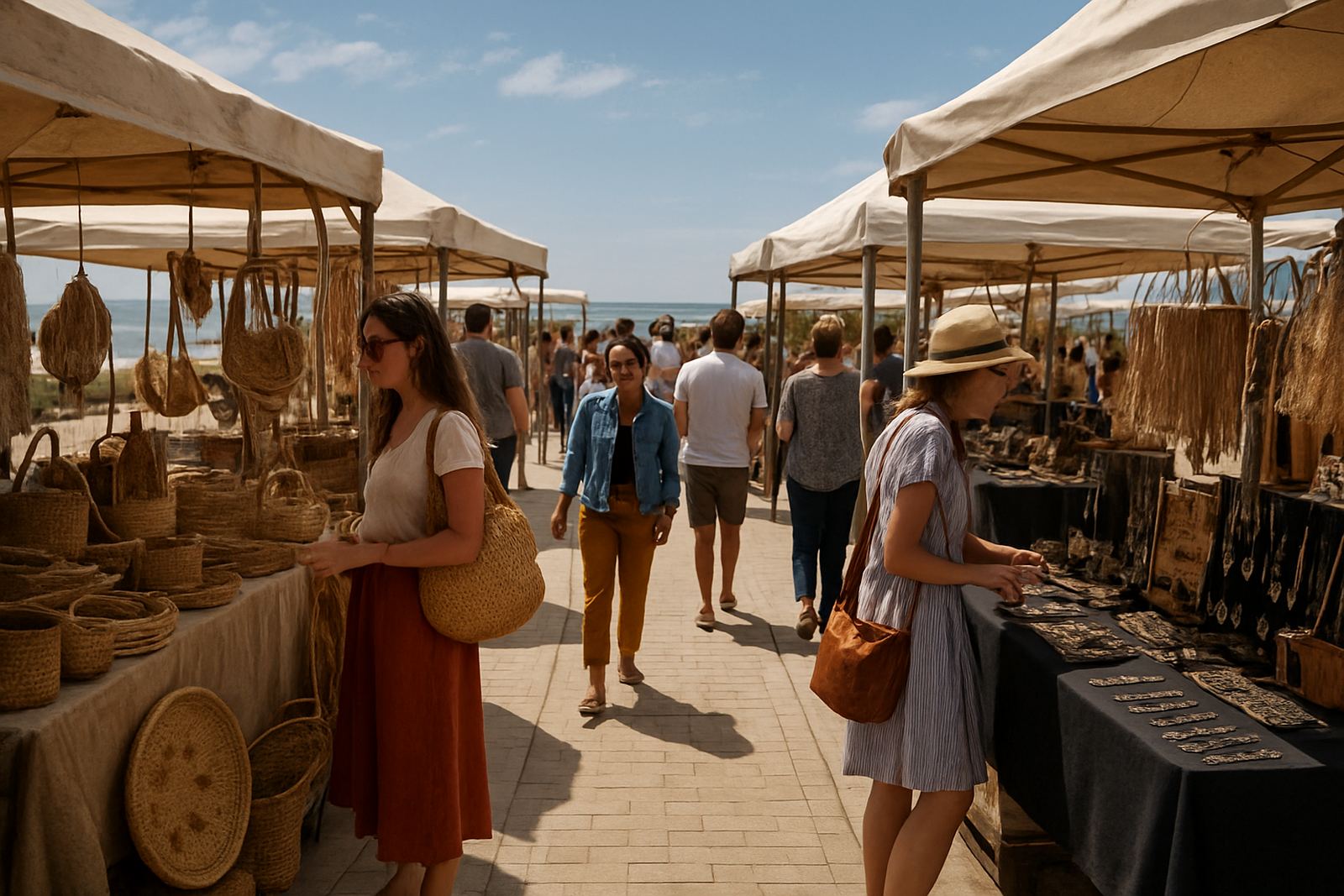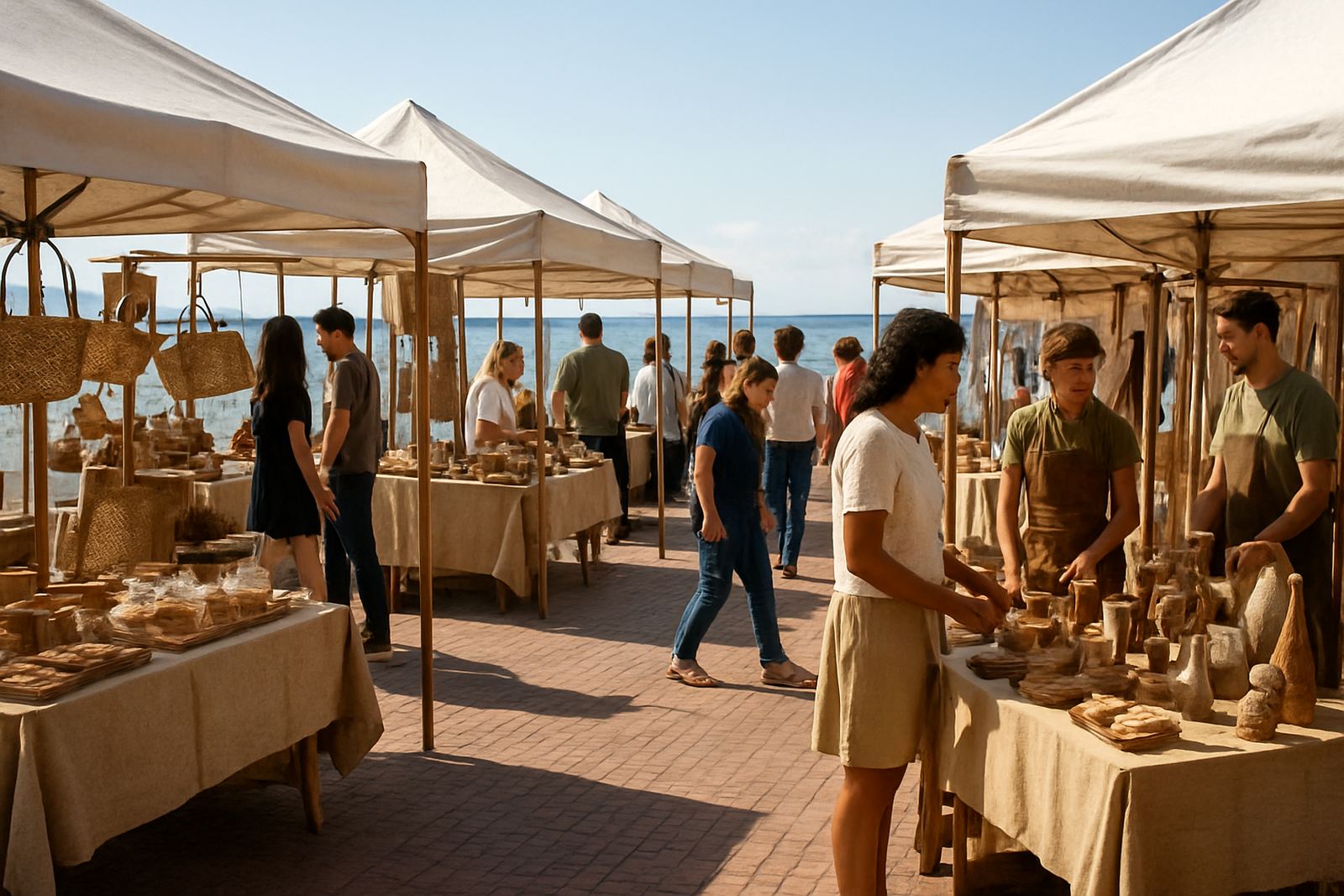

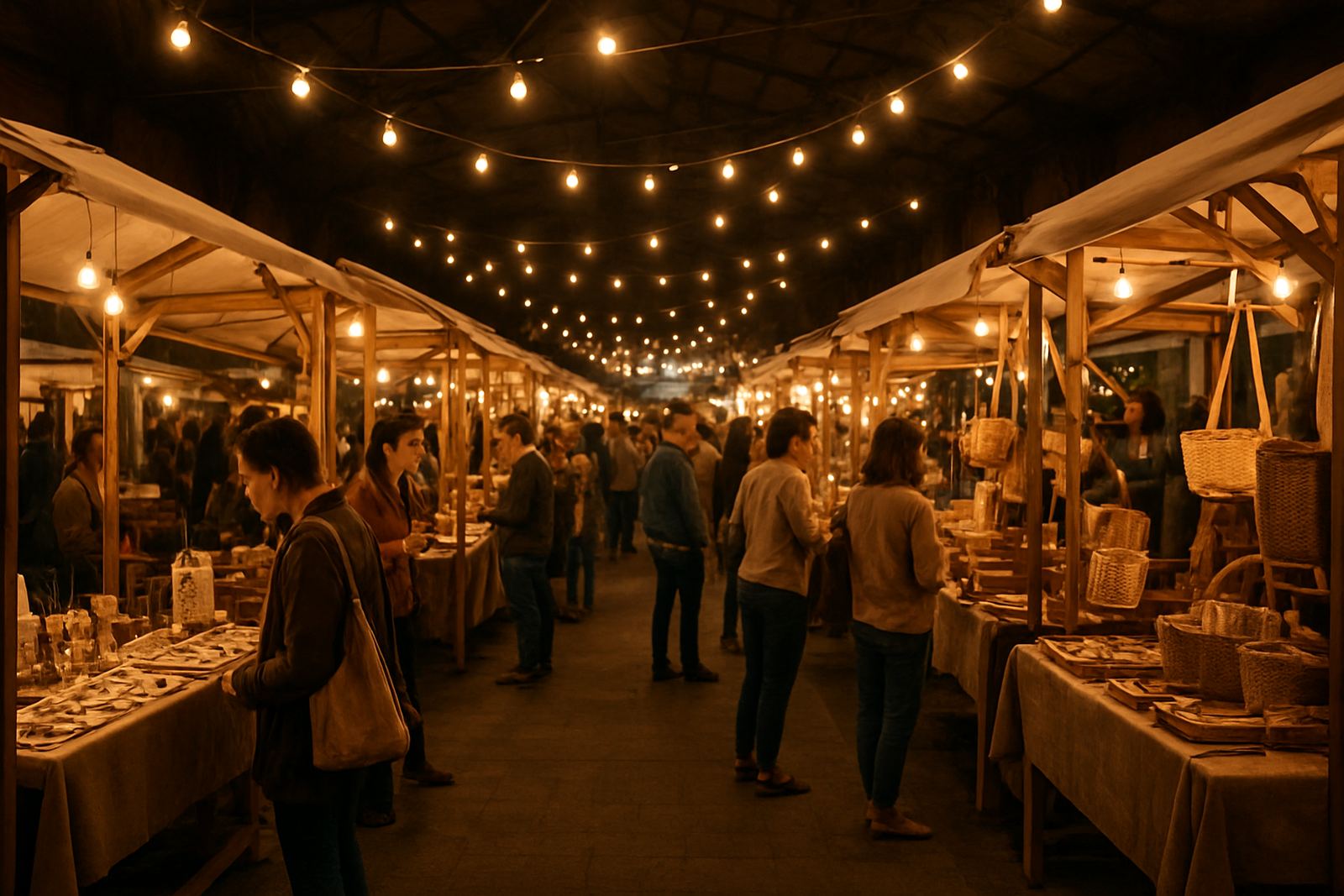
The Brief From A Pretoria Client
The brief came from a Pretoria-based retail and events client that wanted a better weekday evening market format for the Menlyn area. The aim was simple enough on paper, but tricky in practice: create a maker night that felt relaxed and premium, could handle office-hour foot traffic, and still gave small traders a fair chance to sell handmade goods, food, and gift items.
We were asked to shape the event around after-work shoppers, couples, friends meeting for supper, and families popping in for a short visit before heading home. The market had to work indoors, cope with controlled access, and look good under artificial light. It also needed to support makers who were strong at product making but less confident with pricing, display, and quick customer conversations.
- Location: Menlyn, Pretoria
- Format: Indoor maker night with curated stalls
- Audience: After-work shoppers, gifting buyers, families, local residents
- Focus: Handmade products, small batch food, seasonal gifts
What We Had To Plan Around
The main constraint was the venue flow. Evening markets can feel cramped if the aisles are too narrow, and shoppers moving with bags need space to stop and chat. We also had to account for the venue services, even though the event was indoors, because stallholders still needed reliable lighting, card machine charging, and safe food handling. Pretoria weather was less of a concern than parking, wayfinding, and making the whole thing easy for people arriving straight from work.
We also needed to avoid overloading the market with too many similar products. Too many candle stalls or too many snack tables can flatten sales. The mix had to be balanced, with enough variety to keep people browsing for longer. That meant careful maker selection and a floor plan that separated food, gifting, art, and practical home items without making the event feel split up.
- Indoor layout with clear walkways and visible anchors
- Lighting plan suitable for evening retail and photography
- Maker mix control to prevent category crowding
- Support for payment readiness and food compliance basics
Stalls, Signage And The Menlyn Maker Night Setup
We handled market operations, maker communication, and the pre-event preparation that helps traders sell more on the night. Hennie Basson managed the floor layout and event flow. Nompumelelo Mchunu handled maker relations, stall confirmations, and product readiness. Vuyo Bhengu coordinated the event timeline, while Naadirah Rhoda supported the workshop content for makers who needed a practical refresh before trading. Neels Schoeman prepared the event content and trader-facing information packs.
To get the market trade-ready, we supplied guidance on stall styling, pricing products, packaging for sales, customer conversation, and market photography. For food sellers, we covered simple stall basics, label visibility, and serving speed. For makers selling gifts, we pushed clear price points and easy carry options because evening shoppers often buy on impulse if the product looks organised and the price is easy to see.
- Stall layout and maker allocation
- Pricing and packaging support for traders
- Photography guidance for social promotion
- On-the-night coordination and issue handling
Project Timeline And Delivery
The project ran over 5 weeks from first planning call to final trade night. Week 1 covered brief intake, audience planning, and venue checks. Week 2 focused on maker recruitment and product category balancing. Week 3 was about trader onboarding, floor layout, and market rules. Week 4 covered workshop sessions and final confirmations. Week 5 was the event itself, plus post-event review and seller feedback.
That timing gave us enough room to correct gaps without rushing the traders. It also allowed time for stallholders to adjust pricing and packing before the event. A short timeline can work, but for a night market with many moving parts, five weeks is more practical and helps avoid last-minute scrambles.
We kept the process simple: confirm early, brief clearly, and make sure every maker knew what to bring, how to display it, and when to arrive. That cut down on confusion on the evening and helped the setup stay on schedule, which matters when people are coming in from the office and want a market that starts on time.
Results From The Menlyn Evening Market
The night drew a strong mix of weekday shoppers and gifting buyers, with good movement across the floor from early evening through to closing. Makers reported better product visibility and more useful customer interaction than they usually get at a busy daytime market. Food traders benefited from the steady after-work flow, while gift sellers saw the best interest in the first two hours after opening.
The strongest result was how the market felt. It was calm, polished, and easy to move through. People stayed longer because the layout made sense and the stall presentation held up under indoor lighting. Several traders also said their packaging and pricing felt more professional after the prep sessions, which helped with higher value sales. There was a noticeable lift in confidence too, not just takings.
- Better trader confidence at the point of sale
- Clearer product presentation and price communication
- Longer visitor dwell time than expected for a weekday evening
- Stronger gifting interest from office-hour shoppers
What We Would Do Again
We would use the same format again, especially for towns where after-work shopping has to fit neatly into a short time window. The biggest lesson was that evening markets work best when they are tightly curated and easy to enter, browse, buy, then leave without feeling rushed. That balance is what made Menlyn Maker Night worth repeating.
We would also keep the trader prep sessions in place. The difference between a seller who arrives with neat pricing, enough packaging, and a clear greeting, and one who does not is huge. For small makers, those details are often the difference between a polite chat and an actual sale. A little structure helps the whole event look more considered, and honestly it saves everyone time.
For future runs, we would keep focusing on product mix, evening lighting, and quick access for shoppers carrying bags. We would also keep food and gifting close enough for cross-selling, but not so close that queues get in the way. That simple planning is what keeps a maker night working well in a place like Menlyn.
Key facts
| Project type | Indoor maker night and curated evening market |
|---|---|
| Town | Menlyn, Pretoria |
| Timeline | 5 weeks from briefing to event night |
| Audience | After-work shoppers, families, gifting buyers |
| Support included | Stall styling, pricing, packaging, photography and customer conversation |
| Team lead | Thembisa Tshabangu, Managing Director |