Start With the Product, Not the Furniture
The best stall layout begins with what you sell and how customers shop. Flat products like stationery, prints, cards and packaged treats usually work well on tables, while folded items, jars and small homeware benefit from tiered shelving. Clothing, bags and accessories often need rails so people can scan sizes and colours at a glance.
Before you pack a single crate, think about your stock depth, breakage risk and how much time you have to restock during the day. A maker with 20 ceramic pieces needs a very different setup from someone selling 200 packets of rusks. At busy Pretoria weekend markets, shoppers move fast, so your first view must show the product type clearly within 3 seconds.
If you are doing maker nights or a pop up in a tighter space, keep the footprint simple. A narrow table with one small shelf unit and a hanging rail can work better than a crowded display that blocks movement. In summer heat and coastal humidity, packaging and labels also need to stay dry and upright.
When a Table Layout Works Best
Tables are the most flexible choice for many makers because they suit small goods, food products and mixed ranges. They give you a flat surface for grouping items by price, colour or use. If you are selling from a 1.8 metre trestle table, you can create a front display, a middle section for browsing, and a back row for stock refill.
Use a table layout when your products are sturdy, boxed or easy to stack. It also works well for first market days because setup is simple and transport is manageable. Add risers, trays or small crates to create height without spending much money. Battery lights can help the table stay visible if the venue lighting drops.
- Best for candles, preserves, bakes, soaps, prints and small gifts
- Keep the heaviest items at the back or lower level
- Leave a clear area for pricing and card payments
- Avoid covering the entire table with cloth if it hides stock
Check that the table height is comfortable for serving and packing. If customers need to reach across your display, leave enough space so they do not knock items over.
Use Shelves to Create Levels and Bring Order
Shelving is useful when your stock has many variations or needs careful presentation. It helps smaller products stand out and keeps fragile items off the table edge. Bakers often use shelves for wrapped items, while potters and homeware makers can show different shapes and finishes without crowding the main surface.
A shelf arrangement works best when you want a neat, shop like feel within a market stall. It is also practical for repeat customers who want to compare sizes or flavours quickly. Use the back shelf for extra stock and the front shelf for display samples. Make sure the bottom shelf is not too low, because people should not need to crouch to see your range.
- Use 2 or 3 shelf levels, not too many
- Place your strongest sellers at eye level
- Group items by scent, colour or category
- Keep heavier items on the lowest shelf for safety
If you sell food, check local market rules on open display, labelling and hygiene. A shelf unit should never block handwashing access, and food packaging must stay clean in dusty or windy conditions.
When a Rail Arrangement Makes Sense
Rails are the best choice for apparel, aprons, totes, scarves and other hanging items. They let customers see shape and length properly, which is important when fit and drape matter. A rail also keeps products from creasing and can make a small stall feel less cluttered.
For clothing stalls in Hatfield or Brooklyn, use a rail with enough spacing so each item can move slightly and be lifted off the hanger easily. Sort by size or colour, then keep a mirror nearby if your space allows. If your products are handmade textiles, rail height should allow both adults and younger shoppers to view items comfortably.
- Use strong hangers that do not bend under weight
- Leave one end of the rail open for easy browsing
- Keep bags or accessories on a small side table or hook panel
- Protect delicate fabrics from sun and rain where possible
Rails are less useful for small loose items, so if your range includes accessories or packaged add ons, pair the rail with a table or shelf. That gives you a fuller presentation without wasting space.
Mixing Table, Shelf and Rail in One Small Stall
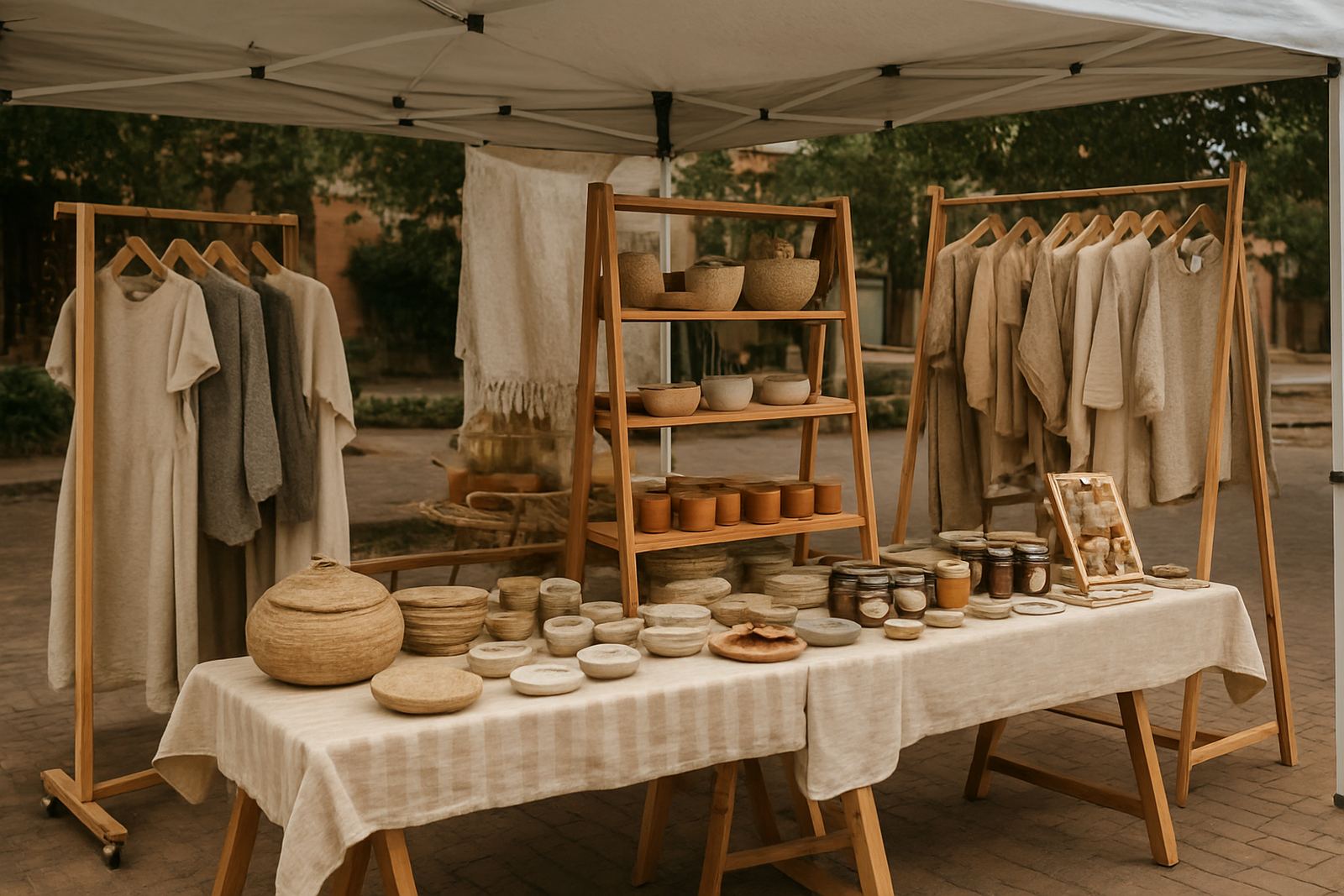
Many makers do best with a mixed layout. A table can hold your core products, a shelf can add height and a rail can support a secondary range. This approach works well for weekend markets where shoppers want variety but space is limited. It also helps if you trade at different venues in Pretoria, Centurion and Menlyn, because you can adjust the same kit to suit the site.
Start by choosing one hero display and build around it. For example, a food maker might use a table for tastings and packaged stock, then a small shelf for gift sets and a side rail for branded aprons. A homeware maker could use a table at the front, shelves at the back and one narrow rail for linen or textile items. Keep pathways open so customers can enter and leave the stall without turning sideways.
Plan your power needs too. If you need lights, a card machine or a small warmer, place cables where no one can trip. In outdoor spaces, secure light fittings and stock against wind, especially during afternoon gusts.
Pack Your Stall Layout Checklist Before Market Day
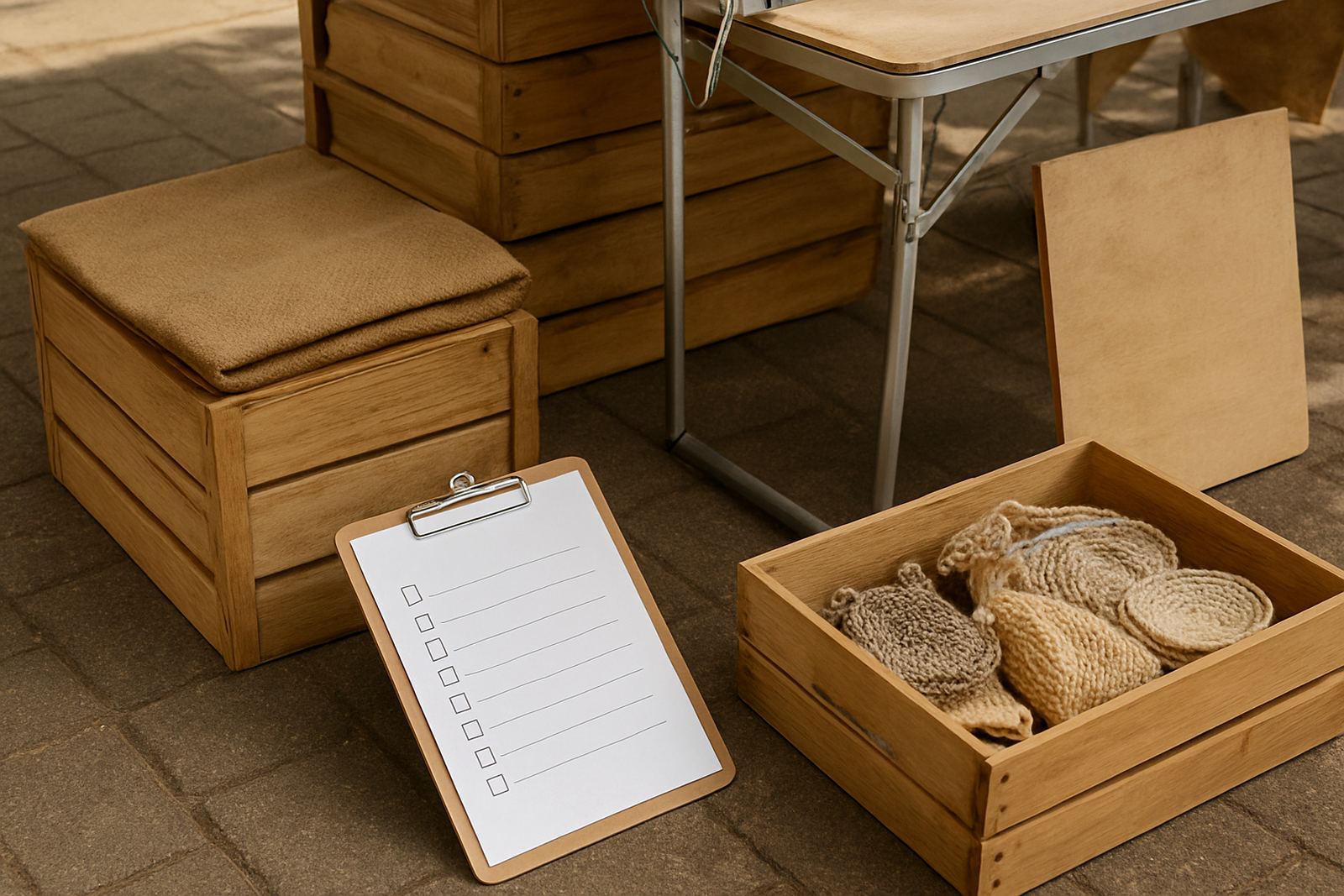
A practical checklist saves time at set up and helps you avoid forgetting small items that matter once trading starts. Keep one version for each stall type so you can pack faster on Friday evening or early Saturday morning. If you trade at multiple sites, label crates by layout type and product group.
- Table, shelves or rail cleaned and packed securely
- Tablecloths, clips, hangers and risers included
- Price labels printed or written clearly
- Mirror, lights and extension leads packed if needed
- Stock arranged by best seller, premium items and refill stock
- Payment method sign visible
- Wet weather cover and weights packed for outdoor use
- Hand sanitiser, wipes and a small change float on hand
After each market, note what sold first, what was ignored and where customers stopped to look. Small changes in layout can improve sales more than adding more stock.
Simple Layout Rules That Help Shoppers Buy
Your stall should make decisions easier, not harder. Keep the front edge open, group similar items together and use height to guide the eye. If shoppers can understand your range without asking three questions, your layout is doing its job.
Use signs for prices and product names, especially if you sell food, mixed gifts or items in different sizes. If something is fragile, put it slightly back from the edge. If something is a top seller, give it prime space at eye level or in the most visible part of the table. A tidy stall builds trust and saves you time answering basic questions all day.
For markets with family foot traffic, think about pram space, standing room and quick browsing. People often carry coffee, bags or children, so a cramped stall can lose a sale even when the product is good. Keep the layout open, practical and easy to restock between rushes.