Start With The Site, Not Your Stock
Before you pack a single product, confirm where you are trading and what the ground is like. A paved Hatfield car park, a grass field in Pretoria East, and a windier open site near the coast all need different set ups. Ask about stall size, access times, parking for unloading, shade, nearby power points and whether there are level surfaces or not. If the market runs in a municipal space, check if there are restrictions on gas, open flame, grey-water disposal, noise, or what can be fixed to the ground.
Measure your display footprint at home and keep it within the limits given by the organiser. A standard 3 m by 3 m space sounds generous until you add a table, trestles, stock tubs, signage and room to stand behind the table. If you are selling food, confirm hand-washing options, whether hot foods need a service point, and if your packaging meets local health requirements. The best outdoor traders arrive knowing exactly where each crate, cooler and banner will go.
Weather Proofing For Sun, Wind And Rain
Outdoor markets are won or lost by how well you handle weather. In summer, direct sun can fade fabric, soften chocolate and make customers move quickly. In winter, a cold wind can empty a stall even on a busy day. Pack for the worst case, then hope for the best. Shade is not just comfort, it protects stock and keeps shoppers longer.
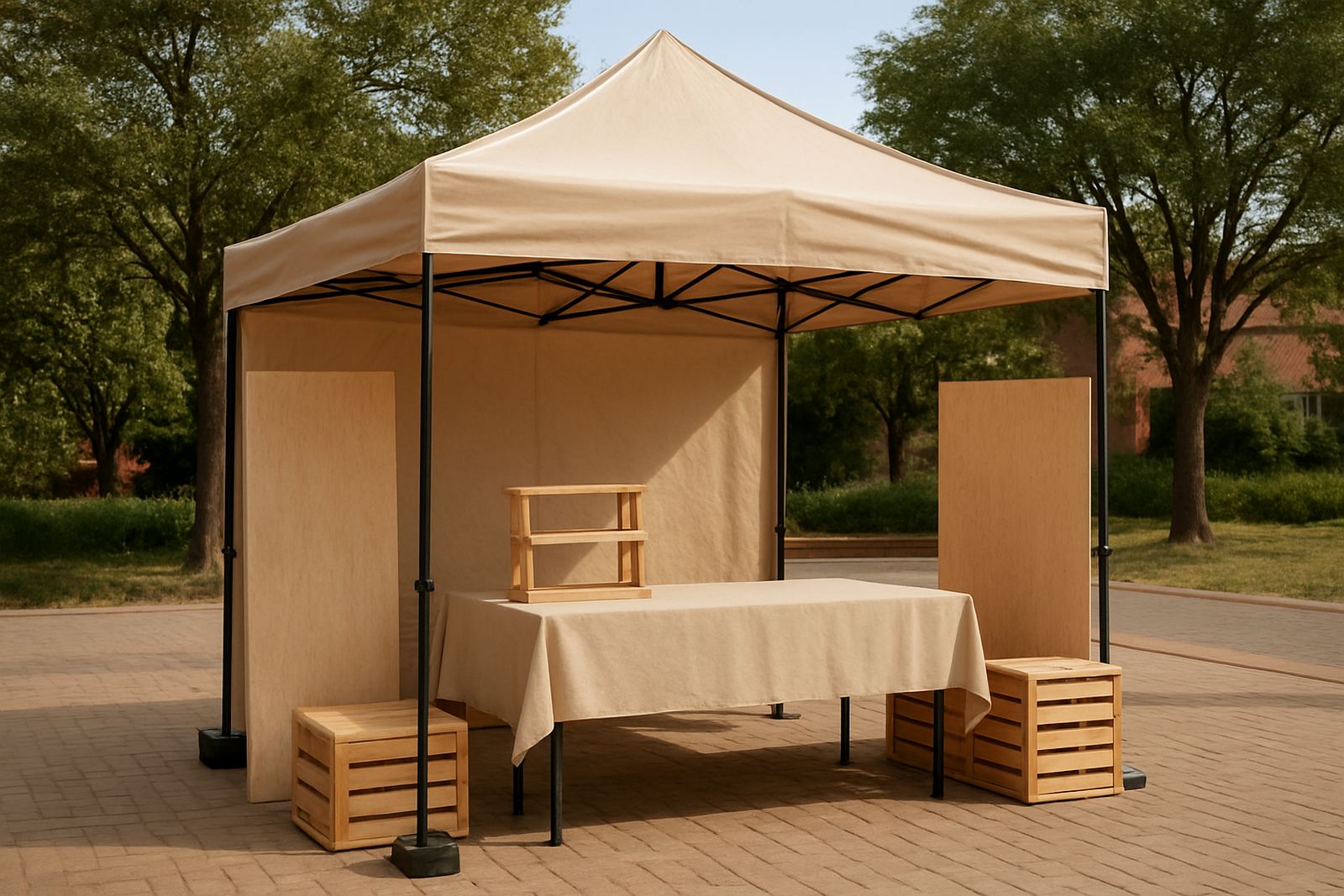
Use a gazebo or canopy with weighted legs, side ropes and secure pegs where allowed. Never rely on loose bricks or light plastic weights. For rain, carry clear waterproof covers, clip seals for printed material and a spare tarpaulin for stock under the table. If you sell food, keep coolers closed and off the ground, and bring extra ice packs in insulated bags. For heat sensitive items, use thermal boxes and line them with towels or bubble wrap to reduce temperature swings.
- Pack a canopy with side walls or clear rain sheets.
- Take four proper weights, not improvised ones.
- Keep towels, clips and tape in a weather bag.
- Bring sunscreen, hats and drinking water for your team.
- Use closed tubs for anything that must stay dry.
Weights, Anchoring And Safe Layout
A windy day can turn a lovely display into a hazard. Your main job is to stop movement before it starts. Heavy items go low, light items go high, and anything that can fall must be braced. Use solid table covers that do not flap into products, and keep cords taped down where customers walk. If you are on grass or gravel, check that your base stands level and does not wobble when touched.
For gazebos, each leg should be anchored with proper weights or ground pegs, depending on the site rules. For tables, use non-slip mats under trays and clamps on uneven surfaces. Put breakables away from edges and leave a clear path for browsing. If you trade alone, arrange your stall so you can serve, pack and take payment without crossing behind customers every time. That matters when it is busy and people are queueing.
- Test your full stall at home with a push test.
- Use low shelves or crates for heavier stock.
- Keep all cords and chargers taped or tucked away.
- Leave a clear entry point so shoppers do not bunch up.
- Place cash, card reader and bags within easy reach.
Pack For A Long Day, Not Just The Setup
Outdoor trading takes longer than people expect. You need a kit for setup, a kit for selling, and a kit for the end of the day. Pack stock in labelled tubs by category or price band so you are not searching through mixed items while customers wait. Carry extra change, receipt books if needed, spare batteries, a power bank and a torch for early mornings or delays. If the venue uses generators or shared power, assume the supply may dip and keep your own back-up ready.
Practical extras make a real difference: scissors, cable ties, a marker pen, wipes, hand sanitiser, bin bags, paper towels, an umbrella, a small first aid kit and a blanket for chilly evenings. If you are selling food, add gloves, serving tongs, cooler blocks and sealed containers for waste. A well packed stall is quicker to set up and much easier to close down when the wind picks up or the crowd starts thinning.
Selling Comfortably In Heat, Dust And Rain
Customers buy longer when they feel comfortable at your stall. In heat, give them space to stand in shade and touch products without rushing. In dusty areas, cover stock that sits too long on the front table and wipe down surfaces often. After rain, keep a dry cloth ready to clean trays, jars and packaging so your display still looks cared for. Outdoor trading is practical work, and small signs of care build trust fast.
Think too about your own working rhythm. Wear closed shoes with grip, choose clothing that can handle mud or spilled drinks, and carry a spare top if the weather changes. If you are running a workshop, demo or maker night table, set out samples so visitors can engage without leaning over your stock. Good comfort leads to better conversations and more repeat customers.
A Simple Outdoor Prep Checklist For Market Day
Use the same checklist every time until it becomes habit. That way you are less likely to forget weights, cord tape or the cooler bag when you are leaving early from Hatfield or driving to a weekend pop-up further out. Keep a printed copy in your packing box and tick it off the night before, not after you have already loaded the car.
- Venue details, trading hours and stall number confirmed.
- Canopy, weights, tables and display pieces packed.
- Weather gear checked for sun, wind or rain.
- Stock counted, labelled and protected in tubs.
- Payment method tested and backup cash ready.
- Water, snacks, sunscreen and first aid kit packed.
- Waste bags, cleaning cloths and tape included.
- End-of-day transport space left for unsold stock.
When your outdoor prep is tight, the day feels calmer. You spend less time fixing problems and more time serving customers, talking about your products and making the most of the market.